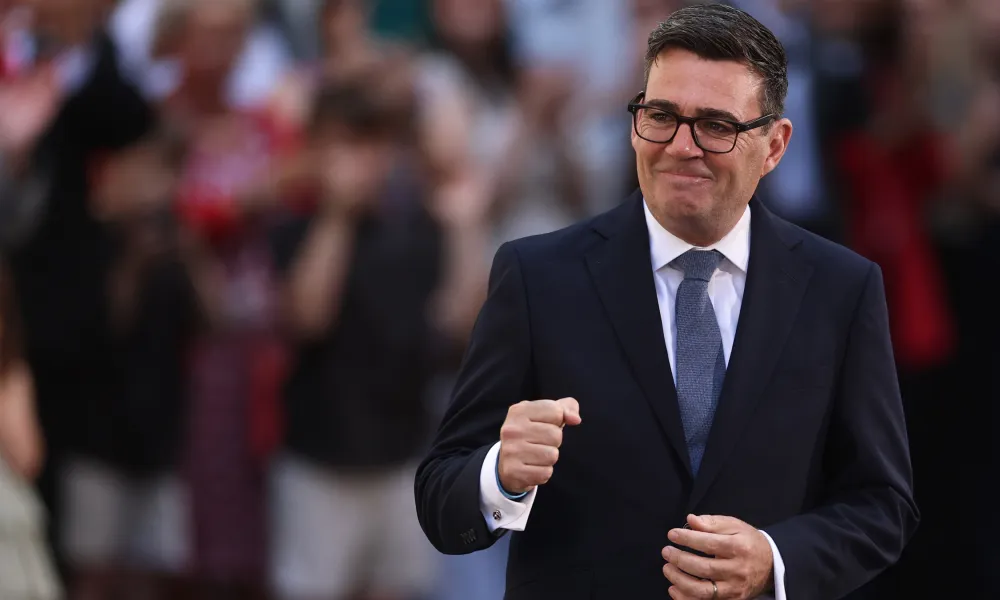



Britain's new prime minister, Andy Burnham, has packed his first weeks in office with public appearances and near-constant online activity, from a visit to a London homeless shelter to a meeting with Ukrainian President Volodymyr Zelensky at a military base, according to the New York Times. He has posted dozens of direct-to-camera videos across TikTok, X and Instagram, pulling a pint at a pub, wearing a hi-vis vest to discuss youth unemployment and even wading into a debate over the correct way to make a cup of tea.
Burnham, the former mayor of Greater Manchester, entered Downing Street in mid-July as Britain's seventh prime minister in a decade, following Keir Starmer's resignation after just over two years in the role, CNN reported. In his first address outside Number 10, Burnham pledged to make his leadership a "circuit breaker" for British politics and promised to end rough sleeping, with his team later confirming an extra £340 million towards that effort, CNN said.
A rapid run of policy announcements
According to the New York Times, Burnham has since announced lower taxes on pubs, promised an overhaul of social care for disabled and elderly people, capped bus fares at £2 and found funds to reduce household electricity bills. He has also pledged to shift power and money away from London towards regional mayors and municipal leaders.
Separate reporting has filled in some of the detail behind these announcements. According to Yahoo News, the electricity bill measure involves scrapping VAT on household energy from October, a move expected to cut around £45 from the average bill and reportedly funded by cancelling the government's planned Digital ID scheme. Yahoo News also reported that Burnham has described his government as a "cost of living government," and that his approval rating stood at a net 19 points in a recent More in Common poll, surpassing any level Starmer achieved in office.
Burnham's cabinet appointments have also signalled the shape of his government. Per CNN, former defence secretary John Healey was named chancellor, Wes Streeting became defence secretary, Ed Miliband was appointed foreign secretary, Shabana Mahmood remained home secretary, Yvette Cooper moved to health secretary, and Angela Rayner returned to government as housing secretary.
A deliberately informal media strategy
The New York Times reports that Burnham's approach is designed to bypass much of Britain's often right-leaning press and speak to the public directly, including appearances on the podcasts "Jimmy's Jobs of the Future" and one hosted by former footballer Gary Lineker. His informal online style has drawn comparisons to that of New York City Mayor Zohran Mamdani.
Rob Ford, a politics professor at the University of Manchester, told the New York Times that Burnham has proven considerably better than Starmer at reading the public mood, likening him to former US president Bill Clinton in his instinct for symbolism and narrative. Paul Dennett, Burnham's former deputy in Greater Manchester and now mayor of Salford, told the newspaper that Burnham's approach was both pragmatic and strategic.
Funding questions and political risks ahead
Rivals have warned that Burnham's spending pledges will likely require either higher taxes or increased government borrowing, the New York Times noted, and the detail of his promised social care overhaul is not expected to be finalised until at least next year, once a review is complete. The Daily Mail has already attacked the proposal with the front-page headline "Burnham's £18 billion 'death tax' nightmare," a reference to a 2010 social care funding proposal Burnham backed as health secretary.
Burnham also faces pressure on immigration, an issue on which Reform UK leader Nigel Farage has accused him of inaction during his first weeks in power. He also faces the broader economic risk posed by the war in Iran, which could push up energy prices heading into winter.
Sources: The New York Times, CNN