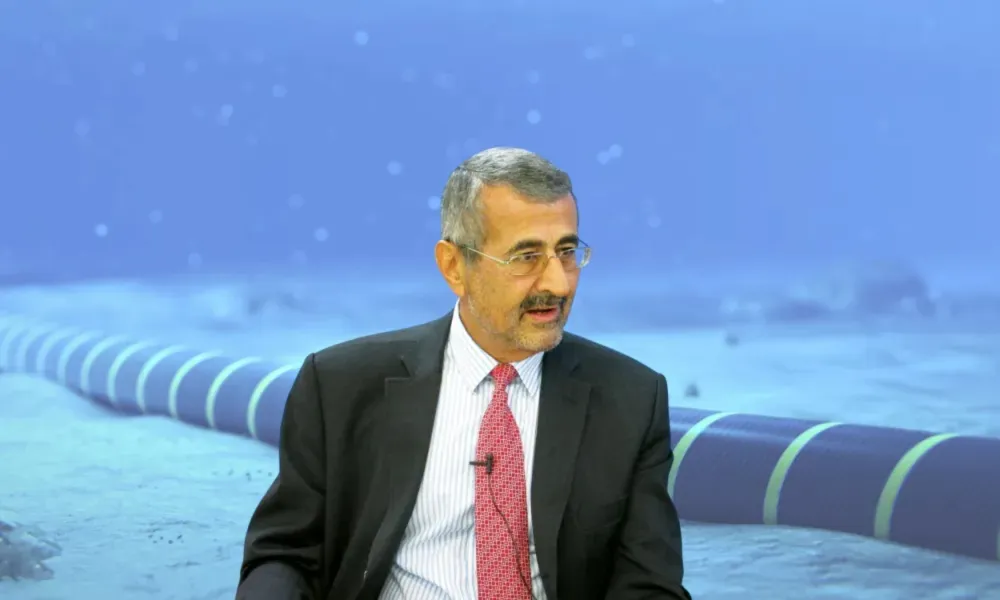

The investment by French infrastructure group Meridiam is a decisive development that significantly increases the chances of the Greece-Cyprus electricity interconnection project moving forward, according to Dr Charalambos Ellinas, Senior Fellow at the Atlantic Council's Global Energy Center.
Speaking on Politis Radio 107.6 & 97.6 during the programme Morning Briefing with Katerina Eliadi, Ellinas described Meridiam's entry as a strong vote of confidence in the project and said it substantially increases the likelihood of its implementation.
He noted that Meridiam has been studying the project for around two years and first expressed interest in 2024, stressing that it is a private investment organisation that does not commit capital to projects lacking profit potential.
Ellinas argued that the Republic of Cyprus should acquire an equity stake in the project, describing such participation as essential.
As he explained, the interconnection is the most important energy project affecting Cyprus, with direct implications for the country's energy security and long-term energy future.
He warned that without participation, Cyprus risks remaining a mere spectator to developments.
Addressing questions about the project's viability, Ellinas said Meridiam's decision to invest is itself an indication that the project is economically attractive.
He noted that the company has extensive experience in major infrastructure investments and does not undertake projects unless it believes they can be successful and profitable.
On possible Turkish reactions, Ellinas struck a reassuring tone, saying the risk remains manageable.
He argued that French involvement strengthens the project's political and geopolitical backing and said he does not expect Turkey to attempt to physically obstruct construction activities through naval action, beyond continuing its established political opposition.
Ellinas also said the interconnector could help reduce electricity costs by facilitating imports of cheaper renewable energy.
At the same time, he criticised the current operation of Cyprus' electricity market, arguing that consumers are not benefiting from competition and that high prices and significant producer profits persist.
He further suggested that Meridiam's participation could act as a catalyst for attracting additional international investors, including from the United Arab Emirates and the United States, strengthening both the financial and political foundations of the project.
Ellinas placed particular emphasis on the need to enhance Cyprus' energy security.
He said electricity demand continues to grow due to climate change, tourism growth and increased desalination requirements, while generation capacity is not expanding at the same pace.
He added that significant weaknesses remain in both conventional power generation and the deployment of renewable energy, due to constraints in the electricity system and energy storage capacity.
Commenting on concerns over electricity prices, Ellinas said the interconnection would not necessarily lead to a dramatic reduction in bills, but could contribute meaningfully to lower costs if supported by the appropriate political will and genuine market competition.
Finally, he expressed the view that following the agreement with Meridiam, the interconnection project is likely to proceed regardless of whether Cyprus takes an equity stake, adding that the next step will be a revised timetable as procedures and surveys related to the cable's construction resume.