
In all democracies, the formation and reshuffling of governments is based on one principle: selecting the best and most capable individuals, always in the judgment of the head of government, to implement his programme, policies and electoral promises to citizens. When a leader concludes that the government's performance is not meeting expectations, the response is to make the necessary changes in order to improve its effectiveness and recover lost ground as quickly as possible.
In Cyprus, from the moment he assumed the Presidency, Nikos Christodoulides showed that he has a completely different understanding of the role and purpose of a government, as well as of his constitutional right to reshuffle it. Instead of using it to improve government performance and correct shortcomings, he views it as a "tool" and an "opportunity" to advance personal objectives and short-term political considerations.
When forming his first government, and despite his pre-election commitments to appoint individuals of recognised standing and technocratic competence, he "spent" his constitutional privilege to accommodate political allies and reward people who had supported his candidacy.
When weaknesses and failures began to emerge within his administration, he believed he would find a "lifeline" among members of the parties that had backed his election, breaking yet another campaign pledge, namely that he would not include party officials in his government and would never engage in bargaining with political parties over ministerial appointments. The result was much the same. The country's major problems remained unresolved, while citizens saw their daily lives not only fail to improve but, in many cases, deteriorate.
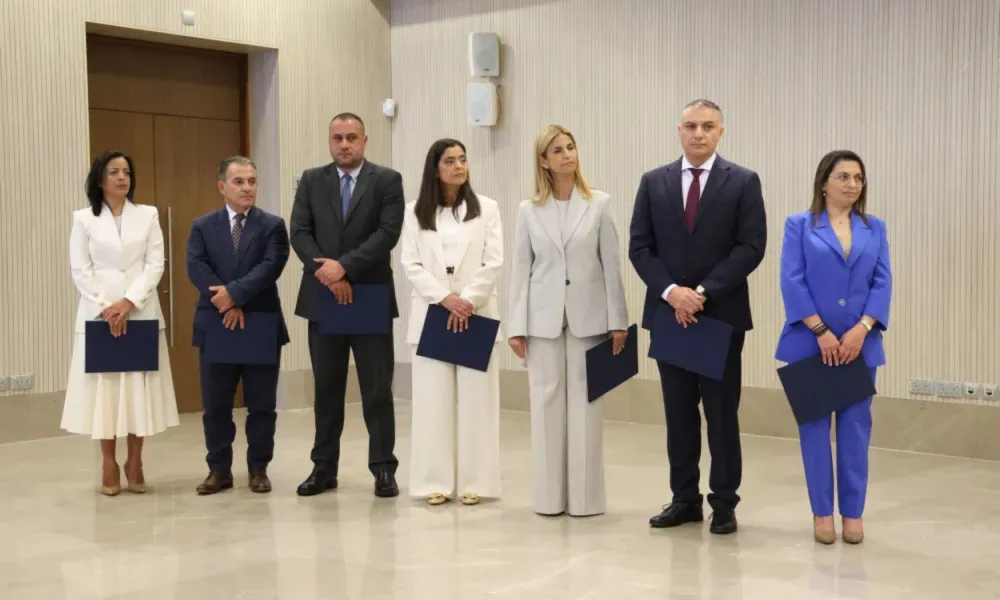
In his recent and third attempt to form a government, the President lost every trace of political credibility. He assembled a government not to recover lost ground during the final 18 months of his term, not to address the country's enormous challenges and citizens' concerns with seriousness and dedication, but solely to help secure his re-election in 2028.
By distributing ministries to parties, small political groupings and defectors from other parties, he believes he can ensure his hold on power through political trade-offs and reciprocal arrangements. But his approach is short-sighted. What he is actually achieving is the loss of whatever independence he has left and the mortgaging of his political future to opportunists and circumstances that may not even stand by him when the moment of crisis arrives.