
At a time when Cyprus is facing a severe housing crisis, the challenge is not only to increase the housing stock but also to ensure housing quality.
The housing problem will not be solved simply by erecting rows of apartment blocks in unattractive, poorly designed and dysfunctional buildings. Effective housing policy requires thoughtful interventions, implemented where needed, while safeguarding the right to dignified and quality housing.
The initiative also presents a modern challenge for architects: finding solutions that reconcile, and potentially overcome, the problems associated with contemporary affordable and social housing models, from rising construction costs to increasingly fragmented communities.
Seven developments
In early December 2025, President Nikos Christodoulides announced the government's intention to create 500 new housing units as part of its efforts to alleviate the housing crisis.
The initial proposal envisaged a budget of €70 million and a four-year implementation period.
The programme covers seven state-owned plots, including:
- Three in Limassol, where housing pressures are most acute.
- Two in Nicosia.
- One in Larnaca.
- One in Paphos.
Under the plan, the completed homes will be managed by the Cyprus Land Development Corporation (KOAG), which will be responsible for allocating them through affordable rental schemes under its existing housing programmes. KOAG, however, will not be involved in the development process itself.
The principal innovation is that, for the first time, the state, through the Department of Town Planning and Housing, decided to develop the projects through an architectural competition process.
Construction will subsequently be undertaken by private contractors using a Design-Build-Maintain model.
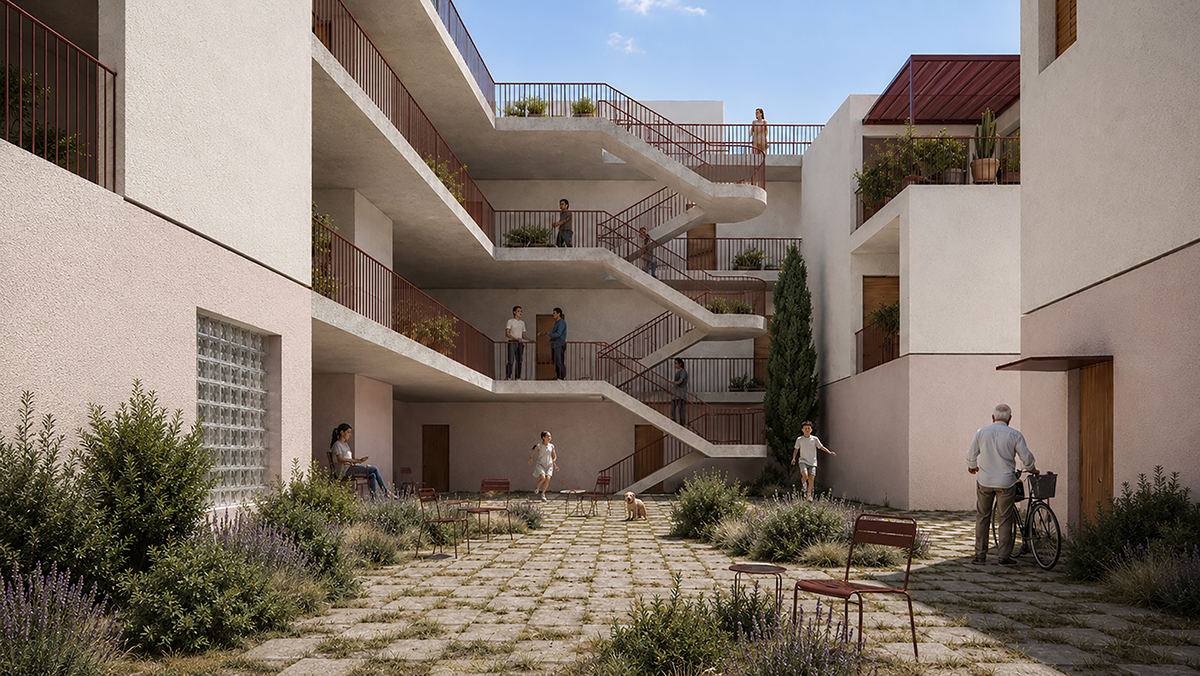
52 ideas submitted, 18 awarded
The architectural competitions have already been completed and the intention is that the winning teams will remain involved until the projects reach the licensing stage.
Unlike a full architectural competition, this process focused on conceptual designs, primarily to limit costs.
To further contain construction expenses, restrictions were imposed in other areas, including the absence of provisions for underground parking facilities or pilotis structures beneath apartment buildings.
The initiative attracted strong participation from architectural teams, mainly from Cyprus and Greece.
A total of 52 proposals were submitted for the seven sites.
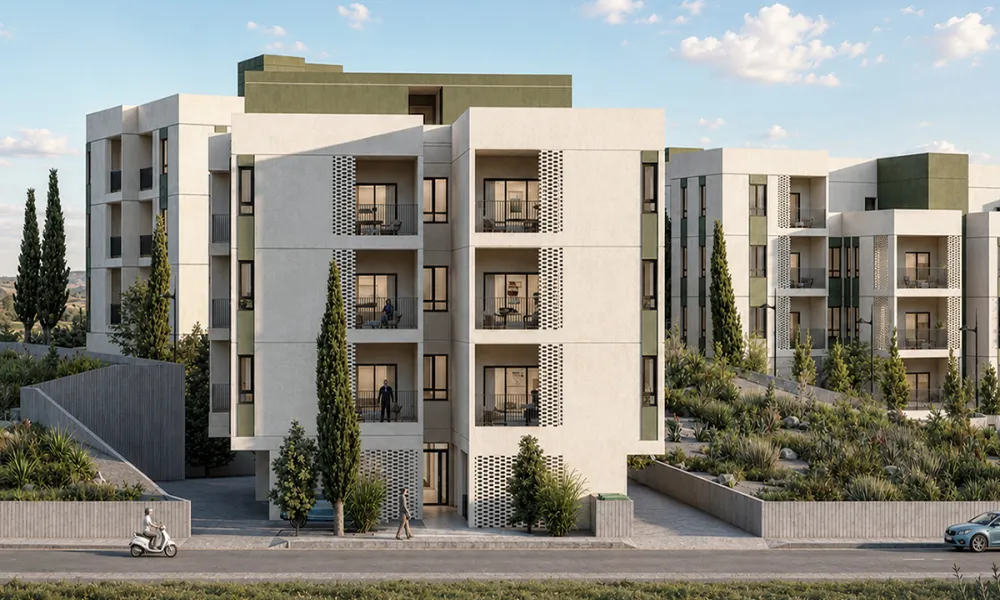
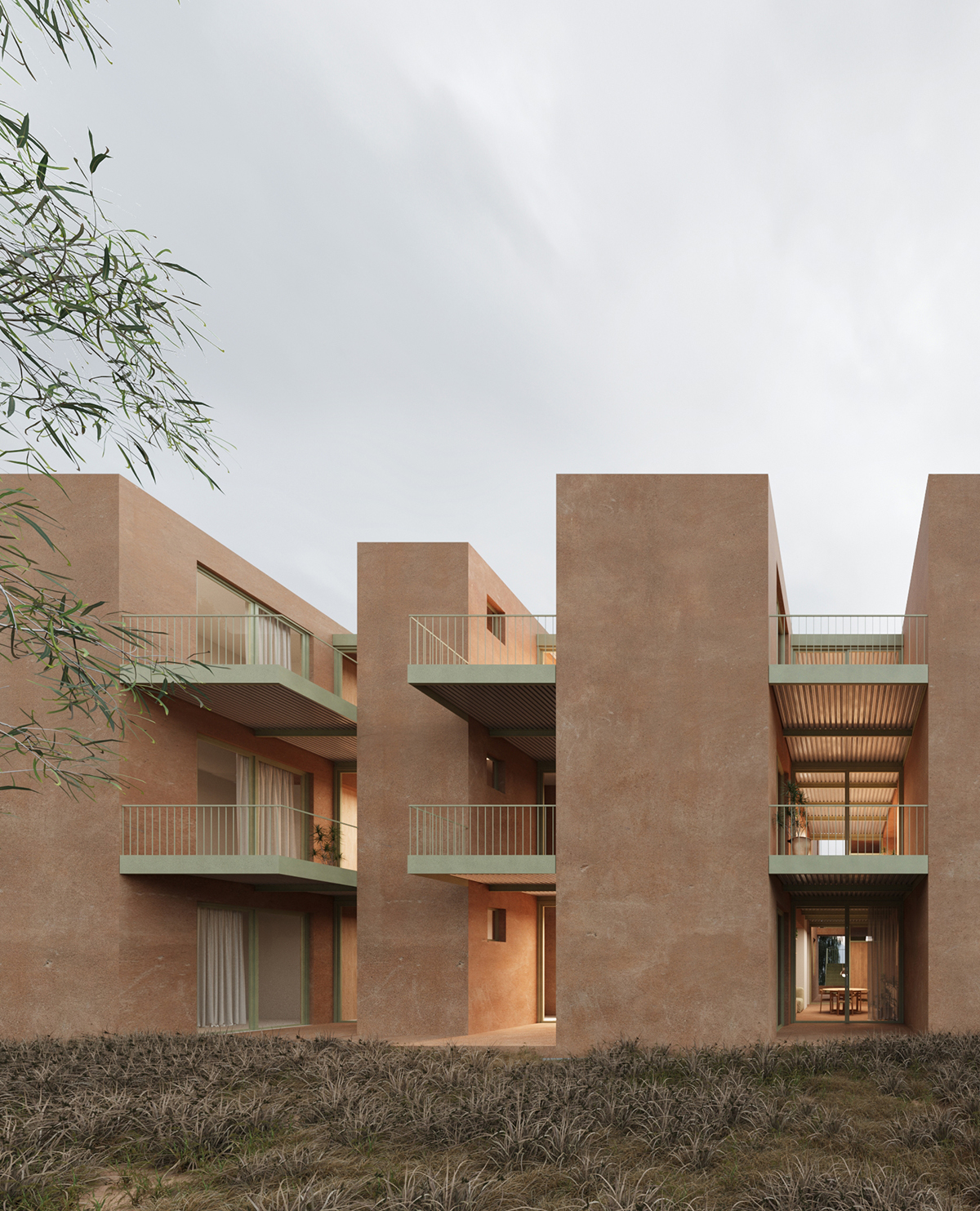
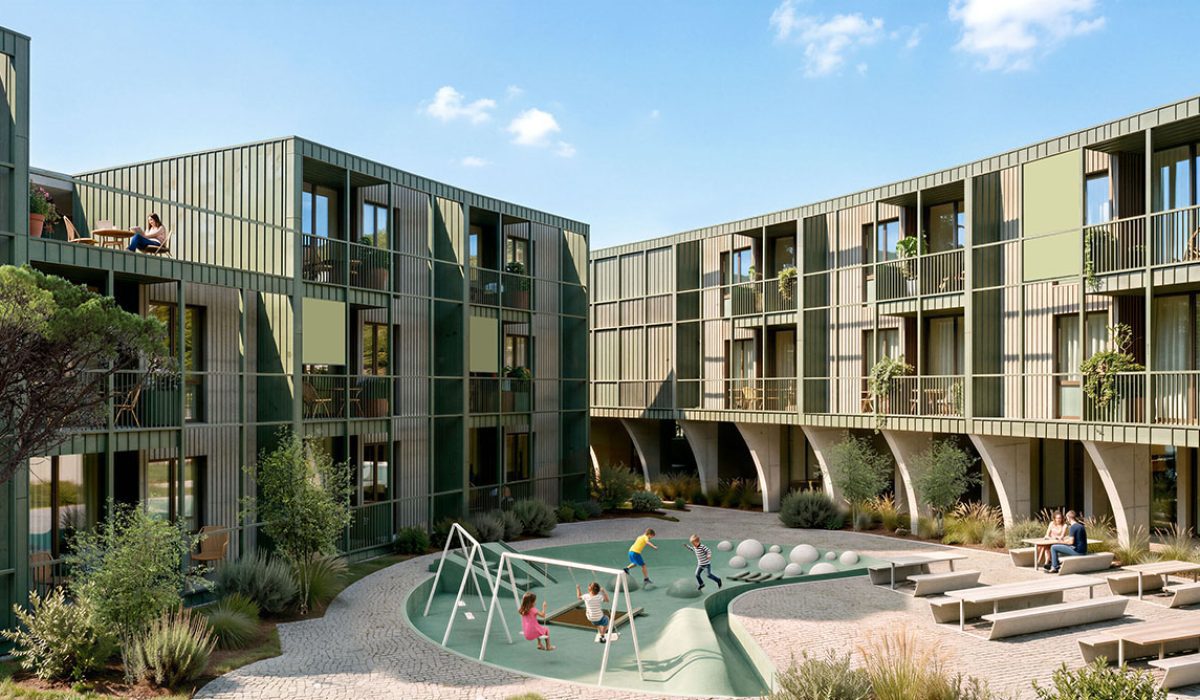
Of those, 18 proposals received awards and have been published on the website of the Cyprus Architects Association.
Before the competitions were launched, amendments were introduced following representations by the Cyprus Scientific and Technical Chamber (ETEK).
Those changes affected both the selected plots and the number of residential units.
As a result, the total number of apartments was reduced from 500 to 460, while allowing for larger public areas, greater communal space and improved living conditions.
One aspect that prompted concern among many observers was that all seven state-owned plots are located outside the existing urban fabric.
When the competition was announced, ETEK president Constantinos Constanti stressed that the pursuit of affordable housing should not result in a decline in architectural quality.
He argued that architectural competitions remain the most appropriate mechanism for ensuring excellence from the earliest stages of design.
According to Constanti, the competition linked affordable housing with contemporary architectural creativity, challenging designers to propose solutions capable of meeting requirements for:
- Resilience.
- Energy efficiency.
- Functional sustainability.
- Adaptability.
- Social value.
- Meaningful integration into the urban environment.
He also identified aesthetic quality, social inclusion, environmental sensitivity and cost discipline as core objectives, emphasising that architectural quality directly affects citizens' quality of life.
Where the homes will be built
The programme provides for the construction of 460 residential units across four districts.
Nicosia
In Geri, 124 residential units will be built on two plots.
These will comprise:
- 56 one-bedroom apartments.
- 56 two-bedroom apartments.
- 12 three-bedroom apartments.
The project's maximum indicative cost is €16.2 million.
Limassol
In Episkopi, 216 residential units are planned across three plots, with a total indicative cost of €28.3 million.
Plot One
- 56 units:
- 24 one-bedroom apartments.
- 24 two-bedroom apartments.
- 8 three-bedroom apartments.
Plot Two
- 80 apartments:
- 28 one-bedroom apartments.
- 52 two-bedroom apartments.
Plot Three
- 80 apartments:
- 28 one-bedroom apartments.
- 52 two-bedroom apartments.
Larnaca
In Aradippou, 52 residential units will be developed:
- 20 one-bedroom apartments.
- 32 two-bedroom apartments.
The maximum indicative cost is estimated at €6.7 million.
Paphos
In Acheleia, 68 residential units will be built:
- 20 one-bedroom apartments.
- 48 two-bedroom apartments.
The maximum indicative cost is €8.7 million.
All homes will have minimum usable floor areas of:
- 40 square metres for one-bedroom units.
- 62 square metres for two-bedroom units.
- 85 square metres for three-bedroom units.
Each home will also include a covered veranda equivalent to at least 15 per cent of the unit's usable floor area.
Competitions deliver quality
Speaking to Politis on behalf of ETEK, architect Alexis Papadopoulos, a member of the chamber's general council, described the process as proof that the state can trust the architectural community and utilise its expertise in producing high-quality housing.
He argued that although the state has not adequately fulfilled its housing responsibilities in recent years, the competitions highlighted architecture's ability to create quality living environments.
According to Papadopoulos, the 52 proposals demonstrated that multiple high-quality solutions can emerge for every site.
These proposals do not merely create housing units but also strengthen connections with public spaces, neighbourhoods and everyday community life.
Criticism of KOAG
Papadopoulos also criticised KOAG, arguing that, in his personal view, the organisation has in recent years relied on designs of comparatively low quality.
He cited the development of 136 residential units in Agios Nikolaos, Limassol, as an example.
According to him, the competition results undermine arguments advanced by opponents of architectural competitions and demonstrate the value of investing in quality design.
He stressed that Cyprus' cities need quality architecture and respect for public space if they are to become places of wellbeing and prosperity.
At the same time, he argued that these initiatives alone will not solve the housing crisis.
He called on the state to expand its housing policy toolkit and make greater use of mechanisms such as granting additional building density incentives to encourage the large-scale production of affordable housing.
Papadopoulos further argued that affordable housing should primarily be developed in city centres, where residents have easier access to economic opportunities and transport networks.
A demanding process
Regarding architectural competitions more broadly, Papadopoulos noted that the process is highly demanding, requiring substantial investments of time, resources and collaboration, with no guarantee of success.
For that reason, he argued that prize money should be as generous as possible, both to cover part of participants' costs and to recognise their efforts while encouraging future high-quality participation.
He also stressed the importance of publicly exhibiting, promoting and archiving all competition entries with open access to the material.
Architectural competitions, he said, generate not only the projects eventually built but also valuable knowledge, ideas and alternative approaches that enrich Cyprus' architectural culture over time.
The winners
The competition process resulted in 18 awarded proposals from the 52 submissions received.
All awarded projects are already available on the website of the Cyprus Architects Association, while all 52 submissions will be publicly exhibited at a later date.
Under the competition rules, each category awarded:
- First prize: €20,000
- Second prize: €12,000
- Third prize: €8,000
- Commendation: €3,000
The winning teams must now further develop their proposals and submit preliminary designs by 30 September.
The projects will then proceed through licensing and ultimately construction, with the government's target remaining completion within four years.
First-prize winners
Nicosia 1 (Geri)
Thiasos Architecture – Eirini Evgeniou and Paisios Skitini
Nicosia 2 (Geri)
Giannos Koliandris, Maria Kyriakou and Marina Michael
Limassol 1 (Episkopi)
Andreas Constantinou and Eirini Kleidara
Limassol 2 (Episkopi)
Pantelis Papadopoulos, Eleni Flouri and Laura-Maria Fotiou
Limassol 3 (Episkopi)
Eftyhios Savvides and Maria Daouti
Larnaca (Aradippou)
Georgios Kanakis – UMBRAL ARCHITECTURE
Paphos (Acheleia)
Niki Kourti, Savvas Kakalis, Iasonas Ntounis and Aimilia Kritikou