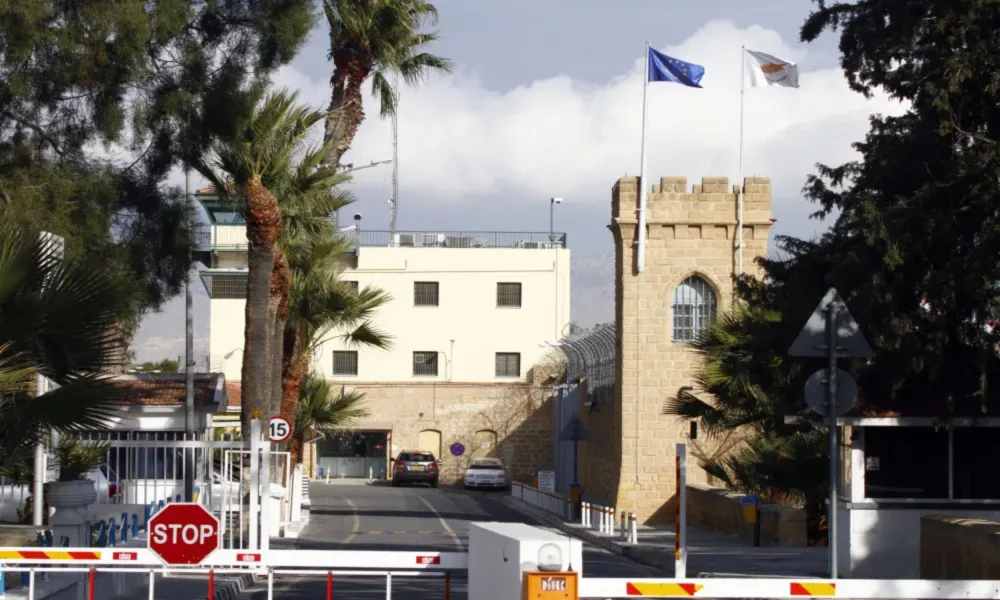

The Nicosia Assize Court has ruled that prosecutors were justified in withholding some documents from defence lawyers in the case involving thousands of classified and confidential files found at the home of a Central Prisons chief warden in 2024.
In an interim ruling delivered on Tuesday, the court settled a dispute over which documents should be provided to the defence teams of the eight defendants and which may be withheld while remaining available for controlled inspection.
The court upheld the prosecution's approach of dividing the material into categories. Some documents will be provided in full, others will be disclosed with personal data or other information redacted, while a third category will not be handed over because it concerns national security or the security of the Central Prisons.
Regarding the documents withheld from the defence, the court said the prosecution's refusal to provide the disputed material was justified after each category had been assessed separately.
Eight defendants in the case
The case dates back to April 2024, when police searched the home of a Central Prisons chief warden in connection with other suspected offences and found thousands of documents at the property.
The eight defendants include former Central Prisons director Anna Aristotelous, former deputy director Athina Demetriou, the chief warden at whose home the documents were found and five other members of staff.
The Assize Court's ruling also disclosed information about the nature of some of the documents that had not previously been made public.
Evacuation and security information
One category of documents withheld from the defence contains information about Central Prisons evacuation plans for emergencies and the prison's security systems.
The material also contains references to the operation and malfunctioning of security systems, as well as instructions concerning the transfer of convicted prisoners.
The information was considered particularly sensitive because its disclosure could potentially create security risks.
Another category contains information about weapons held by Central Prisons personnel, including details of which members have firearms licences.
Documents concerning the witness protection programme are also included, with information on security measures applied to protected witnesses and problems encountered during their implementation.
Police correspondence also withheld
A separate category concerns correspondence between a specific police officer and the Central Prisons relating to a particular criminal case.
The defence had requested the documents partly because they had previously been provided to a criminal investigator.
The court nevertheless ruled that the documents should not be placed in the possession of defence lawyers because of public-interest considerations.
‘Restriction on access, not knowledge’
Although certain documents will not be physically handed over, defence lawyers will still be permitted to inspect them.
The court ruled that inspection must take place without a police officer present in the room, and lawyers will be allowed to take notes.
They will not, however, be permitted to use technology to reproduce the documents, including by photographing them.
The court explained that controlled inspection allows the defence to learn the contents while reducing the risks associated with possessing copies that could be reproduced accurately and multiple times.
“The restriction concerns the form of access, not the ability to know the main content,” the ruling states.
Court relies on Article 7(4)
Central to the ruling was Article 7(4) of the Criminal Procedure Law.
The provision allows access to parts of statements and documents gathered during an investigation to be restricted, provided the right to a fair trial is not affected, where disclosure could seriously endanger another person's life or fundamental rights.
Access may also be restricted where this is considered strictly necessary to protect an important public interest, where disclosure could jeopardise an investigation or where it could seriously damage the national security of the Republic of Cyprus.
The court found that the prosecution's handling of the disputed material fell within the circumstances provided for under the legislation.
Fifth defendant seeks suspension of prosecution
Following the reading of the interim ruling, Giorgos Papaioannou, defence lawyer for the fifth defendant, informed the court that he had written to the Attorney General seeking the suspension of the criminal prosecution against his client.
Papaioannou said the request was based on a series of grounds set out in the letter.
Prosecutor Vasilis Bissas confirmed that the letter had been received and said the Legal Service would respond to the request.