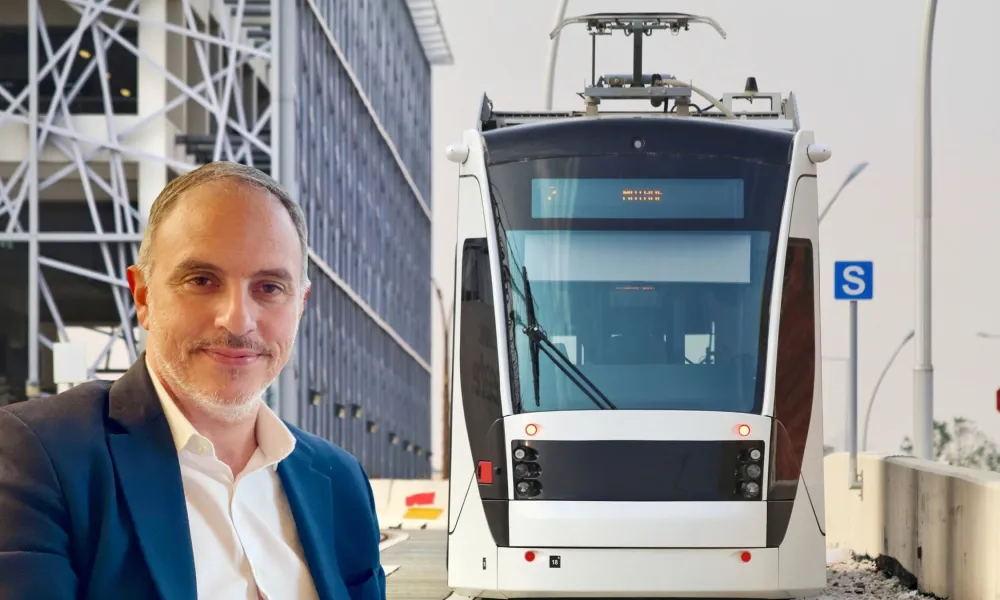

Nicosia Mayor Charalambos Prountzos has called for a serious assessment of a tram network for the capital, arguing that the long-running debate over the idea should move beyond discussion and towards concrete decisions.
In a social media post, Prountzos said previous studies had already shown that a tram system could serve Nicosia's main high-traffic corridors and should be reconsidered as part of the city's long-term transport planning.
The mayor pointed to the performance of the existing bus network, noting that public buses account for only 4%-5% of all journeys despite more than €1 billion having been spent on the system since its introduction in 2010.
According to Prountzos, the problem is not limited to bus contracts but also reflects inadequate supporting infrastructure, including the absence of a comprehensive citywide network of dedicated bus lanes. He added that, in most cases, bus journeys remain significantly slower than travel by private car.
Fragmented authority
Prountzos also criticised what he described as a fragmented system of responsibilities, with public transport contracts handled by the Transport Ministry, traffic management overseen by the Public Works Department and major planning projects falling under separate authorities.
He argued that a tram system could provide an alternative approach to public transport, with buses continuing to play a complementary role.
Earlier studies commissioned by Nicosia Municipality examined a tram line of just over 14 kilometres, with a subsequent extension of about six kilometres, bringing the potential network to around 20 kilometres.
High investment cost
The mayor estimated construction costs at €25 million to €30 million per kilometre, implying a total investment of roughly €500 million to €600 million.
Prountzos said lower-cost electricity from renewable energy sources could improve the financial viability of such a system, linking the proposal to the municipality's "Lefkothea" Energy Community initiative.
With planning under way for public transport contracts covering the 2030-2040 period, he argued that now was the appropriate time to examine alternatives.
Time to talk
"We are not being frivolous when we say we will build a tram. What we are saying is that now is the time for a serious examination of the issue."
Prountzos said the municipality was seeking a cooperative relationship with the Transport Ministry rather than a confrontation, adding that the issue had recently been discussed with the transport minister.
He also warned that traffic congestion carries wider costs for public health, the economy and quality of life, and urged authorities to begin planning major transport projects ahead of the next cycle of European co-financing programmes.
"Matters that have been pending for years must be closed," he said, asking: "What exactly are we waiting for to intervene?"