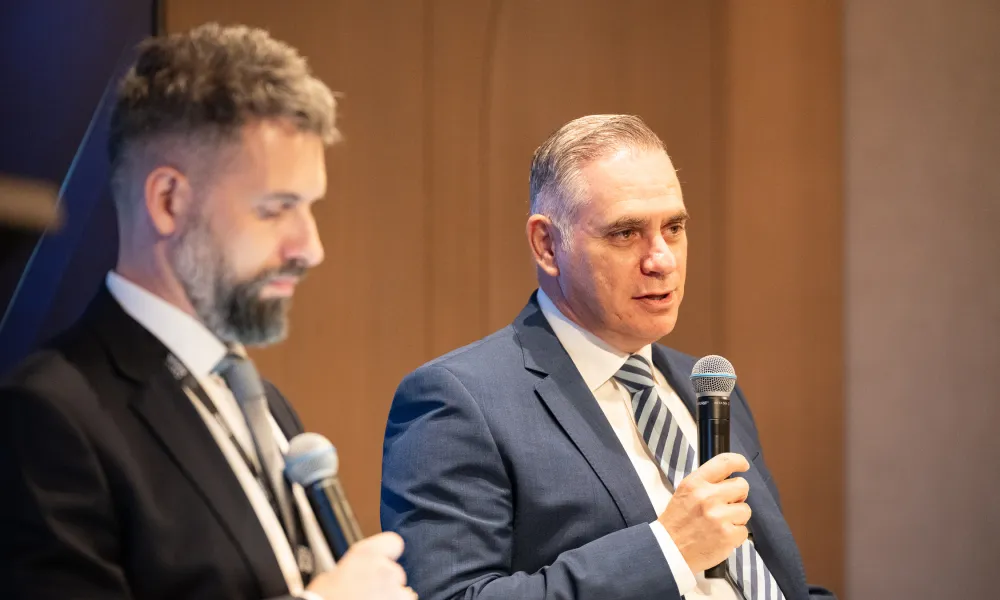

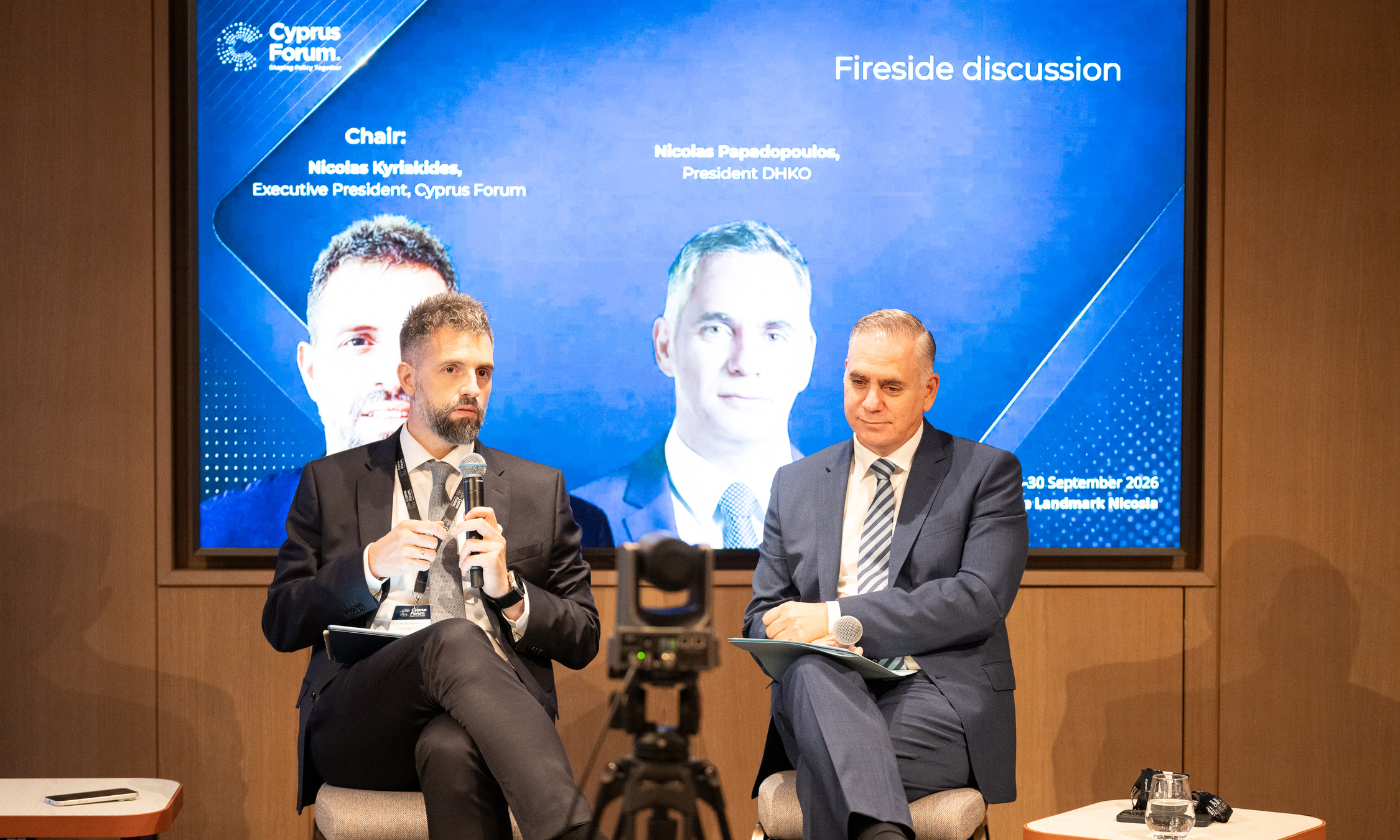
The continuation of the Republic of Cyprus is the key safeguard for the country's future, DIKO leader Nikolas Papadopoulos said on Tuesday, arguing that any Cyprus settlement must result in a functional and sustainable state.
Speaking at the Cyprus Forum in Nicosia, Papadopoulos said:
"If the state is paralysed, if the state that we will have after the solution of the Cyprus problem collapses, we cannot turn into Palestinians and ask for a state."
He said Greek Cypriots should not face the same fate as the Palestinians and argued that the continuity of the Republic of Cyprus was what could protect them from such a scenario.
Papadopoulos said a settlement ensuring a functional state was theoretically achievable but depended on Turkey, which he described as being further away than ever from a Cyprus solution.
He also argued that any settlement must fully respect European principles and values.
"We cannot accept an apartheid system, such as the one Turkey wants to implement in Cyprus," he said, warning that veto powers capable of paralysing state institutions would create new risks for the country.
The DIKO leader called for greater European Union involvement in the Cyprus issue, stronger ties with regional partners, the United States and Israel, continued cooperation with Greece and a broader upgrade of Cyprus' geostrategic role.
According to Papadopoulos, only sustained international pressure could persuade Turkey to abandon positions that, in his view, obstruct a settlement.
Referring to Turkey's regional role, he said Ankara was currently involved in three wars in three different countries, possessed NATO's second-largest army and maintained more military bases abroad than any other country.
He also claimed that Turkish President Recep Tayyip Erdogan was steering Turkey towards nationalist fundamentalism, making the country more dangerous and more confrontational towards Cyprus and Greece.
‘The Cyprus issue will not be solved without international support’
Papadopoulos cited developments in Pyla and Turkish objections to the Great Sea Interconnector (GSI) project as examples of Turkish assertiveness.
"We see it every day on the Green Line," he said.
"Without the support of the European Union, without the support of these countries, the Cyprus problem will not be solved."
He argued that the dispute remained unresolved because Turkey sought direct or indirect control over the whole of Cyprus and said no solution was possible unless Ankara changed that position.
GSI must move forward
Papadopoulos backed the Greece-Cyprus electricity interconnection project, describing it as being in the public interest and of major geopolitical significance.
He said the project would strengthen Cyprus' energy security, particularly given the ageing Dhekelia power station and the expected loss of around 600 megawatts of generating capacity.
"This deficit cannot be covered either by renewables, or by batteries, or by anything," he said.
According to Papadopoulos, the interconnector would also help reduce electricity costs in Cyprus, one of Europe's most expensive electricity markets for businesses.
He said delays had increased the estimated cost of the project from €1.9 billion to around €2.3 billion-€2.4 billion, but maintained that the charge imposed on Cypriot consumers would remain unchanged at 0.7 cents per kilowatt-hour.
Papadopoulos said private investors would not commit hundreds of millions of euros without first assessing the project's viability and argued that some opposition stemmed from existing monopolies and oligopolies in the electricity market, as well as from Turkey's opposition to a stronger geopolitical role for Cyprus.
"Therefore, the project will move forward. It must move forward because it is first and foremost a European obligation, but also because important countries in the region want it," he said.
Committee broadcasts and legal service reform
Asked about live broadcasts of parliamentary committee meetings, Papadopoulos expressed support for greater transparency but warned of the risk of political grandstanding.
He said full start-to-finish coverage of committee proceedings was technically feasible and could strengthen public scrutiny, although it could also encourage what he described as a "competition of populism and soundbites".
The DIKO leader also addressed proposals to separate the advisory and prosecutorial functions of the Law Office, a reform recommended by GRECO.
He said draft legislation had been prepared but that further discussion was needed on key issues, including how the Attorney General would explain decisions to discontinue criminal investigations or prosecutions.
Papadopoulos described the proposed reform as one of the most significant legislative initiatives expected to come before parliament in the near future.
Source: CNA