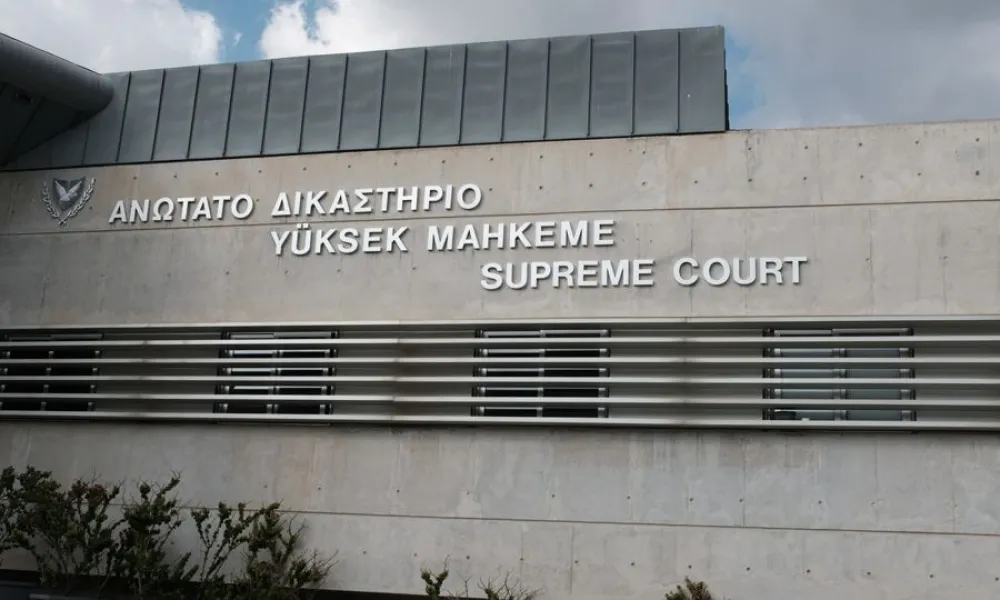

Cyprus' Supreme Constitutional Court has ruled unconstitutional a law passed by the House of Representatives seeking to protect indefinite-term teachers from termination of employment on grounds of redundancy.
In its opinion, dated 27 November 2026, the court found that the legislation interfered with powers constitutionally reserved for the executive branch, violating the principle of separation of powers.
The ruling follows a referral by the President of the Republic under Article 140 of the Constitution, after he sought the advice of the Attorney General and returned the legislation to Parliament for reconsideration. The House subsequently rejected the referral, prompting the President to bring the matter before the court.
The legislation originated from a bill proposed by AKEL MPs and approved by the House plenary on 3 April 2026. Its stated aim was to eliminate what its supporters considered unequal treatment between indefinite-term teachers and other indefinite-term employees in the public service, who are protected by law against redundancy.
Court stresses need for flexibility in education staffing
The President's side argued that indefinite-term teachers operate under a distinct employment framework because of the particular nature of their duties.
It maintained that teachers are employed according to specific specialisations and cannot necessarily be reassigned to teach other subjects. This, it argued, makes flexibility essential when managing staffing levels across the public education service.
In its assessment, the court noted that indefinite-term teachers work under written contracts, with their terms determined by the Minister of Education in consultation with the Minister of Finance. Under the existing legal framework, their employment may be terminated on grounds of redundancy.
The court held that Parliament cannot, as a general rule, impose a blanket prohibition on redundancies that would oblige the executive to retain employees it may no longer be able to deploy effectively to meet changing service requirements.
EU case law recognises limits to employment protection
The court also referred to rulings by the Court of Justice of the European Union, acknowledging that employment stability is an important element of worker protection.
However, it stressed that such protection does not amount to an absolute prohibition on terminating indefinite-term employment contracts for objective reasons.
The court further noted that European case law recognises the need for flexibility in education systems, allowing governments to adjust the number of teachers in line with the actual needs of schools.
Court refers to previous ruling in 2023
The opinion also examined similar legislation introduced in 2022, which was declared unconstitutional by the Supreme Court in June 2023.
Although the court rejected the argument that the earlier ruling created an issue of res judicata, given that the previous case concerned legislation with a broader scope, it found that the legal principle established in that judgment constituted binding judicial precedent.
The court stressed that constitutional review is not concerned with assessing whether the legislature's objectives are desirable or appropriate, but solely with determining whether legislation is compatible with the Constitution.
It therefore declined to examine arguments concerning equality between different categories of teachers and other employees, focusing instead on the constitutional question of the separation of powers.
The judges unanimously concluded that the legislation was unconstitutional.
Existing redundancy framework remains in force
The court's opinion will be communicated to the President and the House of Representatives.
As a result, the existing legal framework, which allows the employment of indefinite-term teachers to be terminated on grounds of redundancy, will remain in force.