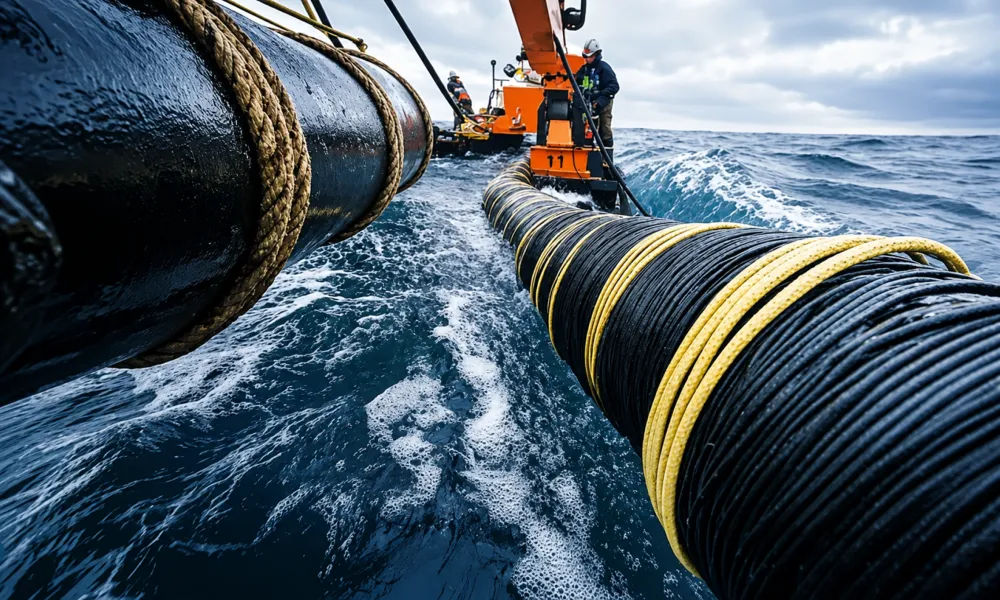

The United States has reportedly launched a diplomatic effort to ensure the uninterrupted continuation of survey work for the Great Sea Interconnector (GSI) linking Greece and Cyprus, according to a report by Proto Thema.
At the same time, the French research vessel Abeille Marengo is expected to return to the survey area in the coming hours following intensive diplomatic consultations.
According to the report, the United States has been conveying through its diplomatic missions in Ankara, Nicosia and Athens the position that "for projects of this kind, no side is justified in raising an objection."
Because the communication is being delivered orally in Ankara, the message is expected to be conveyed by US Ambassador Tom Barrack.
French communication with Ankara
The reported US intervention follows diplomatic efforts by France aimed at ensuring that the surveys resume without further obstacles.
At the centre of discussions is a written notification sent to countries in the region, including Turkey, following Greece's authorisation of the survey work.
According to a source cited by Proto Thema, the communication was purely informative in nature and did not constitute a request for permission or consent.
The same source stressed that informing third countries does not amount to recognising their maritime jurisdiction.
The precise contents of the French communication with Ankara remain unknown, including whether details of the survey vessel's route were included.
NAVTEX notices and Turkey's response
The company contracted to carry out the surveys submitted licensing requests only to Greece and Cyprus, whose authorities issued the relevant NAVTEX notices on Friday.
Turkey responded by issuing a counter-NAVTEX, reiterating its own claims regarding the maritime areas where the work is planned.
According to the Greek report, Ankara may attempt to use the French notification as evidence that it has a role in the licensing process.
Competing legal interpretations
The written notification has also sparked debate over its implications under international law.
One legal interpretation argues that notifying a third country is not required and could set a precedent by creating the impression that another state has a role in areas where maritime claims overlap.
A different interpretation holds that surveys for the laying of undersea cables do not require the consent of third states and that such notifications are merely practical arrangements that do not imply recognition of any rights.
The expected return of the Abeille Marengo is likely to mark the next stage of the project, with attention now focused on how Turkey responds.