
The global economy is facing one of the most severe energy crises of recent decades. The wars in Ukraine and the Middle East have damaged production facilities, refineries and oil transport networks, reducing fuel supplies and causing chain reactions in the prices of goods and services.
For Cyprus, the consequences are particularly severe. The economy depends almost entirely on imported petroleum products for transport, while electricity generation continues to rely primarily on fuel oil and diesel. As a result, every increase in international oil prices affects vehicle transport, electricity generation, industry and consumer spending simultaneously.
The energy destruction caused by two wars
In Russia, Ukrainian attacks on refineries have significantly reduced fuel production. At the same time, the conflicts in the Middle East have affected oil production and its transportation through the Strait of Hormuz.
According to the October 2026 report of the International Energy Agency (IEA), global diesel exports in September were down by 700,000 barrels per day compared with a year earlier. Export losses from Russia and the Middle East reached a combined 1.3 million barrels per day, although some of these losses were offset by supply from other markets.
Exports of refined petroleum products from the Gulf fell to 1.9 million barrels per day, compared with 4.7 million before the war. This represents a shortfall of 2.8 million barrels per day. The reduction does not mean an equivalent quantity of oil has been permanently lost. It reflects losses in refining capacity, reduced production and transportation difficulties.
Pressure on the market pushed international diesel prices above $200 per barrel in September, while North Sea Dated crude traded near $134 per barrel in October.
Cyprus' double dependence
The Cypriot economy faces the energy challenge from two directions.
According to the European Commission, 85.2% of Cyprus' total energy consumption in 2024 came from oil and petroleum products, while dependence on imported energy reached 87.7%.
In electricity generation, despite progress in renewable energy, 72.6% of net electricity production in 2025 still came from conventional and other non-renewable sources.
In practical terms, higher oil prices increase both the cost of supplying power stations and the transportation costs of goods. A bakery, for example, pays more for electricity, for transporting flour and for distributing bread. Farmers, manufacturers, hotels and retailers face similar pressures.
The effects are already visible in inflation.
In September 2026, Cyprus' national consumer price index increased by 3.7%, while petroleum products recorded an annual increase of 25.8%. Harmonised inflation reached 5.2%, with energy prices rising by 20.2%.
The paradox of wasted solar energy
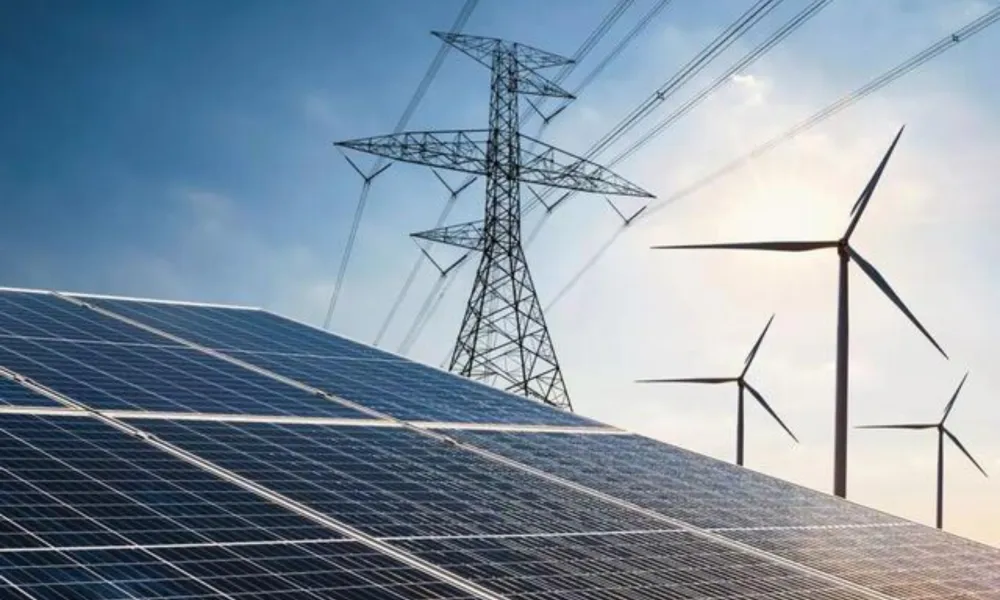
While Cyprus pays a high price for imported fuels, significant quantities of electricity generated by photovoltaic systems go unused.
According to figures published in 2026, around 306 gigawatt hours of solar electricity generation were lost during 2025 because of curtailments. The Cyprus Institute estimates that these reductions represented 22% of the potential output from renewable energy sources.
The problem stems from the limited capacity of the electricity grid to absorb photovoltaic generation, particularly during midday hours when sunshine is abundant but consumption remains relatively low.
The result is paradoxical. The country discards available solar energy while continuing to consume imported fuels to meet its needs.
Batteries in 2027: A realistic solution
The installation of large-scale electricity storage systems is one of the most immediate solutions.
In June 2026, contracts worth approximately €50 million were signed for battery systems with a combined output of 120 megawatts and storage capacity of around 400 megawatt hours. The aim is for them to be operational before the summer of 2027.
Such systems will allow part of the surplus solar generation produced during the day to be stored and then supplied to the grid during the afternoon and evening.
Their economic significance can be illustrated through a simple calculation. A system with a capacity of 400 megawatt hours, operating 300 full charging cycles annually, could deliver around 108 gigawatt hours of electricity per year, assuming overall efficiency of 90%.
This quantity is equivalent to roughly 1.9% of Cyprus' annual net electricity generation in 2025.
If this energy replaced generation from fuel oil or diesel, consumption of imported fuels would decline accordingly. This is an indicative scenario rather than a guaranteed saving, as the outcome depends on available solar production, the operation of conventional generating units and the needs of the electricity network.
Storage alone cannot eliminate dependence on oil. It can, however, significantly reduce the waste of clean energy.
What other measures are needed?
Beyond batteries, a comprehensive energy strategy is required.
The first priority should be upgrading the electricity grid so that it can absorb more photovoltaic generation. Storage should also be expanded to private photovoltaic parks, industrial facilities and, where technically feasible, residential systems.
A second intervention is to accelerate the introduction of natural gas, provided that the economic benefits are clearly demonstrated. It could temporarily reduce reliance on fuel oil, although it would not eliminate exposure to international fossil fuel prices.
At the same time, electricity interconnection with other countries, such as the GSI project, could reduce Cyprus' energy isolation by providing additional options for importing and exporting electricity and, above all, introducing greater competition into the market.
In transport, the promotion of electric vehicles, public transport and more energy-efficient infrastructure could gradually reduce petrol and diesel consumption.
Finally, targeted protection is needed for vulnerable households, without broad-based subsidies that encourage continued consumption of imported fuels.
Energy security as an economic priority
The two wars demonstrate that energy dependence is a serious economic risk, particularly for small and isolated markets such as Cyprus.
Cyprus cannot influence international oil prices. It can, however, reduce its dependence on them.
If the first large-scale storage systems become operational during 2027 and additional investments follow, the country will be able to utilise a greater share of the solar energy that is currently being wasted.
The answer lies not exclusively in securing cheaper imported fuels, but in reducing the need to consume them in the first place.
That would provide a meaningful response both to high energy costs and to the vulnerability of the Cypriot economy to international crises.