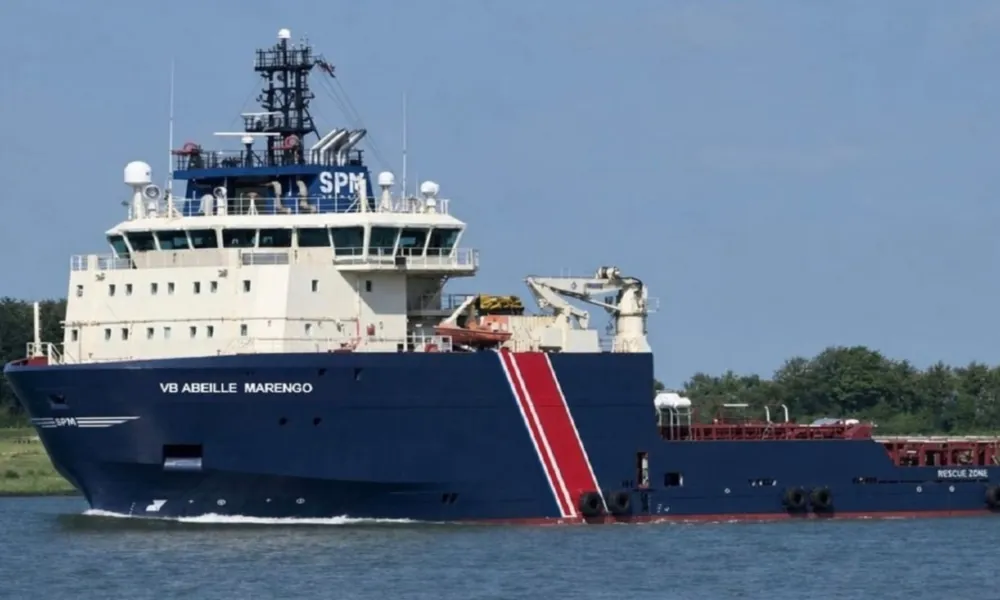

The launch of seabed surveys along the route of the Great Sea Interconnector (GSI) electricity interconnection cable by the French-flagged research vessel VB Abeille Marengo has become the focus of attention in Athens, Nicosia and Ankara, following the issuance of the necessary NAVTEX notices by Greece and Cyprus for survey operations in the Eastern Mediterranean.
The issuance of the NAVTEX notices was followed by the expected reaction from Turkey, which issued its own NAVTEX and was accompanied by a relatively restrained statement from Turkish Foreign Minister Hakan Fidan.
The issue of the NAVTEX notices concerning the electricity interconnection cable surveys has been resolved, Turkish diplomatic sources say, with Fidan telling Greece's Kathimerini newspaper that "everything is normal, everything is fine."
Commenting on Fidan's remarks, Greek diplomatic sources said: "Turkey's internal management of the issue does not concern us. Greece is the only licensing authority, it acted as required under international law and will continue to do so."
On Friday, Greece and Cyprus coordinated the licensing of the survey activities, sending a message that the Crete-Cyprus electricity interconnection project is moving ahead according to schedule.
Ankara's measured response has fuelled expectations that the surveys may proceed without significant interference on the ground. At the same time, diplomatic and political consultations remain under way, as the coming period is viewed as critical in determining whether the dispute will remain confined to public statements or move offshore and take on a military dimension.
Energy expert Charles Ellinas appears cautiously optimistic.
Speaking to the Cyprus News Agency (CNA), he said Turkey's stance in recent days suggests that it is "proceeding in a measured way", increasing the likelihood that the surveys will continue normally.
According to Ellinas, Turkey undertook the moves that were expected, including issuing a counter-NAVTEX and deploying unmanned aerial vehicles in the area, but has so far refrained from taking more forceful action that could trigger a serious crisis.
He believes the behind-the-scenes diplomatic contacts of recent weeks may have contributed to easing tensions.
At the same time, he noted that Turkey is unlikely to publicly abandon positions it has already articulated, as it has invested political capital in the issue domestically. However, he considers it likely that Ankara will continue to react in a limited manner, effectively allowing the surveys to proceed.
From the Greek side, the government reiterated over the weekend that the process is progressing normally and according to plan.
Prime Minister Kyriakos Mitsotakis described the issuance of the work permit and the related NAVTEX as important steps towards implementing the project, stressing that Greece and Cyprus are the only countries authorised to license the specific surveys.
He added that the GSI is a project of common European interest, carrying strategic importance for energy security, connectivity and regional stability.
A similar message was delivered by Deputy Minister to the Prime Minister Thanasis Kontogeorgis, who said the surveys are taking place in areas where sovereign rights are exercised exclusively by Greece and the Republic of Cyprus.
He also stressed that the Greek side is acting calmly and with full operational preparedness, without underestimating any possible scenario.
Turkey, meanwhile, argues that the planned activity concerns part of a continental shelf area that it has declared to the United Nations, and insists that its prior approval is required.
The Turkish Foreign Ministry stated that the NAVTEX notices issued by Greece and the Republic of Cyprus have been cancelled by Ankara and vowed to continue protecting what it describes as its sovereign rights.
In response, Greek diplomatic sources emphasised that the international law of the sea is unequivocal and that the operations of the French vessel will proceed in accordance with operational planning in Greek and Cypriot territorial waters and in areas of the Greek and Cypriot continental shelves.