
Rising interest in Cyprus' Technical and Vocational Education system is creating an unexpected challenge, with dozens of students unable to secure places in their preferred specialisations, even when they achieve excellent academic results.
Parents and students have voiced frustration that demand for certain technical fields now exceeds available capacity, leaving many applicants disappointed despite strong performance records.
Speaking to Politis, Elias Markatzis, Director of Secondary Technical and Vocational Education, confirmed that the issue has become increasingly evident over the past two to three years as more students pursue technical careers.
Success brings new pressures
Markatzis described the trend as a positive development, reflecting growing recognition of the value of technical education and skilled trades.
He noted that the labour market faces strong demand for professions such as electricians, plumbers and other technical specialists, some of which are at risk of labour shortages despite growing industry needs.
However, the surge in applications has created a new problem. "The increase in demand means we are forced to reject students, often excellent students, because there are simply no available places," he said.
Workshop limits cannot be ignored
While Technical Schools have increased enrolment where possible, Markatzis stressed that there are practical constraints.
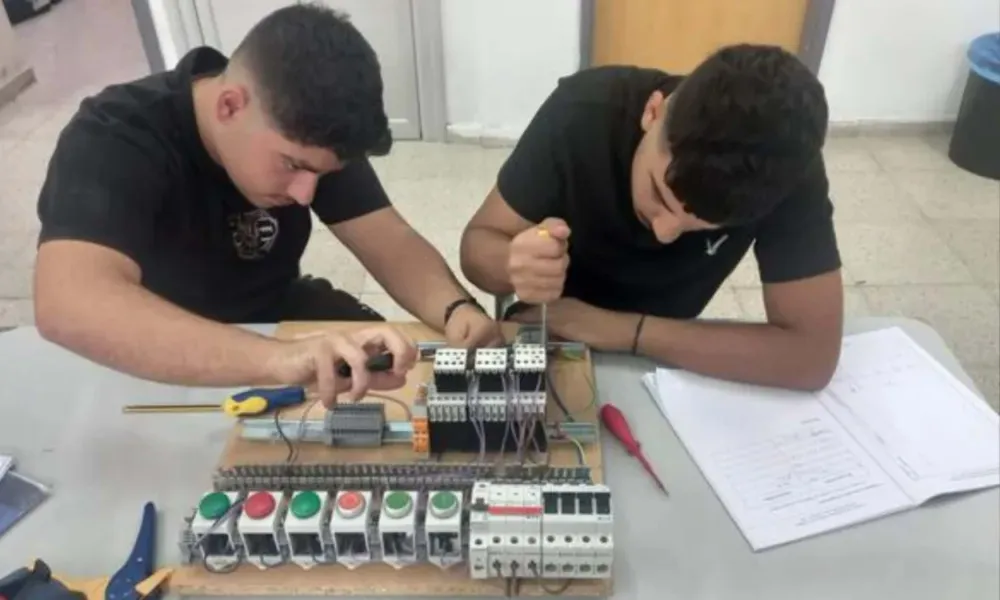
Most programmes involve laboratory-based training, where class sizes must remain limited for safety reasons and to maintain educational quality. "We cannot double capacity overnight. In workshops we cannot have more than 14 or 15 students per class," he explained.
The greatest pressure this year is being felt in Nicosia district.
Although certain specialisations are also oversubscribed elsewhere, in the capital the problem affects almost every field of study.
Nicosia's two largest Technical Schools, known as the First and Third Technical Schools, are already operating at capacity, with approximately 750 and 800 students respectively.
According to Markatzis, efforts continue to increase student numbers where feasible, but there are clear limits that cannot be exceeded.
Selection based on specific criteria
Markatzis stressed that admissions are not decided arbitrarily but are based on defined and measurable criteria.
These include:
- Academic performance
- Social criteria
- Orphaned students
- Students from large families
Despite the application of these criteria, high demand means many students fail to secure a place in their first-choice specialisation.
Call for new Technical Schools
Asked whether existing schools could be expanded, Markatzis said current facilities have already been stretched to their limits.
The long-term solution, he argued, is the construction of new Technical Schools.
Work is already under way on two new large Technical Schools in Limassol and Larnaca, which are expected to welcome their first students in September 2027 and September 2028 respectively.
At the same time, plans are progressing for a new Technical School in southern Nicosia.
Following a political decision to proceed, a plot of land has been identified and the necessary assessments are currently being carried out before tenders can be issued for the project's design phase.
Markatzis acknowledged that the new school will not provide an immediate solution to Nicosia's capacity problems because of the time required to complete such a project.
He emphasised, however, that the political decision to proceed is significant after years of requests from the Technical Education Directorate.
He also noted that the new schools in Larnaca and Limassol are expected to ease pressure on Nicosia to some extent, as students living in surrounding areas may find the new facilities equally accessible, or even closer, than the capital's existing Technical Schools.