
The latest escalation involving Iran and the Strait of Hormuz, and particularly the uncertainty over what comes next, with the worst-case scenario being a prolonged period of instability, has revived fears of a new energy shock at a time when the Cypriot economy is still absorbing the effects of the spring surge in prices.
The renewed uncertainty in energy markets threatens expectations of a decline in living costs and could reignite strong inflationary pressures both internationally and locally.
Finance Minister Makis Keravnos said yesterday that developments are being closely monitored and that authorities are adopting a wait-and-see approach, while stressing that recent events are inflationary in nature.
Measures aimed at supporting household incomes, including reduced taxation on fuels and essential goods, remain in force.
The agreement previously reached between the United States and Iran had raised hopes for a gradual normalisation of conditions in the Middle East and, consequently, lower oil and natural gas prices.
For Cyprus, the situation is particularly significant.
Recent inflation data show that the cost of living remains elevated, with households continuing to face pressure from energy, transport and essential goods prices.
A fresh increase in global oil prices could quickly filter through to Cyprus via fuel costs, electricity prices and transportation expenses, affecting almost every aspect of economic activity.
The scenario of future European Central Bank interest rate increases also remains a concern.
These worries are reinforced by scenarios examined by the European Commission's Joint Research Centre (JRC).
According to its analysis, a prolonged disruption of energy flows through the Strait of Hormuz could push oil prices as high as $180 per barrel, causing a significant slowdown in growth and a new surge in inflation across the European Union.
The JRC estimates that EU inflation could reach 3.5%, while economic growth would suffer a substantial setback.
The Central Bank of Cyprus has already warned about the risks posed by instability in the Middle East.
In its latest forecasts, the bank revised growth expectations downward and inflation projections upward, citing geopolitical developments and higher energy prices as factors likely to weigh on economic activity.
The bank forecasts economic growth of 2.5% in 2026 and inflation of 3.2%, warning that downside risks to growth and upside risks to inflation remain.
The sectors considered most exposed are tourism, shipping, construction and real estate.
These industries depend heavily on the international economic environment, foreign investment and the smooth functioning of transport and trade routes.
According to the Central Bank, impacts could be felt both through weaker external demand and higher operating costs.
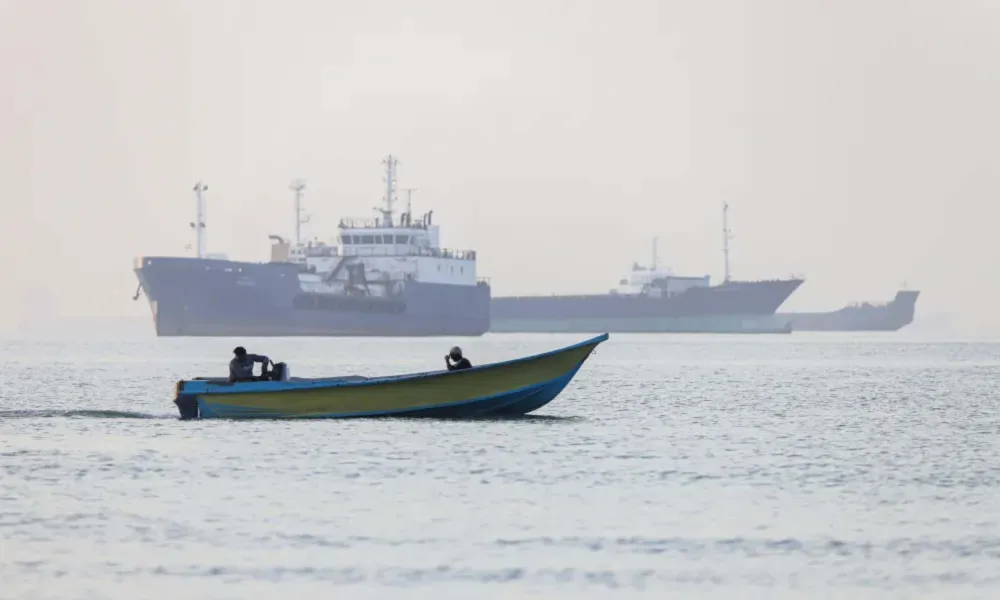
Concerns over the Strait
The shipping industry is also increasingly concerned.
Alexis Iosifides, Director General of the Cyprus Shipping Chamber, told Politis radio programme Second Look that any restrictions or charges imposed on vessels passing through the Strait of Hormuz would set a dangerous precedent for global trade.
He stressed that the strait constitutes international waters and that freedom of navigation must be guaranteed without unilateral interventions by states.
According to Iosifides, recent announcements regarding renewed restrictions and measures have caught the shipping community by surprise and created fresh obstacles for maritime transport.
He also expressed concern about the safety of seafarers, recalling previous incidents in which crews became trapped in the region.
The Strait of Hormuz plays a critical role in global trade, carrying a significant share of the world's oil and liquefied natural gas exports.
Any disruption increases risk premiums, transport costs and ultimately the price of goods reaching consumers.
For this reason, developments are being closely watched by governments, central banks and businesses worldwide.
Escalating conflict
For a third consecutive night, US forces struck targets in Iran, while Iranian missiles hit two tankers in the Strait of Hormuz, killing one sailor.
At the same time, President Donald Trump reimposed a blockade on Iranian shipping and announced a 20% transit charge on cargo passing through the strait.
Asked about a possible agreement with Iran, Trump told reporters in the Oval Office on Monday: "Yes, I think an agreement is achievable, certainly, I believe so."
US armed forces launched another wave of strikes against Iranian targets on Trump's orders.
According to Iran's Fars News Agency, explosions were heard in several parts of the country, including Bushehr, home to a Russian-operated nuclear power station, as well as on the islands of Kish and Qeshm.
Video verified by Reuters showed a fire at a port facility on Kish Island.
In Hormozgan Province, a local official reported that three people were killed in a US strike.
Meanwhile, US Central Command announced the first operational use of Corsair autonomous underwater vehicles during an attack on the naval base at Bandar Abbas.
Tankers targeted
Tensions escalated further when two tankers operated by ADNOC L&S, a subsidiary of the United Arab Emirates' state oil company, were struck by Iranian cruise missiles while transiting the Strait of Hormuz in Omani territorial waters.
The vessels, Mombasa B and Al Bahyah, suffered what ADNOC described as significant damage.
The company condemned the attack on ships and seafarers.
One Indian sailor was killed and ten others injured, two of them seriously, among a total crew of 46 across the two vessels.
India's Foreign Ministry lodged a formal protest with Tehran.
In a separate incident off the coast of Oman, the Norwegian chemical tanker Stolt Magnesium, owned by Stolt-Nielsen, struck an unidentified explosive device and caught fire, though no casualties were reported.
Blockade sparks reactions
Trump announced the restoration of a blockade targeting Iranian vessels and their customers, while stating that the Strait of Hormuz would remain open to ships from other countries in exchange for a 20% fee on cargoes transiting the waterway.
In a post on Truth Social, the US president wrote that the United States would now be recognised as the "guardian of the Strait of Hormuz" and should be compensated for providing security to maritime traffic.
Earlier, in an interview with Fox & Friends, he had said the US intended to "hold" and possibly "manage" the strait, describing the role as a "guardian angel" for the region.
When asked again in the Oval Office whether a peace agreement with Iran remained possible despite the latest attacks, Trump replied that he still believed such an agreement could be achieved.
Iranian Foreign Minister Abbas Araghchi responded by saying that Tehran remained the "historic guardian" of the strait and criticised Trump's proposed 20% transit levy as excessive.
German shipping giant Hapag-Lloyd rejected the proposal, calling it "fundamentally wrong."
Meanwhile, the European Union Aviation Safety Agency (EASA) advised airlines to avoid airspace over Bahrain, Kuwait, Qatar, the United Arab Emirates and parts of the Gulf of Oman until 29 July.
The regional tensions have also spread to Yemen, where the Iran-aligned Houthis launched missile attacks against Saudi Arabia, effectively ending a ceasefire that had been in place since 2022 after accusing Riyadh of bombing Sanaa airport.