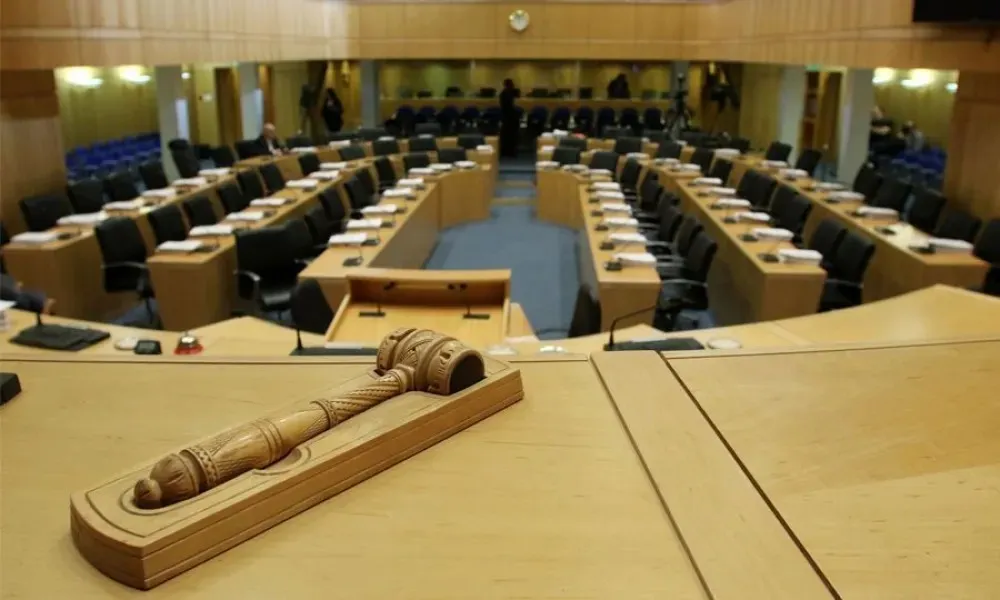
For the first time in history, the number of women exceeded 10, while of the eight female MPs elected in 2021 who sought re-election, six were re-elected.
These are Annita Demetriou (DISY) in the Larnaca district, Fotini Tsiridou (DISY) and Marina Nicolaou (AKEL) in Limassol, Savia Orfanidou (DISY), Christiana Erotokritou (DIKO) and Irene Charalambidou (ALMA) in Nicosia.
As for the new female presence entering parliament, from AKEL were elected Argentoula Ioannou in Limassol and Anastasia Hasikou in Kyrenia. From ALMA, Theodoulitsa Drousiotou was elected in the Famagusta district, while from Direct Democracy, also in that district, Ntaiana Konstantinidou was elected.
The election of a female MP in Paphos is also of particular political significance, happening for the first time. DISY secured a second seat in the district, with Nicoleta Constantinou entering parliament.
Orfanidou first in preference votes
The increase in the number of women in the new parliament is not only reflected in the total number of seats, but also in the preference votes received by several candidates. Excluding Annita Demetriou, who as DISY leader and head of the Larnaca list did not receive preference votes, Savia Orfanidou in Nicosia recorded the highest number among elected women with 11,367 votes.
She is followed by Fotini Tsiridou in Limassol with 6,956 votes, while Irene Charalambidou ranks third with 5,938. Close behind is Christiana Erotokritou, who received 5,844 votes in Nicosia.
Next are Marina Nicolaou with 4,294 votes and Argentoula Ioannou with 3,803 in Limassol, Nicoleta Constantinou with 3,608 in Paphos, Anastasia Hasikou with 2,240 in Kyrenia, Ntaiana Konstantinidou with 1,657 in Famagusta and Theodoulitsa Drousiotou with 511, also in Famagusta.
This picture shows that, beyond the increase in women’s seats, there were also candidates who recorded strong personal performances within their party lists, in some cases in highly competitive districts.
224 female candidates
The new parliament emerges from an election in which female representation on candidate lists increased compared to 2021. In this year’s parliamentary elections, female candidates numbered 224, representing 29.7% of all candidates. In 2021, female candidates were 160, or 24.31%.
Superman lost seat internally
Of the eight women elected in 2021, two will not be in the new parliament: Rita Superman and Alexandra Attalidou.
Rita Superman’s case is different, as the loss of her seat resulted from internal party ranking. The outgoing DISY MP in Kyrenia ran again but placed second on her party list. Dimos Georgiades received 1,935 votes, while Rita Superman received 1,696. The difference that cost her the seat was 239 votes.
Attalidou out due to Volt
Alexandra Attalidou’s case is different. The outgoing MP ran again with Volt in Nicosia and received 2,701 preference votes. However, the party failed to enter parliament, meaning her personal performance was not enough to secure a seat.
Anthousi narrowly missed out
Beyond the women who were elected and the two outgoing MPs who were not, there were also candidates who recorded strong performances but did not enter parliament due to seat allocation and internal party ranking.
In Nicosia, Anastasia Anthousi (DISY) received 7,606 votes but remained outside. The final DISY seat in Nicosia went to Charalambos Petrides, who received 8,252 votes. The difference between them was 646 votes.
Historic high, but still below one fifth
The presence of 11 women in the new parliament constitutes a historic high for Cyprus. In percentage terms, women now hold 19.6% of the 56 seats. This is an increase compared to 2021, when eight women were elected, representing 14.3% of the total.
In 2016, 10 women were elected (17.9%), while in 2011 there were seven women MPs (12.5%). This year’s result is therefore the best to date, but still far from equal representation. In other words, the 2026 parliament is the most female it has ever been, but remains predominantly male-dominated.