
DISY has launched a fresh attack on the government over its handling of the Great Sea Interconnector, accusing it of allowing Greece to take the initiative while Cyprus remained absent from crucial developments.
The party described French infrastructure investor Meridiam’s agreement to acquire a 66% stake in the project company as a major European, geopolitical and energy development for Cyprus. However, it warned that the agreement alone would not guarantee the completion of the electricity link between Cyprus, Greece and Israel.
Meridiam deal creates new conditions
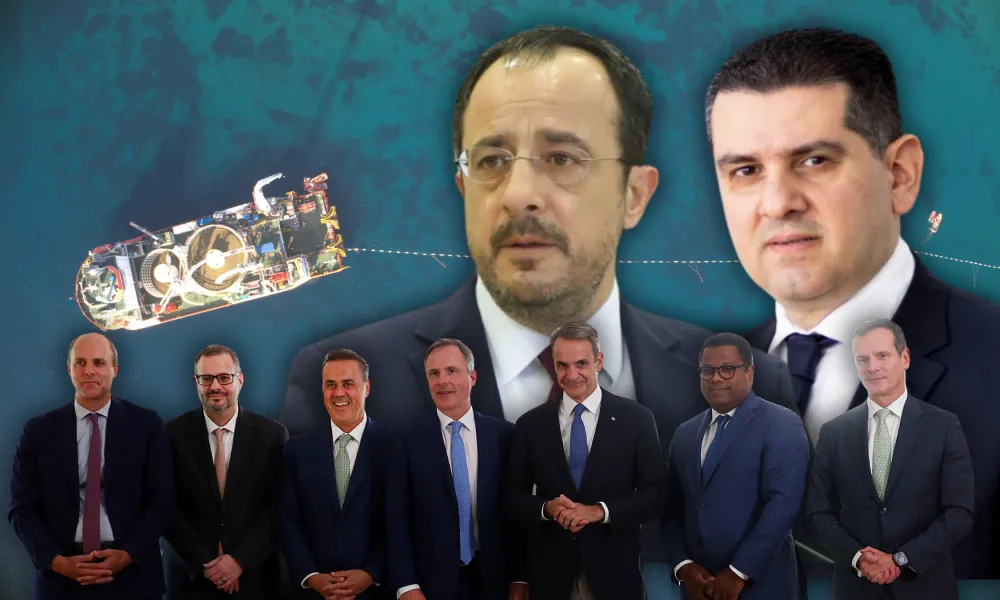
In a statement, DISY’s Government Policy Monitoring Council said Meridiam’s involvement, alongside Greek electricity transmission operator ADMIE as a technical minority shareholder, demonstrated international confidence in the project.
It also pointed to the acceleration of the €1.43 billion cable contract with French manufacturer Nexans as further evidence of the GSI’s strategic importance.
According to DISY, Meridiam has managed 130 infrastructure projects over 20 years and has assets worth €23 billion.
The party rejected AKEL’s claim that the involvement of a major private investor could create a “risk of dependency”, arguing that Cyprus needs more international partners operating within transparent frameworks.
“Cyprus does not need fewer international partners. It needs more,” the statement said.
DISY added that the interconnector was vital not only for electricity security, but also for Cyprus’ participation in regional energy planning and the India-Middle East-Europe Economic Corridor.
Government accused of losing two years
DISY accused President Nikos Christodoulides’ administration of losing two critical years through contradictory positions, disputes with Athens and disagreements between government ministers.
It argued that the latest breakthrough came through action by the Greek government and a French initiative, with Cyprus playing no meaningful role.
The party said this absence was linked to the government’s failure to invest in the project, warning that the opportunity for Cyprus to acquire a stake may now have been lost.
While thanking the Greek government for filling the gap, DISY said this could not become a permanent arrangement.
“Greece cannot continue covering the absence of effective and decisive governance in Cyprus,” it said.
DISY also claimed that the government’s position had caused a second dispute with Greece, after Cyprus previously stepped back from an agreed financial contribution.
Five steps proposed by DISY
The party called on the government to take five immediate steps:
- Seek a full briefing on the latest developments so that the President and the Energy Minister can restore Cyprus’ role in the process.
- Resolve disagreements between the Finance and Energy ministers and decide whether Cyprus will participate in the project company’s share capital and pay its agreed €125 million contribution.
- Establish a Cyprus project management team with clear terms of reference, placing the monitoring of the project, its conditions and implementation on a technocratic basis.
- Help resolve the remaining procedural issues, including possible notification and approval of the agreement by the European Commission and the issuing of a NAVTEX when circumstances allow.
- Move decisively on Cyprus’ remaining energy projects, which DISY said have also been delayed.
Further delays remain possible
DISY warned that the timetable for the GSI remained uncertain despite the Meridiam agreement.
It noted that Nexans had removed expected revenue from the project from its 2026 financial guidance, while delivery is now expected beyond the original target of late 2029 or early 2030.
According to the party, further delays could push the project’s completion beyond 2030 or even 2032 unless Cyprus takes a more active role.
Wider energy projects remain stalled
DISY said the interconnector must form part of a broader energy strategy based on three pillars: electricity networks, new energy sources and storage capacity.
It pointed to the liquefied natural gas terminal at Vasiliko, which has remained incomplete for almost two years, and said operational energy storage capacity in Cyprus remained at zero megawatts.
The party argued that completing the Vasiliko terminal could reduce electricity prices by as much as 30%, while central battery systems and photovoltaic installations with storage were also needed.
“Cyprus’ energy security is not a matter of ideology or populist slogans,” DISY said. “It is a matter of national security, economic competitiveness and social justice.”