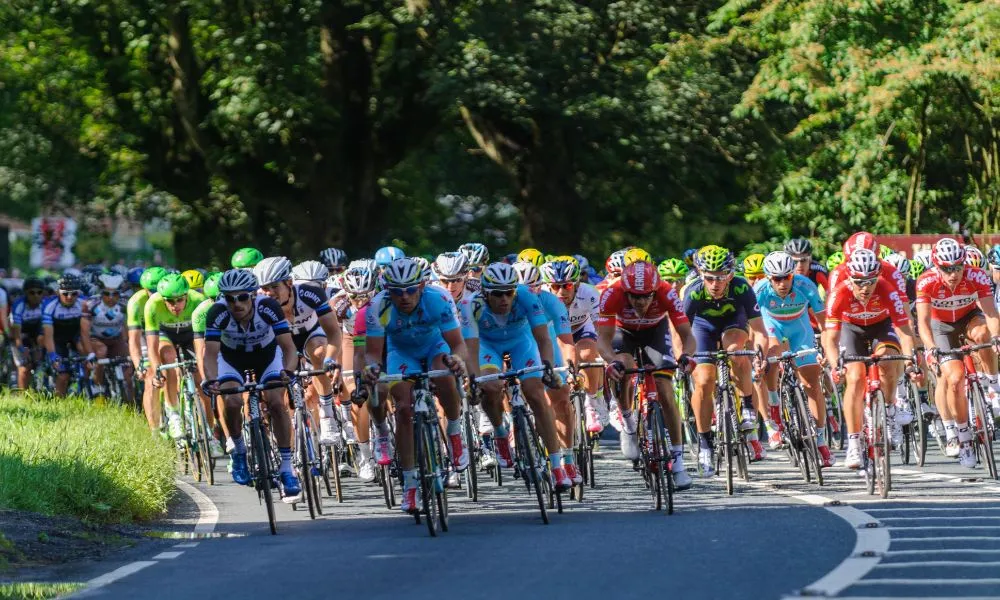

The 2026 Tour de France, which begins on Saturday in Barcelona, is preparing for the effects of climate change as another heatwave is forecast to sweep across Europe in the coming days, potentially forcing changes or cancellations to parts of the race.
"It is something that concerns us greatly," said Tour de France technical director Thierry Gouvenou.
"This is not the first time we have faced such a situation, but this time conditions are worse because of what we have already experienced in May and June."
The Tour de France has previously been disrupted by wars, strikes, social unrest and the Covid-19 pandemic, but a stage has never been cancelled because of extreme heat.
That prospect has now become a realistic possibility, with temperatures expected to reach as high as 44°C in parts of France and Spain.
The next period of extreme heat could affect the peloton as early as Sunday, when the second stage of the race, a 168-kilometre route featuring climbs and descents, follows the Mediterranean coast from Tarragona to Barcelona.
Heat poses growing danger for riders
Recent races have already demonstrated the risks posed by extreme temperatures.
During the Tour de Suisse, Elisa Longo Borghini suffered heatstroke and lost almost ten minutes to her rivals. The Italian rider was reportedly in severe physical distress at the finish and struggled to recall parts of the race.
"Heatstroke is an extremely serious medical emergency," said Emilio Magni, medical director of the XDS Astana team, which is competing in this year's Tour.
"The brain's temperature regulation systems begin to malfunction. Then cardiac activity, blood circulation and blood vessel dilation are affected. It is like a short circuit."
Although professional cycling's extreme weather protocol includes additional feeding and hydration measures, existing safeguards are increasingly being tested by the temperatures experienced across France in recent weeks.
"In the past, we opened the feeding zone from the beginning to the end of stages and extended the time limits," Gouvenou said.
"For several years now, we have also deployed motorcycles carrying cold drinks for riders."
Riders call for earlier start times
Another option being considered is to start stages significantly earlier in the day.
However, the Tour's global television commitments make such changes difficult, as broadcasters prefer the race's decisive moments to take place during prime viewing hours, which often coincide with the hottest part of the day.
Riders have already called for earlier start times to avoid racing during the most intense midday heat.
"Instead of starting stages so late, we should begin them at nine in the morning so they finish at around 2:30pm," said Pascal Chanteur, president of France's professional cyclists' association.
Emergency services under pressure
France's most recent heatwave, described as the hottest since records began, led to a sharp increase in deaths and forced the closure of schools and tourist attractions.
The extreme temperatures have also placed significant strain on emergency services, which play a crucial role during the Tour de France by helping protect both riders and spectators.
Source: lifo.gr