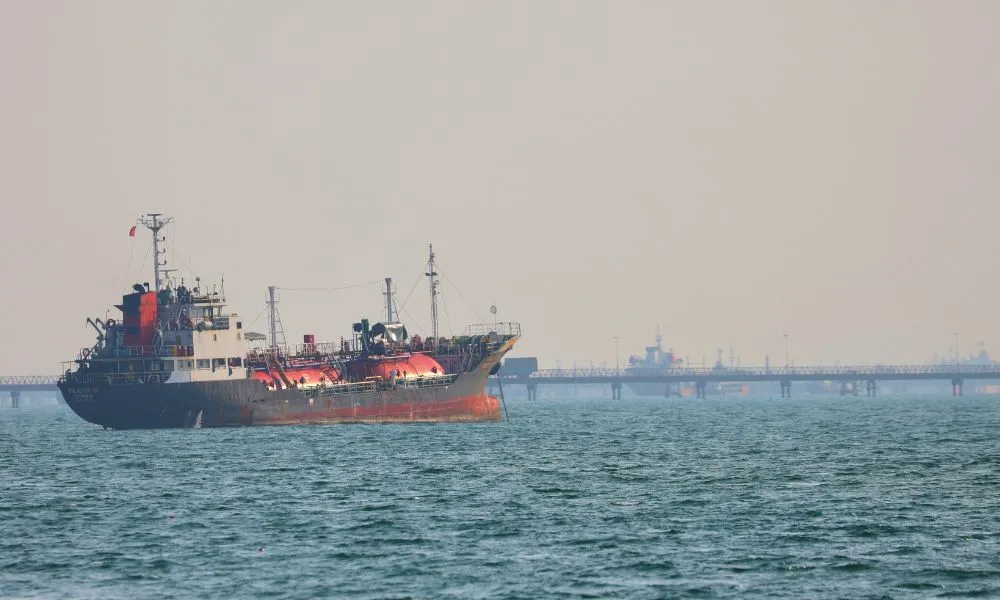
Iran's Revolutionary Guards have warned vessels operating in the Strait of Hormuz not to attempt a crossing without prior authorisation from Tehran, threatening "appropriate measures" against ships that fail to comply.
The future of the Strait of Hormuz, one of the world's most strategically important maritime trade routes, has emerged as a key point of contention in talks between Washington and Tehran.
Iran has restricted access to the waterway since the outbreak of war on 28 February and is now considering the introduction of transit charges for vessels using the route — a move that did not exist before the conflict.
The United States has strongly opposed the proposal, arguing that the Strait of Hormuz is an international shipping lane, despite the fact that its waters border both Iran and Oman.
"The only authorised route for passage through the Strait of Hormuz is the one announced by the Islamic Republic of Iran," the Revolutionary Guards said in a statement.
They described any transit undertaken without Iranian approval as "unacceptable and dangerous" and warned that "appropriate measures" would be taken against vessels that failed to comply.
The statement also criticised what it called attempts by certain authorities to establish a new maritime route through the area.
Fees
The Strait of Hormuz is a narrow shipping corridor, approximately 30 kilometres wide at its narrowest point, separating Iran from Oman and serving as a vital gateway for global energy exports.
According to Iranian authorities, vessels are currently permitted to pass only through a designated corridor running along the country's coastline.
A memorandum of understanding signed by Tehran and Washington as part of efforts to end the conflict provides for commercial vessels to pass through the strait without charges for a period of 60 days.
The agreement also states that Iran will take steps, within its capabilities, to ensure the safe passage of commercial shipping.
On Tuesday, Iran and Oman announced that they would examine the level of fees that could potentially be imposed for services related to the management and operation of the strait.
Washington rejects proposed charges
US Secretary of State Marco Rubio, who is touring Gulf states this week, reiterated on Tuesday that Washington would not accept the introduction of tolls or transit fees for ships using the Strait of Hormuz.
The issue is expected to remain a major source of tension as negotiations continue over the future governance of one of the world's busiest and most strategically significant maritime routes.