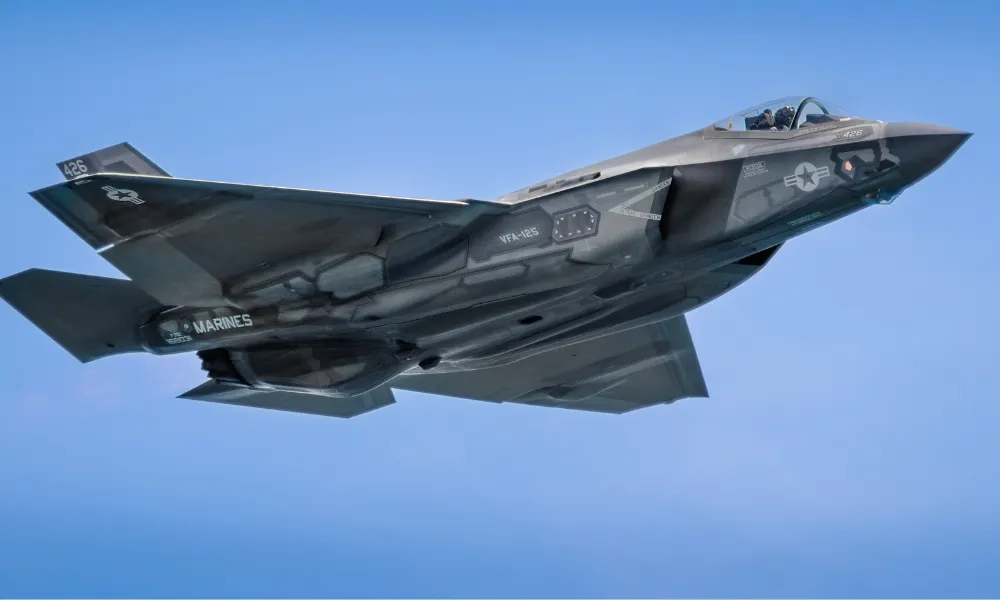

Behind-the-scenes discussions are intensifying in Ankara over the future of Turkey’s Russian-made S-400 air defence system, as resolving the issue is regarded as a prerequisite for the country’s possible return to the F-35 fighter jet programme.
Following US President Donald Trump’s signal that Washington could consider lifting sanctions imposed under the Countering America’s Adversaries Through Sanctions Act, known as CAATSA, and reassessing Turkey’s participation in the F-35 programme, attention has turned to how Ankara could overcome the S-400 obstacle.
Any solution would need to avoid creating the impression that Turkey is backing down under US pressure, while also preventing a rupture in relations with Moscow.
Transfer to a Gulf country
According to reports in the Turkish media, several possible formulas are being discussed.
The first involves transferring the S-400 system to a third country in the Gulf. This is regarded as the most politically flexible option, as the missiles would be removed from Turkey’s direct control without being formally returned to Russia.
The United Arab Emirates, and Dubai in particular, have been mentioned as possible destinations. However, the country’s close relations with the United States and Israel are said to have raised concerns in Moscow.
Qatar has also been discussed because of its close strategic relationship with Turkey. The strong US military presence in the country, however, presents a significant obstacle for Russia, which does not want the system placed in an environment where American specialists could potentially gain technical access.
Somalia scenario seen as unlikely
Somalia has also been mentioned because of Turkey’s military presence there.
The scenario is considered less likely, however, as it has been denied by Ankara and would not necessarily resolve the legal issue surrounding Turkey’s continued ownership of the S-400 system.
A transfer outside Turkish territory may not be sufficient if Ankara retains legal possession or operational control.
Return to Russia or sale to India
A legally clearer solution would be the return of the S-400 system to Russia or its sale to a third country that is already seeking to acquire the Russian system, such as India.
This option would be closer to Moscow’s interests because it would help ensure that the system does not fall under American or NATO control.
For Ankara, however, returning the missiles to Russia would carry a high political cost, as it could be portrayed domestically and internationally as a concession to Washington.
Washington’s key condition
The central issue for the United States is the requirement that Turkey “cease possession” of the S-400 system.
This means that simply relocating the missiles outside Turkish territory may not be enough if Turkey continues to retain ownership, authority or control over them.
Based on the current discussions, the most likely outcome appears to be a third-country arrangement, possibly involving a Gulf state, with Russian approval and strict guarantees that the S-400 system would not become accessible to the United States.
The preferred option for Moscow would be a return to Russia or a transfer to a country such as India. Ankara would favour a Gulf-based solution, while Somalia currently appears to be the least likely scenario.
The final arrangement will depend on negotiations between all three sides. Turkey wants access to the F-35 programme, the United States wants the S-400 system removed from Turkish control, and Russia is seeking guarantees that its technology will not be exposed to American or NATO access.
Source: CNA