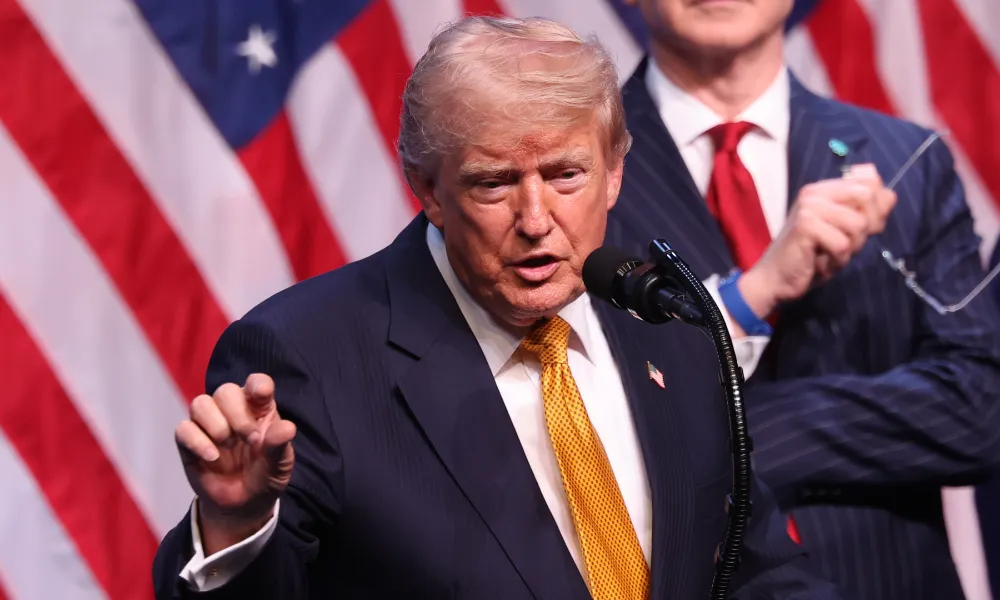

US President Donald Trump said on Monday that the United States would likely take control of the Strait of Hormuz and should be compensated for securing the strategically vital shipping route.
In a telephone interview with Fox News, Trump said the US would assume responsibility for safeguarding the waterway, through which a significant share of the world's oil supply passes.
Source of wealth?
"We will keep the strait and probably manage it. We will become the guardian of the strait. Maybe we'll call ourselves the guardian angel of the strait. And we should be compensated for that," he said.
Trump added that the US should receive substantial payments for protecting the route, arguing that other countries benefiting from the passage were "very wealthy" and that Washington should not be expected to shoulder the burden without financial compensation.
The Strait of Hormuz has become one of the main flashpoints in the conflict after Iran effectively blocked access to the waterway, triggering a sharp rise in global energy prices and fuelling concerns over inflation.
Restore shipping
Tehran announced on Saturday that it was closing the strait following what it described as an unauthorised transit. On Sunday, Iranian authorities said the suspension of shipping remained in place and that permits would only be issued once "stability and calm" had been restored.
Commenting on relations with Iran, Trump said the US had previously reached an agreement with Tehran, which he claimed Iran had violated. He warned that the United States would respond "very harshly" to any further breaches.
Iran's Revolutionary Guards said on Monday that the only way to restore normal shipping through the Strait of Hormuz was for the United States to end its military operations in the region. They also warned that continued US involvement would cause further disruption to global oil and gas markets.
US and Iranian forces exchanged heavy missile and drone strikes over the weekend and into Monday. Tehran said it had targeted US military installations in the Gulf while keeping the Strait of Hormuz closed, further driving up oil prices.
The latest escalation has cast doubt over the interim agreement signed by the United States and Iran in June, which aimed to reopen the strait, suspend hostilities and allow negotiations to continue for a further 60 days.