
A new escalation is unfolding in the Middle East after several days of relative calm, with Iran's Revolutionary Guards claiming to have struck three oil tankers in the strategically important Strait of Hormuz, while the United States and Saudi Arabia carried out joint air strikes in Iraq.
The developments triggered an immediate reaction in global energy markets, with oil prices posting sharp gains.
Revolutionary Guards strike three tankers in Hormuz
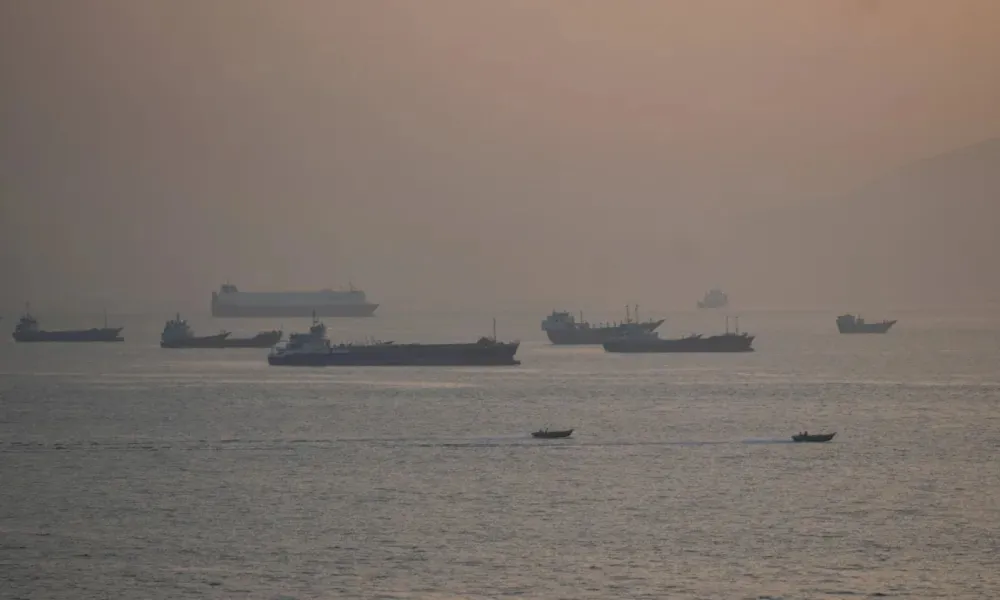
The Revolutionary Guards announced in the early hours of Wednesday that they had struck three oil tankers attempting to transit the Strait of Hormuz despite warnings issued by Tehran.
According to the Tasnim news agency, the Guards' navy said the three vessels had "violated orders" issued by Iranian authorities, ignored warnings and continued their passage, resulting in the ships being struck and immobilised.
The incident has heightened concerns about the security of maritime traffic through the Strait of Hormuz, a vital route for a significant share of global oil trade.
Iranian missile attack on US bases preceded incident
Hours earlier, the US military announced that it had intercepted ballistic missiles launched from Iran against American bases in the Middle East.
According to US Central Command (CENTCOM), the Revolutionary Guards attempted a "surprise attack" against US forces, but all missiles were successfully intercepted and no strikes reached their intended targets.
The attack marked the first direct escalation between the two countries following several days of relative de-escalation.
Joint US-Saudi strikes in Iraq
In response to the continuing tensions, the armed forces of the United States and Saudi Arabia said they had carried out joint air strikes overnight in eastern Iraq.
CENTCOM said American and Saudi fighter jets targeted supply facilities and weapons depots belonging to armed groups considered aligned with Iran.
Washington also warned Tehran and its allied militias to halt their attacks if they wish to avoid further US retaliation.
For its part, Riyadh confirmed its participation in the operation, linking the strikes to drone attacks against Saudi oil facilities.
Saudi Arabia also announced that it had intercepted unmanned aerial vehicles that entered its airspace from Iraq.
Oil prices jump
The latest escalation had an immediate impact on international energy markets.
At the opening of trading in Asia, oil prices rose by more than 3% amid investor concerns about potential disruptions to crude exports from the Persian Gulf.
US benchmark WTI crude was up 3.67% at $82.17 per barrel, while Brent crude gained 3.39% to reach $86.94 per barrel.
Diplomatic efforts under pressure
The renewed hostilities come at a time when Washington had suspended attacks on Iranian territory, saying it wanted to give diplomacy a chance.
US President Donald Trump said just two days ago that talks with Iran had a "good chance" of succeeding, while on Tuesday he hosted Israeli Prime Minister Benjamin Netanyahu at the White House in what both sides described as a positive meeting.
However, developments over the past few hours underline the fragility of the situation in the Middle East, with tensions now stretching from the Persian Gulf and Iraq to Saudi Arabia and Yemen.