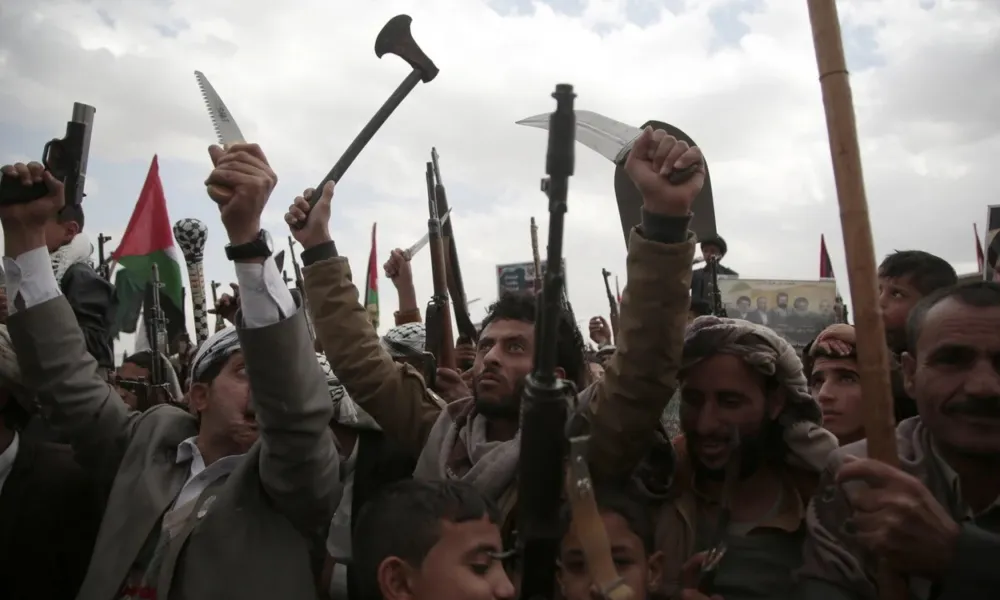

The conflict in Yemen is entering a more dangerous phase, with strikes by both sides intensifying as international powers, including the United States and United Kingdom, become increasingly involved in efforts to prevent a wider regional escalation.
The Houthis said on Tuesday that Saudi strikes killed two civilians in Al-Jawf province in northwestern Yemen.
“A mother and her child were killed, while her husband and two other children were injured,” the Houthi-run Health Ministry said.
A Houthi official also said nine prisoners were killed in an attack on a prison in the same area.
Fighting intensifies after Houthi advance
Days earlier, six people, including two children and a woman, were reported killed in Saudi strikes on Mokha, a Red Sea port city recently captured by Houthi forces.
The escalation follows a surprise offensive launched by the Houthis in early September, during which they captured Mokha and extended their control along the entire Yemeni Red Sea coastline surrounding the strategically important Bab el-Mandeb Strait.
The advance has heightened concerns over the security of international shipping through one of the world’s most important maritime routes.
Last Saturday, the Houthis also targeted Riyadh for the first time since the war resumed in July and claimed to have shot down a Saudi F-15 fighter jet.
The group is now threatening to advance towards Marib, a strategically important region containing Yemen’s largest oil infrastructure. Such an advance would represent another significant shift on the battlefield.
Following the defeat of forces loyal to Yemen’s internationally recognised government, tens of thousands of residents have already fled their homes, with many heading towards Aden, where the government has been based since 2014.
Trump halts planned US operation
The escalation has also brought the United States close to renewed military involvement.
President Donald Trump postponed a planned US operation against the Houthis at the last minute, just three hours before it was scheduled to begin, according to NBC News.
The decision was reportedly taken amid concerns that military action could trigger another escalation in the Middle East.
Trump held back despite appeals from the Saudi crown prince, while divisions reportedly emerged within the Pentagon.
Some officials warned about reduced US military stockpiles and potential risks to American troops in the region, while others argued that failing to act amounted to abandoning an ally.
Rashad al-Alimi, head of Yemen’s government council, also reportedly asked Trump for US assistance during a telephone call, but the American president made no commitment.
UK support from Akrotiri
Against that backdrop, Britain has decided to strengthen Saudi Arabia’s defensive capabilities.
Prime Minister Andy Burnham agreed to provide military support, with Voyager refuelling aircraft operating initially for several weeks from the British base at Akrotiri in Cyprus.
The aircraft will provide aerial refuelling for Saudi fighter jets, allowing them to remain airborne for longer periods while intercepting drones and missiles.
British Defence Secretary Luke Pollard said the operation would be “purely defensive” and would not participate in offensive strikes against targets inside Yemen.
Burnham linked the decision to the protection of energy and commercial interests, arguing that further escalation in the Red Sea could also affect fuel prices in Britain.
The growing involvement of international powers comes as the Houthis consolidate their position along the Red Sea and threaten further advances, increasing concerns that the Yemen conflict could develop into an even broader regional confrontation with consequences for energy supplies, international shipping and trade.