
A voice that asked for her by name
Several years ago, the phone rang at my office at Politis. On the other end of the line was an elderly Greek Cypriot. He had something to tell me. His voice carried that hesitation of people who have borne something heavy inside them for years but do not know whether the time has come to speak. He told me he wanted to make some disclosures about Turkish Cypriot missing persons in the southern part of Cyprus.
I told him I would speak with some of our reporters and that we would be in touch to arrange a meeting. His response was immediate, almost absolute: "I will only speak with Sevgül Uludağ."
I ventured to ask him why. His answer said everything one needs to know about Sevgül: "Because that girl writes correctly about both Greek Cypriot and Turkish Cypriot missing persons. She does not distinguish between races. She sees only the pain of people."
I had no choice. I spoke with Sevgül and arranged the meeting. And she did what she knew better than anyone: earning people's trust. Listening without judging, asking without wounding, searching without fear. In this way she brought to light the stories that shook us all.
More than journalism
Sevgül did not practise journalism to confirm narratives. She did not write to serve "one side" against "the other." She wrote for people. For the mothers who waited for a bone so they could bury their child. For the fathers who departed without ever knowing. For the children who grew up holding a photograph. For the Greek Cypriots and Turkish Cypriots who lived through the same tragedy, sometimes as victims and sometimes as perpetrators, within a country that went astray, suffered, and wounded its own children.
This was her great courage: that she did not flatter. She was not afraid to say that the truth of Cyprus does not fit into easy, nationally convenient versions. She was not afraid to write about mass graves, about crimes, about silences, about complicity. She was not afraid to highlight that pain has no nationality, and that without truth, however bitter it may be, neither reconciliation nor a shared future is possible.
That is why people trusted her who would not have spoken to anyone else. That is why mouths opened before her that had remained closed for decades. That is why her work repeatedly led to official investigations, to exhumations, to the location of mass graves, to the return of remains to families. Her journalism did not stay on the page. It became an act of humanity.
From 2002, she devoted herself almost entirely to research into the missing persons and mass graves of Cyprus. She worked with persistence, sensitivity, and at personal cost. She received threats, defamation, and intimidation. In 2006 she narrowly escaped an attack by a group of Greek Cypriot nationalists at the Nicosia checkpoint. In the northern part of Cyprus, she at one point became a red rag to a bull when she exposed rapes committed by the Turkish army against women in 1974. But she did not stop. Because Sevgül believed that silence is a second death for the missing. And that truth, however much it hurts, is the only path by which a society can look at itself in the mirror.
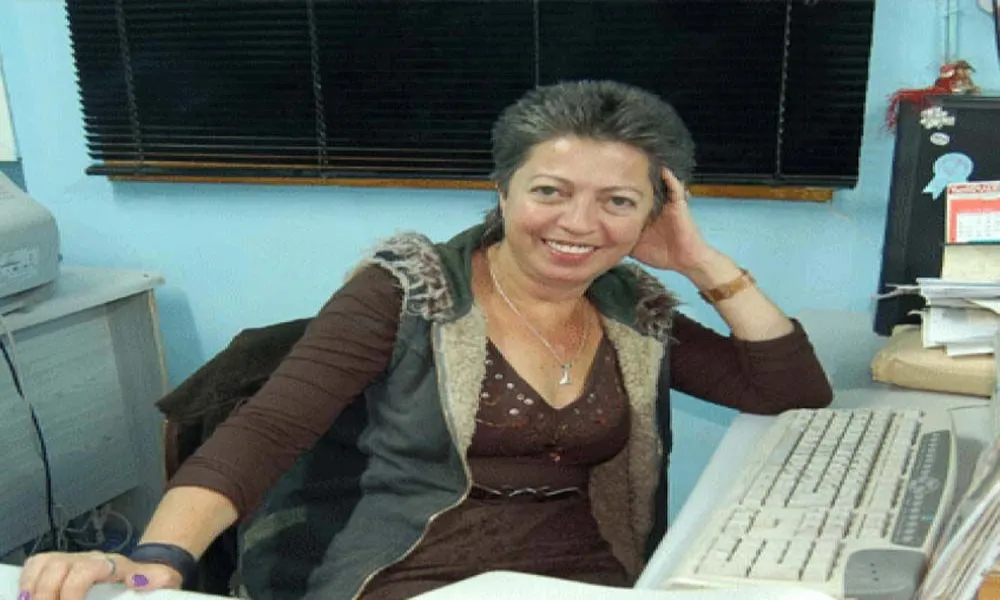
Born on 15 October 1958 in Nicosia, she began her journalism career in 1980. She worked for many years at Yenidüzen and was for a long time a columnist at Politis, through her column "Underground Notes." For us, her presence was not simply valuable. It was necessary. It was a bond of trust between people who had learned to live apart, yet continued to share the same memory, the same land, the same wound.
I believed that with Sevgül, Politis would have many more years of collaboration. That together with Yenidüzen we would continue to jointly send the message she served throughout her life: that Cypriots can speak with one another, can hear each other's pain, can seek the truth without turning it into a weapon.
Her final message
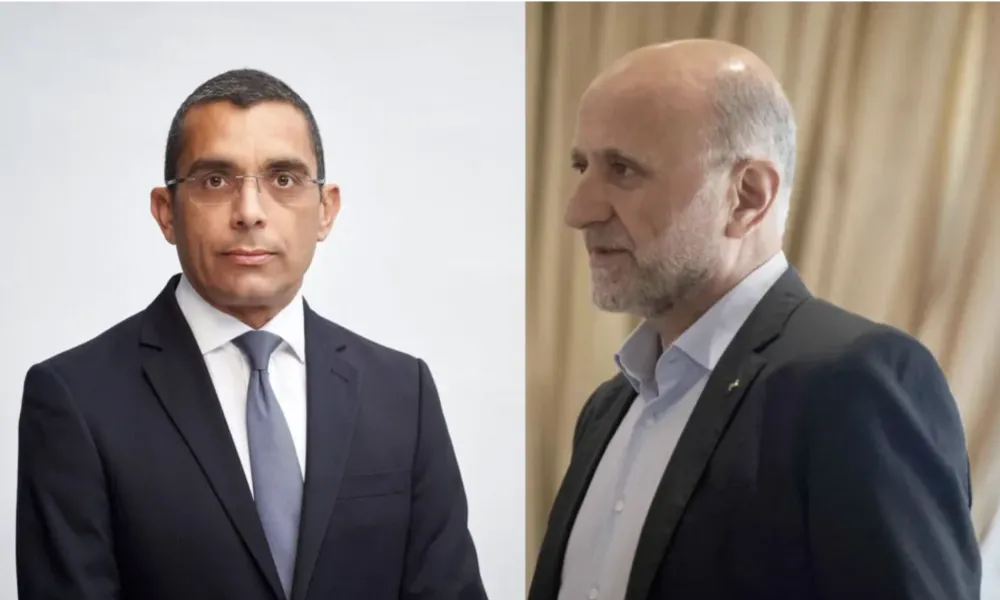
On 5 May 2026, when I received her email, I froze. It was addressed to me and to the editor of the Sunday edition of Politis, Michalis Stavrou. Her message was courageous, but it did not convey optimism. She did not want us to inform anyone.
"Dear Dionysis, dear Michalis,
Due to a rapidly developing medical situation, I have been in hospital for the past 10 days. All of this will be a long process and I had to stop writing at Yenidüzen, my daily double pages, and now I must stop my articles at POLITIS. My dear friend Gina Chappa, who has been my volunteer, personal translator for the past 22 years, will place a small note beneath the last article she will send, which will be published on Sunday 24 May. If and when I have the opportunity to continue, I will be in touch with you again.
My request of you is of great importance to me. PLEASE DO NOT SHARE THIS INFORMATION WITH ANYONE.
I am very, very weak, I cannot speak on the phone, it is very difficult for me to write even short messages.
My CYTA is not working at the hospital, so I cannot communicate with you via WhatsApp, dear Dionysis. So if you send messages there, I cannot see them... My Messenger is working normally, however.
I want to thank you, dear Dionysis, for always giving full support to my work from the beginning, without ever intervening, and without that support we would not have been able to carry out such an enormous volume of humanitarian, voluntary work for the missing persons of our communities, for reconciliation, mutual understanding and peace in Cyprus. I thank you from the bottom of my heart...
Dear Michalis, I thank you for your support and your help with my articles. I truly appreciate this deeply.
With all my respect and my greetings,
Sevgül Uludağ"
Even in the midst of that ordeal, rather than speaking about herself, she spoke again of her mission, of the missing, of reconciliation, of peace in Cyprus. She thanked us for our support, but in reality it is we who must thank her, and we will thank her forever, because she graced the pages of our newspaper with her writing.
This was Sevgül. Even when she herself was confronted with her most difficult personal news, her mind was turned towards others. Towards the families. Towards the missing. Towards Cyprus.
The true honour
The international recognition she received was considerable. In 2008 she became the first Cypriot journalist to be honoured with the international "Courage in Journalism" award. In 2014 she received the European Citizen's Prize. In 2019 she was nominated for the Nobel Peace Prize. That same year she was honoured alongside Andreas Paraschos for their pioneering research into the missing persons.
But her true honour does not lie only in the awards. It lies in the homes to which remains were returned. In the people who were able, after decades, to light a candle above a grave. In the testimonies that were not lost. In the silences that were broken. In the trust of an elderly Greek Cypriot who wanted to speak only to her, because he knew that Sevgül would betray neither the truth nor the person.
Sevgül Uludağ was something far greater than a remarkable journalist. She was our conscience. She was a bridge of communication between Greek Cypriots and Turkish Cypriots. She was one of those rare voices that reminded us that Cyprus cannot be healed by forgetting, nor by half-truths, nor by national certainties. It can only be healed when it finds the courage to mourn all of its dead.
Today we bid farewell to a woman who honoured journalism, truth and humanity. A woman who did not distinguish between languages, religions and races, but saw only the pain of people.
For this reason, Sevgül will remain ours forever. The Sevgül of all Cypriots.