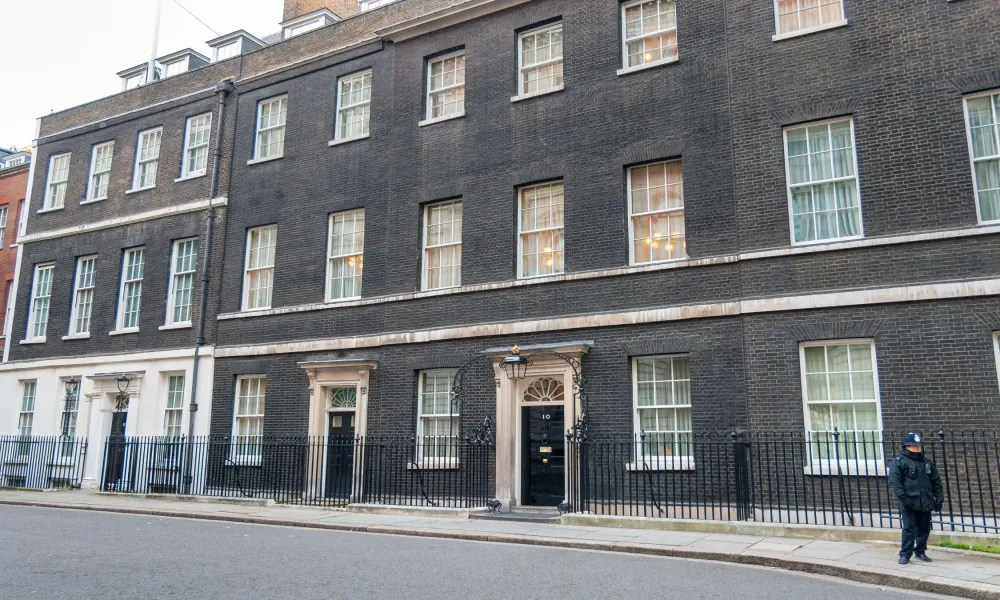

Andy Burnham's arrival in Downing Street is a significant political development not only for Britain but also for Cyprus.
London remains one of the three guarantor powers of the Republic of Cyprus, maintains sovereign military bases on the island and continues to hold a permanent seat on the UN Security Council. As a result, any change in British leadership has the potential to affect the Cyprus issue.
Burnham came to power promising political renewal and a stronger focus on the concerns of ordinary citizens. However, his early appointments suggest continuity rather than a break with established foreign policy.
His decision to appoint Ed Miliband as Foreign Secretary may prove particularly important. While many expected Miliband to take charge of the Treasury, Burnham instead entrusted him with foreign affairs, assigning the economy to John Healey.
For Cyprus, that choice matters. Miliband is regarded as one of Labour's most experienced figures on international issues and is well acquainted with Britain's role in the eastern Mediterranean.
He is not expected to alter Britain's longstanding support for a bizonal, bicommunal federation within the framework of UN resolutions. However, he may seek a more active diplomatic role for London in support of the UN Secretary-General's efforts, particularly at a time when António Guterres appears determined to keep prospects for renewed negotiations alive.
At the same time, Burnham appears more inclined towards European cooperation than the previous leadership, while stopping short of questioning Brexit.
That approach could facilitate closer coordination between London and Brussels on issues concerning both the eastern Mediterranean and Cyprus.
No room for unrealistic expectations
Expectations should nevertheless remain measured.
British governments, regardless of political affiliation, have traditionally pursued policies guided by strategic interests, the preservation of the sovereign base areas and the maintenance of balanced relations with both the Republic of Cyprus and Türkiye.
The new government is unlikely to depart significantly from that approach.
Even so, the combination of a prime minister seeking to restore a more active international role for the United Kingdom and a foreign secretary with considerable diplomatic experience presents a moment that Cyprus would be wise to utilise.
The Cyprus issue will not be solved in London. However, a more constructive and engaged British role could help create the conditions necessary for the next meaningful effort to reach a settlement.