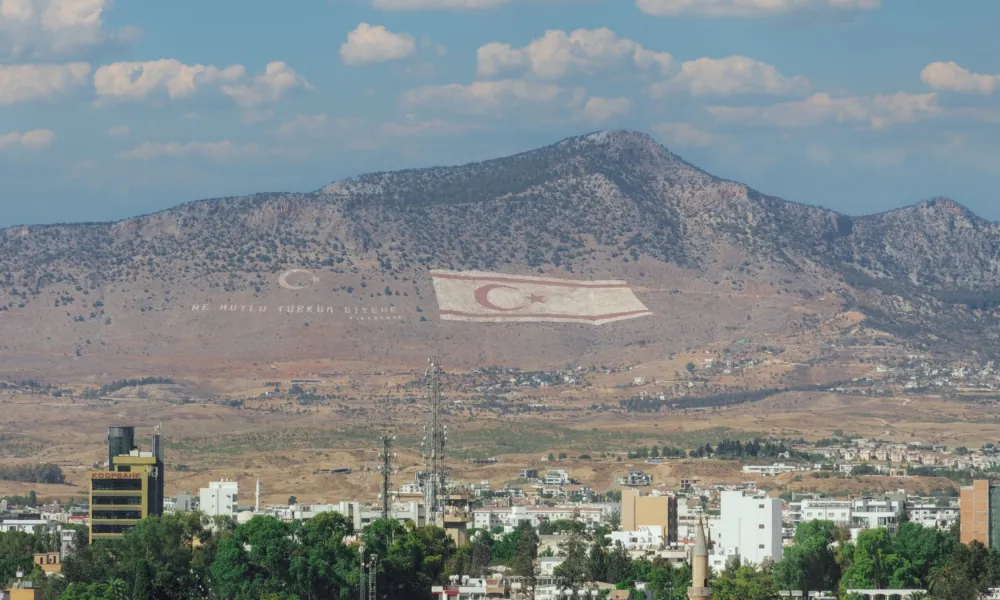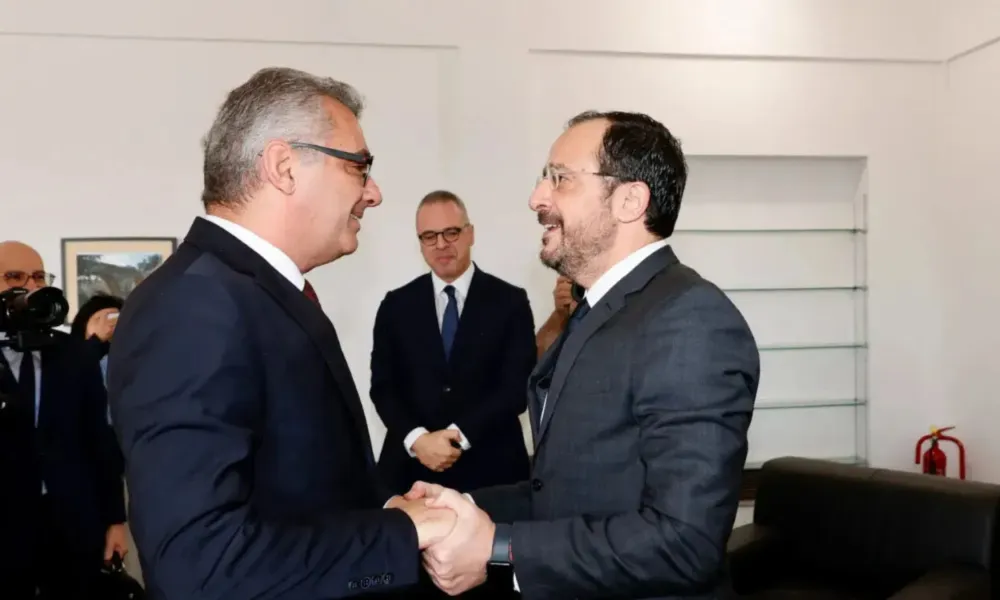

The core problem with the Cyprus issue today is not simply the distance separating Nicos Christodoulides from Tufan Erhürman. Nor is it exhausted by the well-known disagreement over the point from which talks might resume. The real problem lies in the fact that, after more than half a century of division and almost a decade since the collapse of Crans-Montana, the Cyprus problem is gradually at risk of changing category. From an open international problem in search of a solution, to becoming fixed in the category of an entrenched reality that the international community will simply manage, until time, military balances, demographic shifts and new economic realities push things in a particular direction. Anyone who follows where issues such as Alexandretta and the Macedonian question began, and where they ended up, may begin to see where things are heading.
Where do we stand?
At this juncture in the Cyprus problem, Tufan Erhürman certainly starts from a different political position than his predecessor, Ersin Tatar. He appears more willing to discuss a federal solution, though he attaches conditions regarding political equality, methodology and the framework of a new process. The real difficulty is that no Turkish Cypriot leadership can act independently of Ankara on an issue of such strategic importance. Turkey continues to publicly support the logic of two states, a position that in itself creates a fundamental gap with the agreed United Nations framework.
On the other side, Nicos Christodoulides is on safe ground when he insists that a new process must begin from where Crans-Montana left off in 2017, with the acquis of the talks, the convergences and the Guterres Framework remaining on the table. Institutionally and in negotiating terms, this position makes sense. Politically, however, it isn't enough, if it isn't already outdated, given that neither Cyprus, nor the region, nor Turkey has stood still since 2017. As long as the Greek Cypriot side believes that time can be frozen at the point where the previous negotiations collapsed, Ankara is trying to create new facts on the ground and to argue that "realities on the ground" must now also shape the form of any solution.
A strategic bargain
Herein lies perhaps the greatest strategic difficulty for Nicosia. Turkey does not treat the Cyprus problem as an isolated issue. It places it within a much broader web of interests: its relations with the European Union, the customs union, migration, entry visas, Europe's defence and security, energy routes, its relations with Greece, and the redistribution of power in the Eastern Mediterranean.
And here a paradox emerges. The European Union still institutionally links further development of EU-Turkey relations to progress on the Cyprus problem. The European Council has explicitly stated that it attaches particular importance to the resumption and progress of the talks. At the same time, however, Brussels and Ankara are already moving ahead with discussions on the customs union, the economy, security, migration and entry visas. In June 2026, the two sides confirmed their intention to strengthen dialogue across a range of strategic areas.
This means it is far from certain that Europe is willing to turn the full weight of its interests with Turkey into leverage for a Cyprus settlement. Turkey is too large for Brussels to deal with solely through the lens of the Cyprus problem, and Cyprus is too small to take it for granted that it can indefinitely determine the whole of the EU-Turkey agenda.
The relationship with Israel
At the same time, the situation in the Eastern Mediterranean is becoming more complex. Greece is strengthening its strategic relationship with Israel, and at the same time appears more resolute in the face of Turkish claims. Athens insists, however, that it is not abandoning dialogue with Ankara, and that its regional partnerships do not automatically amount to an anti-Turkish front. Kyriakos Mitsotakis reiterated as recently as 7 September that channels with Turkey remain open, while at the same time describing Greece's relationship with Israel as strategic.
For Cyprus, however, this regional realignment creates both opportunities and risks. The more the Eastern Mediterranean becomes a space of competing axes of security, energy and defence, one that is exploited both through Cyprus and as a vital space for Israel, the more easily the Cyprus problem can be used by Turkey as just another bargaining chip, rather than an issue to be resolved on its own terms.
What did Guterres do?
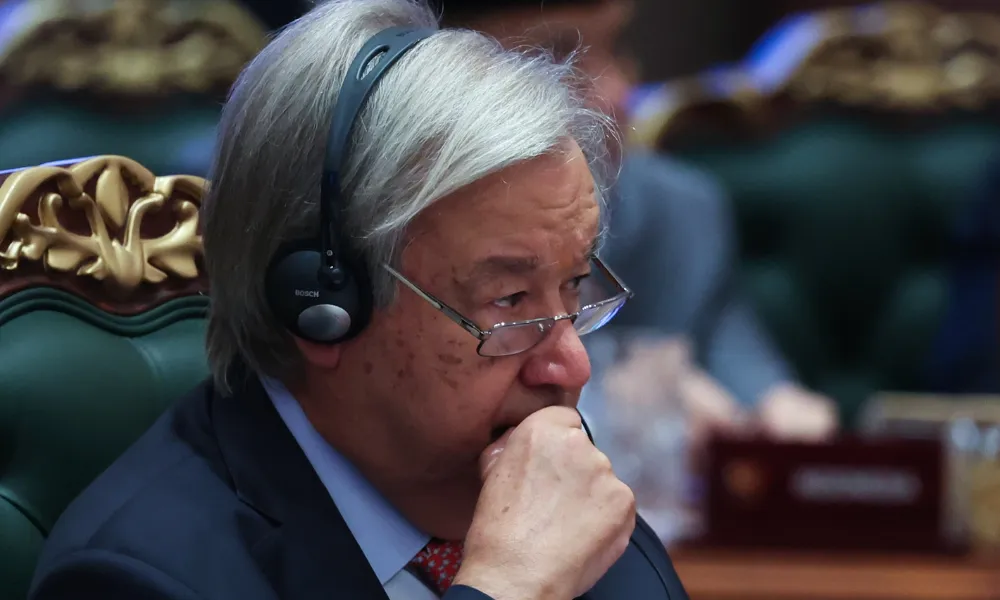
This is why António Guterres's effort takes on particular significance. His visit to Cyprus in late July was not a routine diplomatic gesture. Following his talks with Christodoulides and Erhürman, the Secretary-General announced that he would convene a new "5+1" meeting, once sufficient preparation had taken place on confidence-building measures, methodology and substance, and taking into account the convergences already reached. He was also clear that he does not want another expanded meeting that produces no result.
This is perhaps the most significant point. Guterres is not attempting to solve the Cyprus problem within a few months. He is trying, first and foremost, by giving the Greek Cypriots one last opportunity, to keep the process from dying out. To preserve the link with the Security Council resolutions, the previous negotiating acquis, and the prospect of an agreed solution.
His term, however, ends at the close of 2026. The process of selecting the next Secretary-General is already under way, and among the candidates are several figures from Latin America, with no decision yet on who will succeed him. No one can take it for granted that the next head of the UN will invest the same personal political capital in the Cyprus problem that Guterres did.
The critical time window
A new five-party meeting does not need to solve the Cyprus problem to be considered a success. It does, however, need to produce something strong enough to create political commitment for the day after: a reaffirmation of the basis for a solution, recognition of previous convergences, agreement on methodology and, above all, a clear continuation of the process. Otherwise, Turkey will have every incentive to try to reshuffle the deck once leadership at the UN changes. To argue that, after 52 years without a solution, the discussion cannot continue as though we were still in 1977, 2004 or 2017.
Resolutions don't change easily
The greatest danger for the Greek Cypriot side is not a spectacular overturning of the solution framework overnight. It is the slow slide towards a situation in which no one will officially announce that the solution has been abandoned, yet fewer and fewer people will believe it can actually be achieved. In this battle, Nicosia's most significant opponent may not be Turkish diplomacy alone. It is time itself.