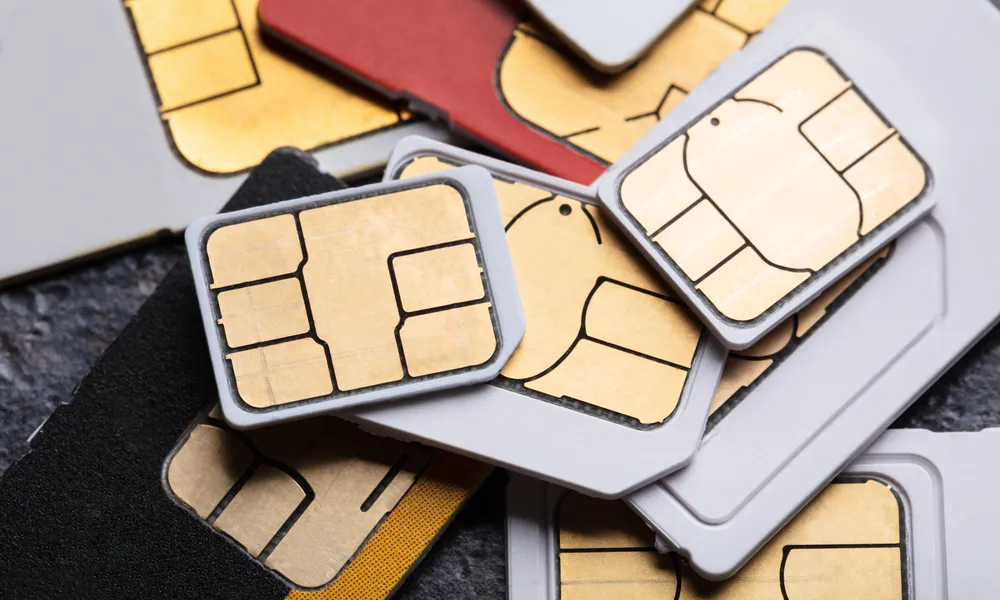
Cyprus will end anonymity for prepaid mobile phone users this Wednesday, when the one-month extension granted by parliament expires. From the first minutes of 11 December, any prepaid numbers that have not been verified will be automatically deactivated in line with the legislation approved by the House of Representatives.
Despite awareness campaigns by the Office of the Commissioner for Electronic Communications and by providers themselves, the verification rate remains low. Officials estimate that by the deadline only around 65 per cent of prepaid card holders will have submitted their personal details, as required by law. Although an 18-month grace period was granted when the legislation first passed, plus an additional month’s extension, a significant number of users have still not completed the process. As a result, thousands of numbers are expected to be disabled from Wednesday.
Who is affected
Active prepaid mobile cards, defined as those used at least once within a six-month period, number around 400,000. These do not concern only mobile phones; many are used by companies, Internet of Things devices, security systems and other automated services.
During the parliamentary debate on granting the extension, it was noted that around 200,000 prepaid users had not provided identification details. A portion of these are believed to be tourists who purchased SIM cards during visits to Cyprus in the past six months and no longer use them.
Support centre for users
The Commissioner’s Office has set up a public-support centre to handle questions once deactivations begin. Many queries have already been addressed through the legislation itself and through public discussions over recent months. One of the most frequently raised issues concerns unused credit on SIM cards belonging to users who fail to register. In such cases, the remaining credit is lost, and providers have no obligation to refund any amount.
Fines and penalties for non-compliance
The law sets out strict penalties for individuals and providers who attempt to bypass or ignore the verification requirements. These include:
False declarations by users:
Any prepaid mobile user who submits false information commits an offence and, upon conviction, faces up to five years in prison or a fine of up to €50,000, or both.
Provider responsibility:
A provider who fails to request, collect or store a user’s identity details, or activates a SIM without these details, commits an offence and may be fined up to €50,000.
Transfer of SIM cards:
When transferring a prepaid SIM card to another person, the original holder must declare the identity of the new user to the provider. Failure to do so constitutes a criminal offence punishable by up to six months’ imprisonment or a fine of up to €5,000, or both.
Lost or stolen SIM cards:
Users must immediately notify their provider in cases of loss or theft. Failure to do so can result in up to one year in prison or a fine of up to €10,000, or both. If the provider fails to deactivate the service due to its own fault, it may also face a fine of up to €10,000.
A long-standing request by law enforcement
Ending anonymity in prepaid mobile services has been a longstanding demand of law enforcement agencies. Investigations into serious crimes have repeatedly been hindered by the inability to trace the users of anonymous prepaid numbers. The issue has been pending before parliament since 2009, with the Police and the Intelligence Service consistently stressing that lifting anonymity would significantly support the prevention, investigation and prosecution of serious and organised crime.
Authorities now hope that the new identification requirement will close a critical loophole that has facilitated criminal activity for years.