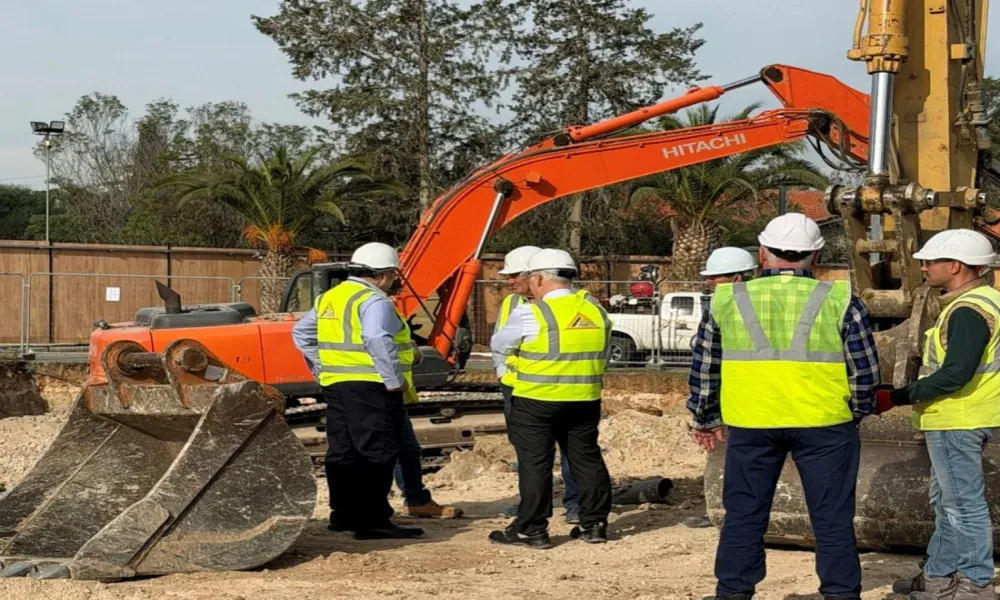
When the British High Commission in Cyprus announced the start of construction for its new building inside the historic compound of Nicosia, the official tone was one of celebration.
Ground was broken in December, the €40-million-plus project, "the largest on the UK’s diplomatic estate", is expected to be completed by November 2028. A new, carbon-neutral High Commission office, a new Residence, a new security facility: a modern, eco-friendly diplomatic hub designed to reflect what the British High Commissioner, Michael Tatham, called “a massive upgrade” and “the value that the UK attaches to its partnership with the Republic of Cyprus.”
As stated, the development of the High Commission’s historic site, which was formerly part of the Central Prisons’ compound, will better symbolise the strong and growing partnership between the United Kingdom and the Republic of Cyprus. It was also noted that with the prime contractor being the Cypriot-owned firm Atlas Pantou, it is also a significant British investment into the Cypriot economy.
But outside the press release, a different conversation has been unfolding.
A conversation about memory, architecture, and the quiet erasure of a colonial landscape that shaped this part of Nicosia for almost a century.
Debate: refurbish or replace?
According to contacts close to the BHC and familiar with the site’s long history, the dilemma over whether to renovate the existing colonial buildings or build anew did not begin this year. For more than ten years, there were attempts to explore refurbishment, partial reuse, or a hybrid design. But the reality of modern regulation soon crashed into the nostalgia:
- Seismic compliance.
- Security standards.
- Health and safety codes.
- Diplomatic circulation routes.
- And, last but not least cost.
Former local employees told Politis to the point “everything was considered, but at the end of the day, every solution returned to cost and compliance. Some of the buildings didn’t survive even the first seismic assessment.”
By the time decisions were final, two structures were already gone. Parking areas reshaped and further demolitions expected.
Even the idea of preserving the signature stonework, once seen as a concession to heritage, was abandoned.
Contacts to the BHC said that there was an effort to argue for at least keeping some of the original stone, or creating a memory wall, but as one insider put it, “there may be a decorative installation, but not even with the real stones.”
What will rise instead is a neutral, modern, zero-carbon building of glass and white surfaces, a look increasingly familiar across Cyprus as entire neighbourhoods shed their older identity.

A changing estate
The British diplomatic estate on the island has already undergone dramatic change.
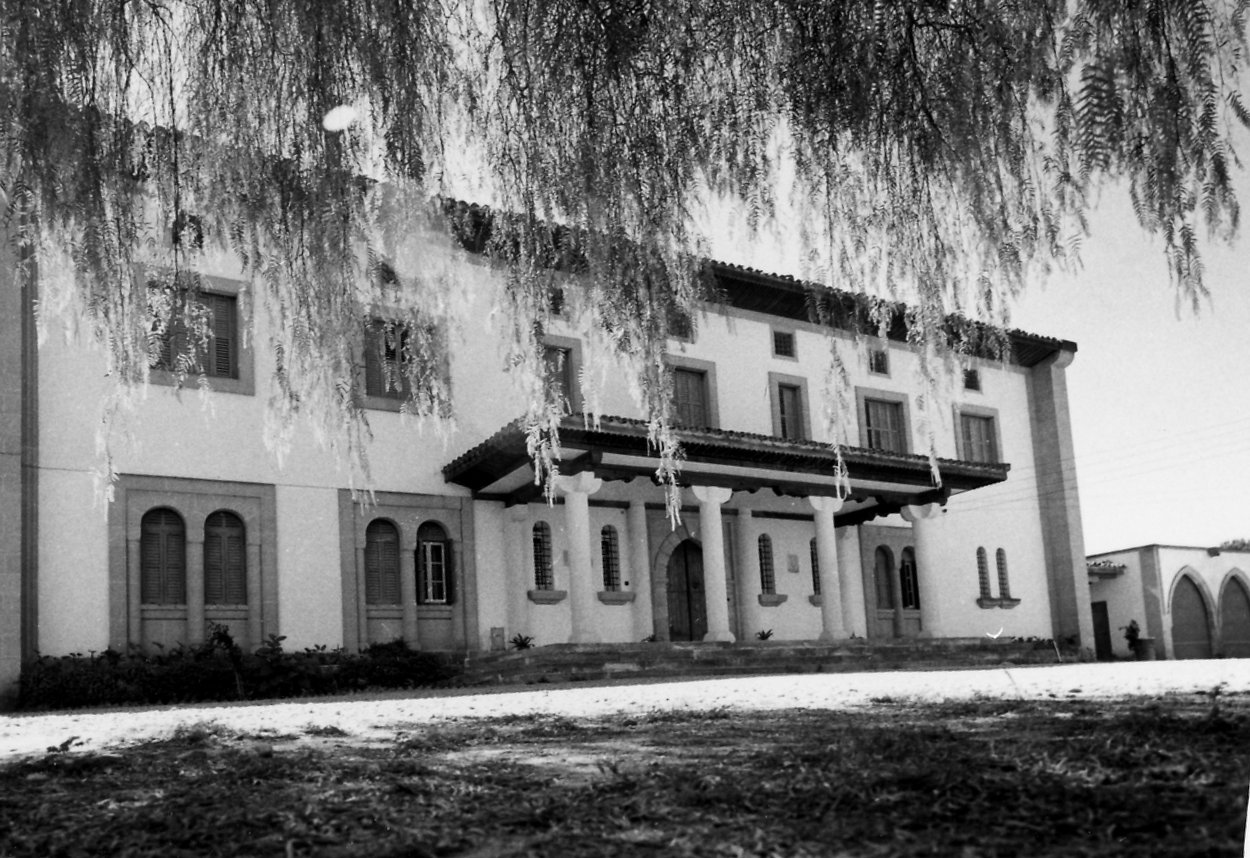
The original British High Commissioner’s residence stood at 29 Mehmet Akif Street (formerly Shakespeare Avenue). An architectural jewel of the colonial period in the north. The Ministry of Works purchased it in 1960 for £65,000 from local entrepreneur Byron Pavlides, who had built it in 1937 for Rupert Gunnis, a former ADC to the Governor. Designed by a Cypriot architect in a Venetian-Byzantine style, the house was not well liked by Ministry officials. One annotation even read: “What a frightful house. I only hope we weren’t bullied into buying it.”
Additional adjoining plots were purchased to create space for a circular drive and parking, eventually forming an estate of about 4.5 acres.
After the Green Line was drawn in 1964, the residence fell inside the Turkish Cypriot enclave and was inaccessible to Greek Cypriots. In 1972, the High Commissioner moved to 6 Philhellenon Street, a former colonial Chief of Staff’s residence that had been bought earlier for £17,000. The house was enlarged in 1973 and an adjacent freehold property, previously occupied by a first secretary, became a guest annex. The two gardens were re-landscaped, and this site remains the High Commissioner’s residence today. The original residence is kept under care and maintenance, with a few rooms used by staff working on Turkish Cypriot community issues and the garden used occasionally for events.
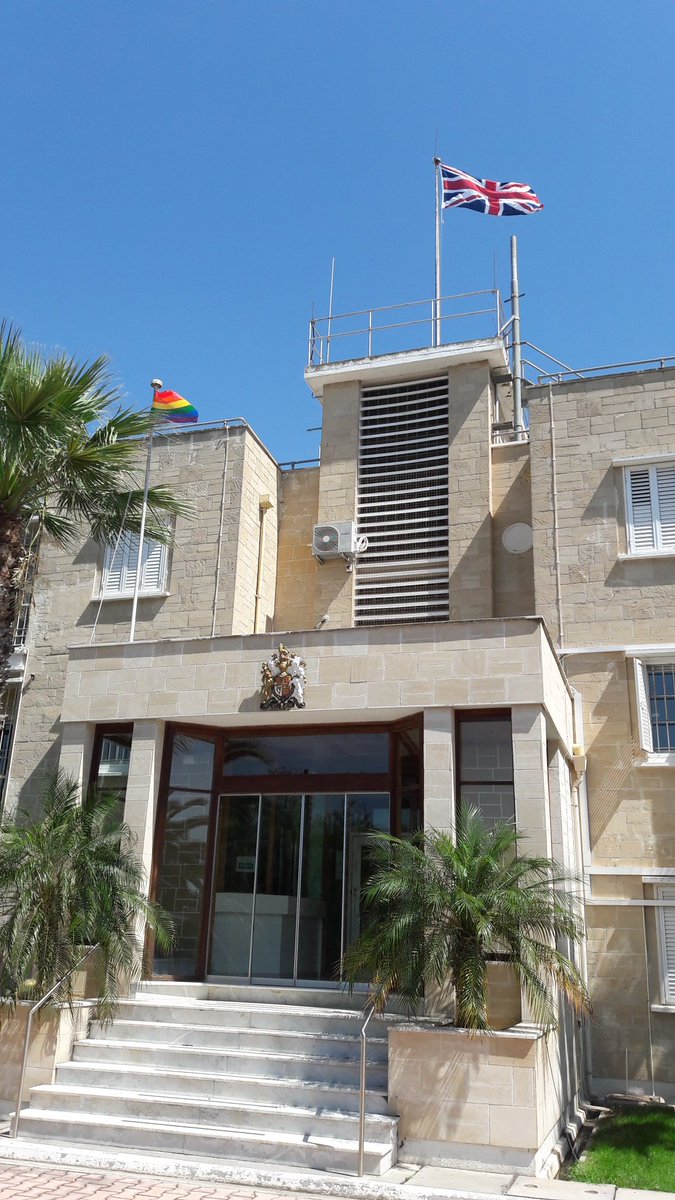
For office space, the High Commission initially operated from a one-hectare compound on Alexander Pallis Street (formerly Tennyson Street), leased from the Public Works Department at independence. It contained a T-shaped, three-storey block of six flats built in 1954 that served as the chancery, along with three smaller stone buildings for other sections of the mission.
In 1992, a political agreement enabled the Foreign Office to acquire the freehold of the compound, paying £365,000 to the Cypriot government and £98,000 to the Ministry of Defence, while Cyprus gained title to the former British Military Hospital site for its planned university.
With the island’s division, the historic High Commissioner’s residence, moved to another British property in the south.
The old flats, the tennis court, sections of the compound behind the Residence were sold off in the last decades.
Today, the buffer zone cuts between the old Shakespeare building and the current High Commission, forming a symbolic line with some noting that the division “stopped where it suited the British.”
Demolition
For Politis interlocutors, the redevelopment has triggered a wider philosophical question: If these colonial buildings are demolished for safety and modernisation, where does it stop?
Architects and heritage advocates ask: If seismic and safety regulations justify tearing down the High Commission’s colonial buildings, then why not:
– demolish the colonial villas in the Troodos mountains, designed by British architects?
– demolish the Presidential holiday residence in Troodos because it is old and non-compliant?
– demolish the Presidential Palace?
These comparisons may sound extreme, but they underline the same argument: History is allowed to be inconvenient, it is llowed to be old. And maybe it is allowed to require effort to preserve.
A footprint of an era
For an architect who spoke to Politis, the issue goes beyond nostalgia.
He points out that international debates on ecological urbanism and sustainable architecture put enormous emphasis on reuse, adaptive restoration, and circular design.
“Before demolishing, every parameter should be examined,” he said.
“Especially when the building belongs to an era that shaped Cypriot identity. Colonial architecture in Cyprus is not just stone and timber, it’s a cultural record. The wider Ayios Andreas area carries the same aesthetic. Removing it is like removing pages from a history book.”
He notes that many colonial villas across Cyprus, especially those built by British engineers in the mountains, have distinct architectural character. “They could have become modern memorials of their time,” he added. “A reminder of the island’s layered story.”
In the end, of course, British property belongs to the United Kingdom. The decisions, and the billion-pound considerations behind them, are theirs alone.
But Cyprus is not just any country in the UK’s global diplomatic network.
It is a country where British architecture, British planning, and British policy left deep and lasting marks, from roads and schools to prisons and residences. And so, as our BHC contacts argue, sensitivity to local sentiment should carry weight.
Especially from a state whose architectural footprint stretches across continents.
No one denies that development is necessary.
No one denies that embassies must meet stringent modern standards.
And no one denies the need for seismic resilience on a Mediterranean island.
The dilemma lies elsewhere: How does a city, a country, and a former colony balance progress with memory?
How much of its past, pleasant or painful, should survive in its physical landscape?
And when the bulldozers move in, what disappears? A building? Or the last physical chapter of a former era?
As the new British High Commission rises, sleek, sustainable, and ultramodern, many in Nicosia feel something else rising alongside it:
a quiet sense that an era is ending, and that once the stones fall, they will not be returning.