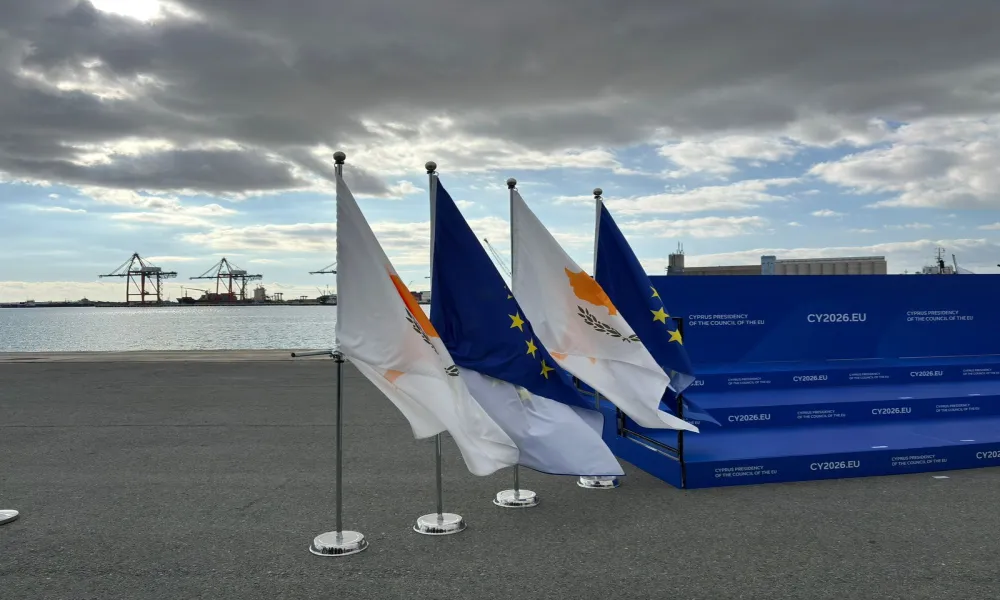
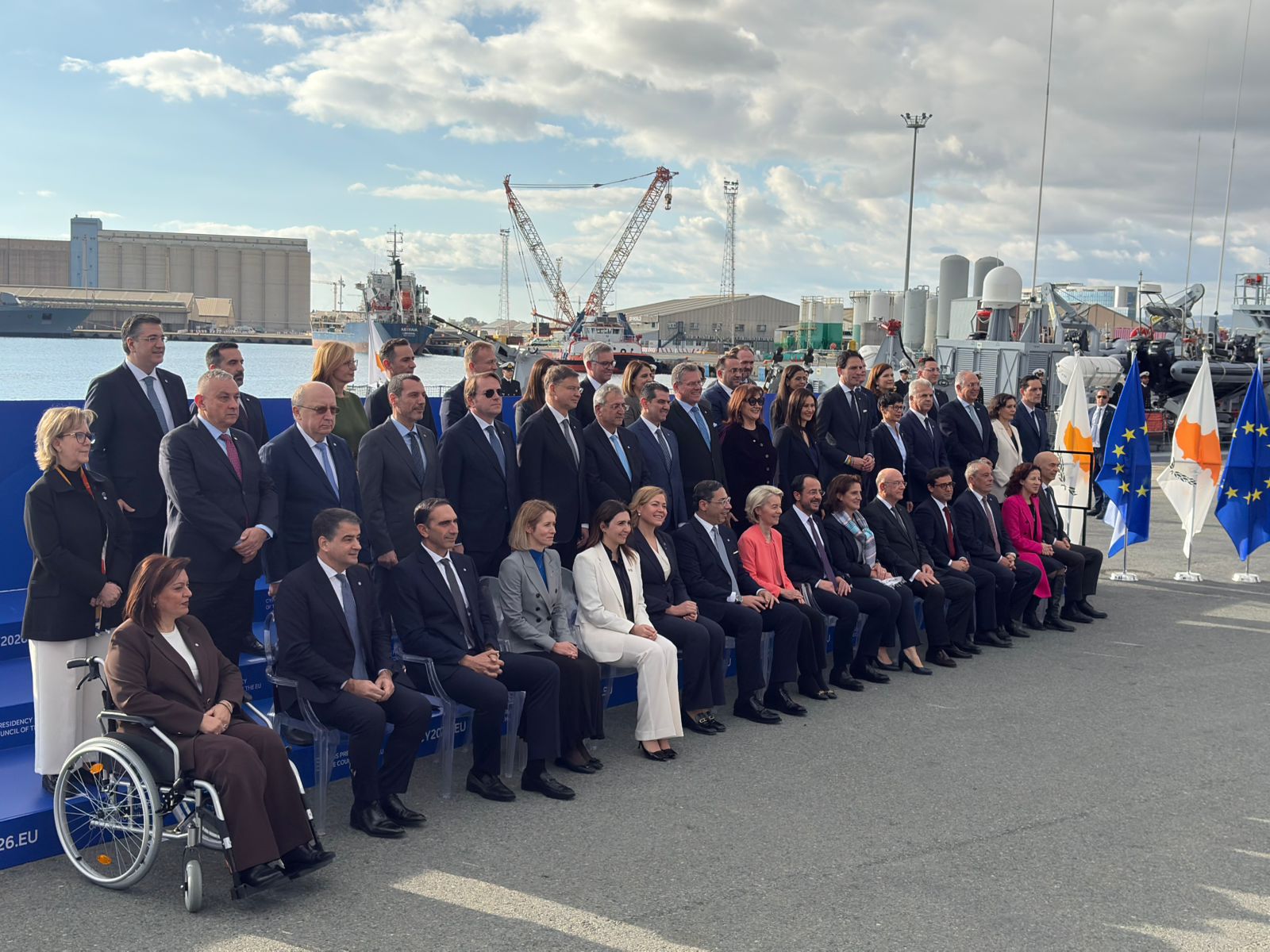
The visit of the EU College of Commissioners to Cyprus unfolded today against a backdrop of heightened security, intense international media attention, and a clear effort to frame the Cypriot EU Council Presidency as both symbolic and operational.
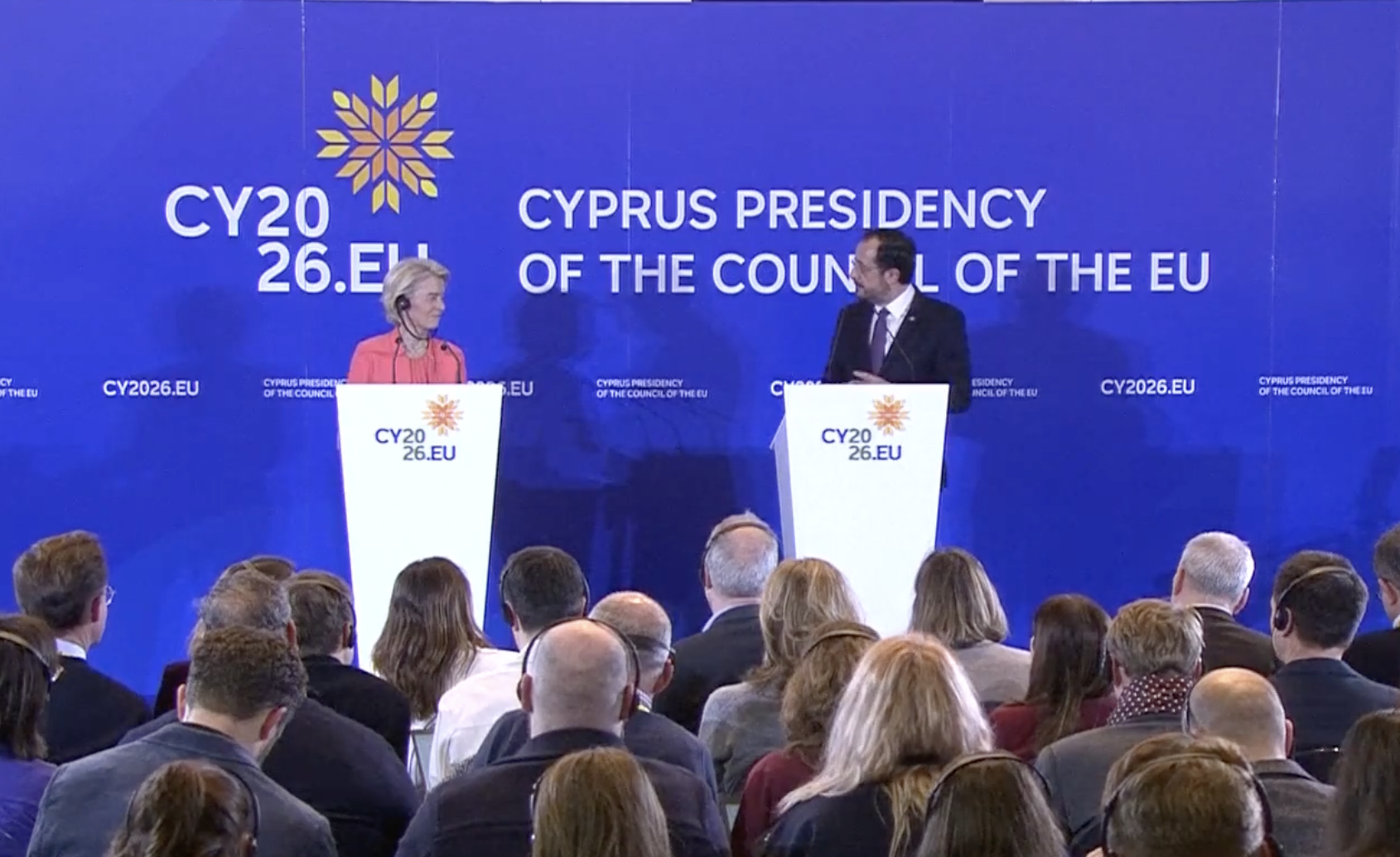
Speaking alongside President Nikos Christodoulides after consultations at Limassol’s new port, European Commission President Ursula von der Leyen set the tone for the next 6 months. “Together, we are navigating through turbulent political waters,” she said, describing Cyprus as a country uniquely positioned at the crossroads of continents and cultures.
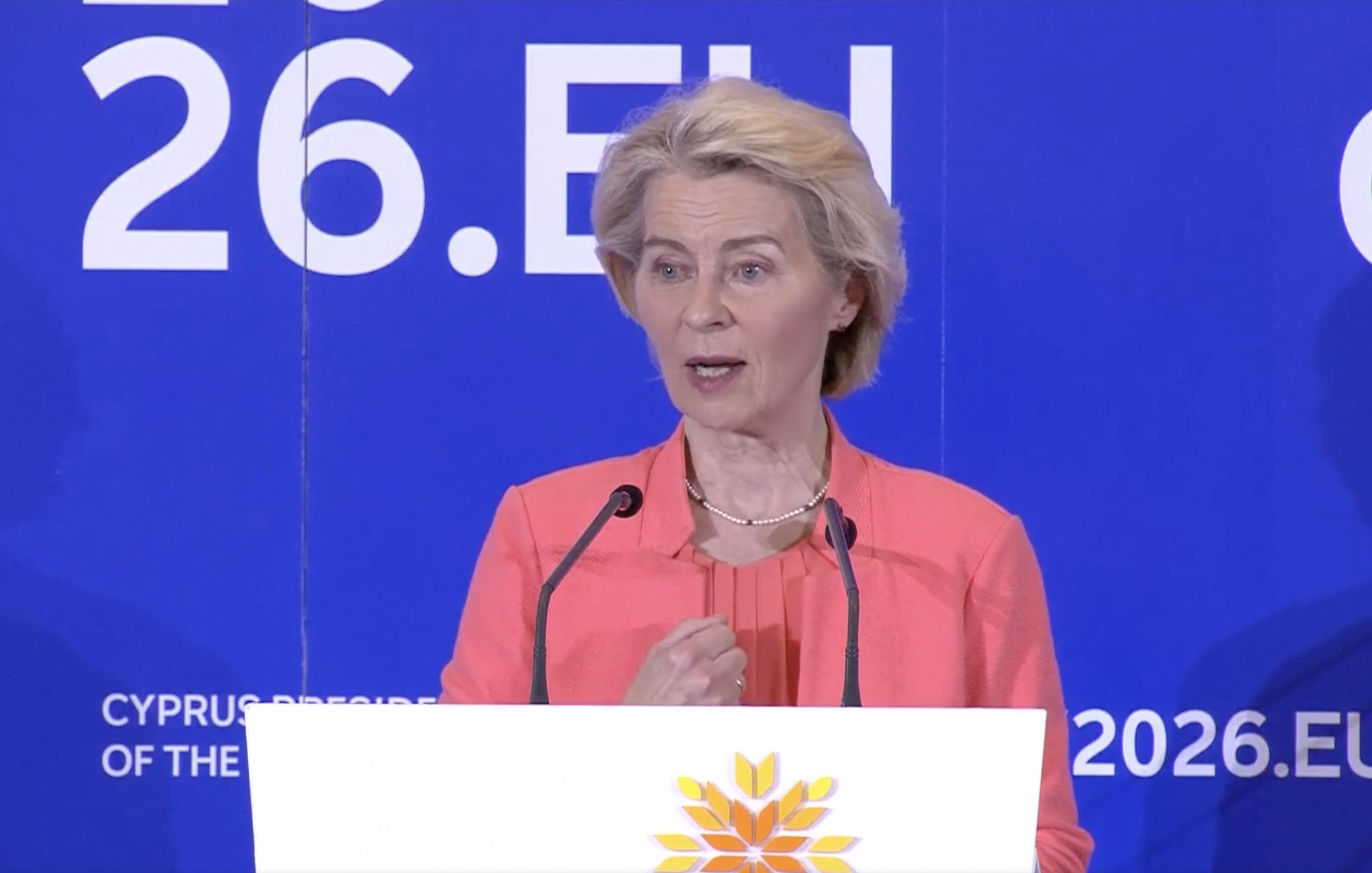
That geography, she added, has endowed Cypriots with a rare expertise in dialogue, negotiation and diplomacy, assets she said “will matter greatly as you steer our common European agenda in 2026.”
The consultations at the new Limassol port followed a morning visit to the Green Line in Nicosia, reinforcing the political symbolism of the EU’s presence in Europe’s last divided capital.
Christodoulides outlined the core priorities discussed with the College of Commissioners, including migration, climate change, the SAFE defence programme, water security, the next Multiannual Financial Framework, social cohesion and the Eastern Mediterranean. He also reiterated Cyprus’s readiness for full accession to the Schengen zone within the year.
The President said he briefed von der Leyen on the latest developments in the Cyprus problem and efforts to restart meaningful negotiations within the UN framework, thanking her for appointing Johannes Hahn as the Commission President’s representative on the issue, a move he describes as a clear signal of EU engagement.
Firefighting hub in the works
Asked about the EU’s intention to establish a regional firefighting hub in Cyprus, von der Leyensaid the project is a priority for the Union and expressed hope that the hub will be inaugurated during the Cypriot Presidency. Christodoulides confirmed that the hub will be based near the Andreas Papandreou Air Base, stressing that Cyprus is ready to coordinate closely with the Commission on the project’s implementation. The initiative, he said, reflects Cyprus’s ambition to contribute tangibly to regional crisis response.
Mediterranean, security and what comes next
Responding to further questions, von der Leyen outlined the EU’s Mediterranean Action Plan that is also a priority, underlining the importance of stability in the Middle East and the wider region. Cyprus, she noted, is uniquely placed to advance the Pact for the Mediterranean, describing it as “the best presidency” to push the initiative forward.
She also confirmed that a new European security strategy is nearing completion and will be presented very soon, framing it as part of a broader reassessment of Europe’s security environment, from the Arctic to the Eastern Mediterranean.
SAFE approved as defence talks progress
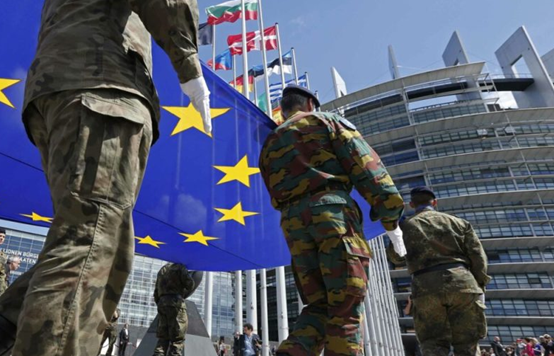
The European Commission approved the national defence plans of eight EU member states, including Cyprus, under the SAFE (Security Action for Europe) initiative.The decision opened the way for low-interest, long-term loans, with Cyprus set to receive €1.18 billion. The first group of approved states also included Belgium, Bulgaria, Denmark, Spain, Croatia, Portugal and Romania, giving the eight countries access to around €38 billion once loan agreements are signed.
European Defence Commissioner Andrius Kubilius stressed that “there is no time to lose,” saying the EU was now moving decisively from planning to financing defence readiness. He outlined the next steps as Council decisions, loan agreements and the release of an initial 15% pre-financing tranche.
International spotlight and the mood on the ground
More than 70 journalists from Europe and beyond are covering the visit, including correspondents from The New York Times and The Guardian, giving the day an unusually international atmosphere for a Council Presidency event. Security remained visibly tight across both Nicosia and Limassol, underscoring the political weight attached to the visit.
Officials from both the Cypriot government and the European Commission described the discussions as productive and beneficial, with ministers and commissioners alike stressing that the visit functioned as a vital working session.
Among journalists covering the visit, the atmosphere was markedly upbeat, shaped by a programme that signalled clear political intent from the outset of the presidency.
The visit concludes in Nicosia
Tomorrow, members of the College of Commissioners are scheduled to walk through the old city and along sections of the Green Line, accompanied by senior Cypriot officials, before departing the island.
As von der Leyen put it, the island is helping steer the Union through turbulent political waters. The real test will be whether today’s dense agenda translates into delivery over the months ahead.