

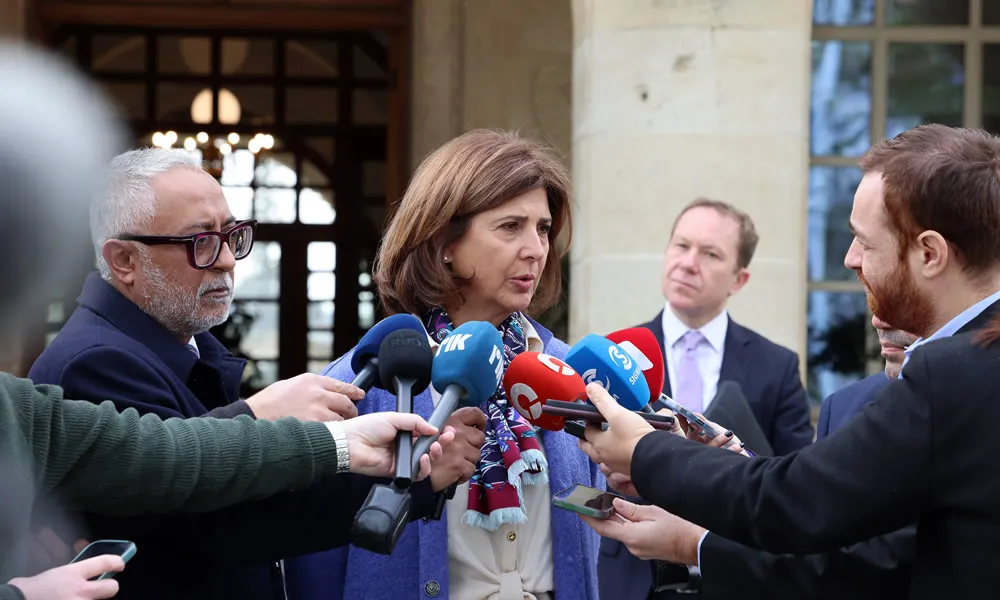
UN Personal Envoy on Cyprus María Ángela Holguín Cuéllar called on the leaders on Sunday to prepare for formal peace talks to resume in early July, after nine years of absence.
In an opinion piece, Holguín noted that the two leaders in Cyprus have yet to make “any significant progress” regarding implementation of trust-building measures, a commitment made to the UN Secretary-General last March in Geneva at the ‘5+1’ enlarged meeting.
When she met with the two leaders on January 17, Nikos Christodoulides and Tufan Erhürman, the two had a “frank” exchange on what they hoped to achieve and how they saw the road towards substantive negotiations.
No formal talks in first half of 2026
The UN envoy warned the leaders to be careful “not to subject their societies to new disappointments, which would lead to many more years of inaction”. At the same time, she suggested the first six months were not conducive to major developments. Holguín noted that, in the south, the Republic of Cyprus assumed the Presidency of the Council of the European Union, arguing this will keep the government “very busy” for the next six months. Parliamentary elections are also due in May, “creating a political moment that ends up limiting the possibility of significant changes”.
In the north, the envoy noted that Erhürman came to power with a different vision, and needs time to coordinate both the coalition partners running internal governance and its strong relationship with Türkiye, to manage positions and priorities. This “makes the upcoming months a complicated period to achieve major changes in the dialogue process,” she said.
The former Colombian foreign minister highlighted, when dealing with protracted conflicts, the importance of “delicate preparation and extensive prior work”. The sides need to understand the other’s position, priority interests, fears, and needs. She welcomed the leaders’ decision to meet without the UN as an intermediary as “a major step forward”.
End blame game, start working together
Holguín called on the leaders to use this period to understand each other better so they can start contributing to mutually beneficial solutions.
“The dynamic of merely applying pressure and blaming the other – or a third party – for the lack of progress, clearly serves no one.”
The UN envoy encouraged the leaders to use the coming months, when she will not be present on the island, to build a different model of interaction, in which they take decisions that show a “genuine interest” in resuming negotiations. In turn, both communities will be able to see that their leaders are willing to change the status quo for the benefit of all, she said.
Holguín then publicly called on the leaders to set the ground for a resumption of formal talks, which ended in July 2017 at Crans-Montana, in early July.
“Both leaders must continue meeting to make small joint decisions, and to explore ideas and viable pathways to restart a more formal negotiation process in the best possible way, beginning in July.”
It remains to be seen how both leaders and the guarantor powers, mainly Turkey, will respond to this proposal.
Meanwhile, the UN envoy said she will utilise the coming months to continue promoting rapprochement between key groups from both communities, as she did previously with the Technical Committee on Youth during a retreat held last December in Amman, and with a group of prominent Turkish Cypriot and Greek Cypriot academics in Paphos a few weeks ago. Next week, the Co-Chairs of the Technical Committees will meet in London, under UN auspices.
Return depends on leaders taking step forward
Concluding, Holguín said she will return to the island in a few months, but her arrival appeared to be conditional on two things: her seeing that she can contribute to “a specific step forward” and the leaders considering that “the UN’s presence is useful to facilitate decision-making”.
The leaders must take concrete steps that allow both sides to enter a new stage of talks, she said, adding, the immediate challenge is to prepare to achieve positive and lasting results in the final stage.