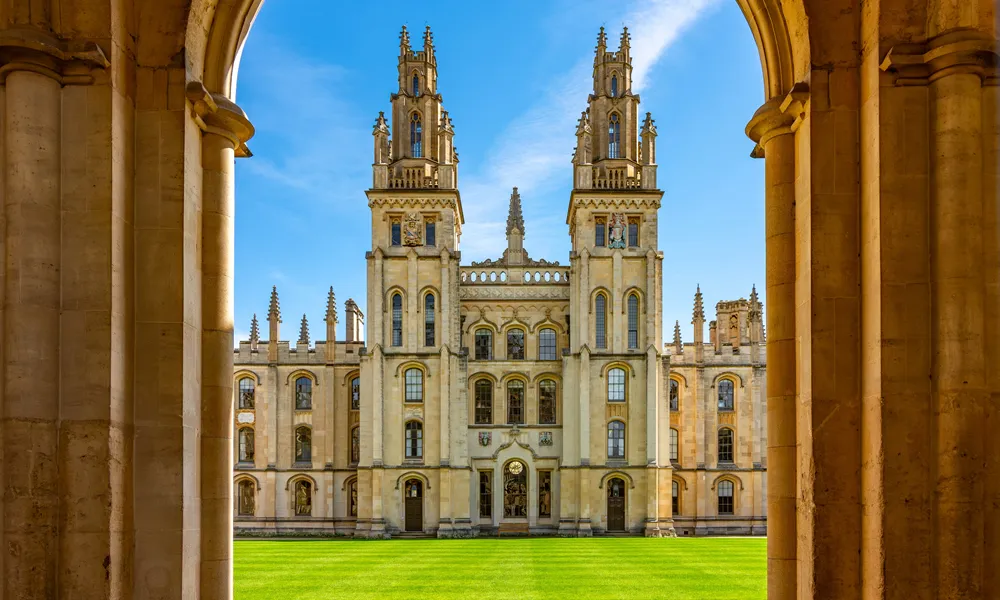

It is that time of year when the migratory birds take flight and, for generations, Cypriot students have followed the same instinct, leaving home to seek knowledge abroad. Coming from a small country with a relatively young university system, or them, the United Kingdom was always the natural destination: a country tied to Cyprus through history, offering world-renowned universities, and made even more accessible by the ease with which Cypriots learn English.
Even though local universities have since grown and multiplied, the appeal of studying overseas remains strong, sometimes pursued with the help of student loans and family support. Yet in recent years, the landscape has begun to shift.
Over five years after the UK left the EU, higher education is still feeling the shockwaves. Beyond the loss of EU funding and research ties, students have been directly hit.
EU nationals are no longer eligible for home fees or UK student loans, instead paying international tuition that often exceeds £20,000 a year. Combined with stricter visa rules and soaring living costs, what was once a natural rite of passage for Cypriot students is becoming far less accessible and, for many, a distant dream.
According to the Migration Observatory at the University of Oxford, in just two academic years, there was a 57% drop on students from the EU enrolling on a new course in UK universities. Data from the Higher Educations Statistics Agency (HESA), shows that EU postgraduate students decreased from 15% of the student body in 2020-21 to just 6% in 2022-23.
What about Cypriots?
The UK has traditionally been a top choice for Cypriot students, with the British Council stating that it has been cooperating with Cypriots since the 1940s. Statistics show that over 9,000 Cypriots study in Britain annually. Is it still the same.
Academic advisor Nicholas Kythreotis, who has decades of experience in student guidance, spoke to Politis about how enrolment procedures have evolved and what prospective students should be aware of when applying.

“It has become harder for European students”, said Kythreotis, now that fees are a lot higher and students also need to apply for a visa. In terms of qualifications, it has stayed the same or even “slightly easier” for international students, as he explained. It has been observed that requirements are more flexible for students paying international fees, which are often “three times higher”.
Apart from the fees, Cypriot students also have to apply for a visa, which is a “relatively straightforward process but time-consuming”, if the student has an unconditional offer from the university of choice and paid the tuition fee deposit. The British government offers a fast track visa application option for a fee. Additionally, students must pay for medical insurance to the NHS, “irrespective of whether they have private medical insurance”. In total, as stated by Kythreotis it adds up to a total of about €4000 for the three years that a typical undergraduate course lasts. He also specified that the visa fee is a one-off.
One thing is for certain, the cost of studying in the UK has risen exponentially. Advertising on UK government websites clarifies that individuals on student visas also have the right to work part-time. Kythreotis explained that indeed, students often choose to work between 15 and 20 hours a week, with 20 hours being the limit allowed, so as to increase their income. Student jobs include working at the university, coffee shops and restaurants, while there are websites where one can enter their details and it matches them with the mist suitable employment, depending on availability and skillset.
Has the UK become less of a popular choice?
With European numbers significantly dropping, one cannot help but wonder whether that’s the case with Cypriot students as well. “Definitely, the numbers have fallen, I would say around 60% if not more”, said the academic advisor. However, Cyprus remains one of the few countries, along with Germany and Norway, that are still “holding up”, mostly because “our income is higher, compared to Poland let’s say”, where numbers have fallen by 90%.
Despite the loss, universities as entities have not been affected financially for two reasons, as Kythreotis illustrated. One is because the price of international fees makes up for the number of students and the other is because there was an increase in the number of Indian and Chinese students who are also paying international fees. However, visa restrictions on Chinese nationals has turned the Chinese to the more lenient option of Australia. Chinese students, especially, are having trouble with securing work permits after they’ve completed their studies and are unable to become employed and therefore choose other countries.
Reduced student numbers may not be affecting universities as such, however the impact is felt strongly on cities whose local economy depends heavily on the universities and students, from local shops to student housing units. According to media reports, some student accommodations are opening up to young workers as well to fill up empty rooms.
Moreover, Scotland has lost the most students compared to the rest of the UK, as institutions north of the border offer four-year undergraduate courses, which increase the cost of education even further.
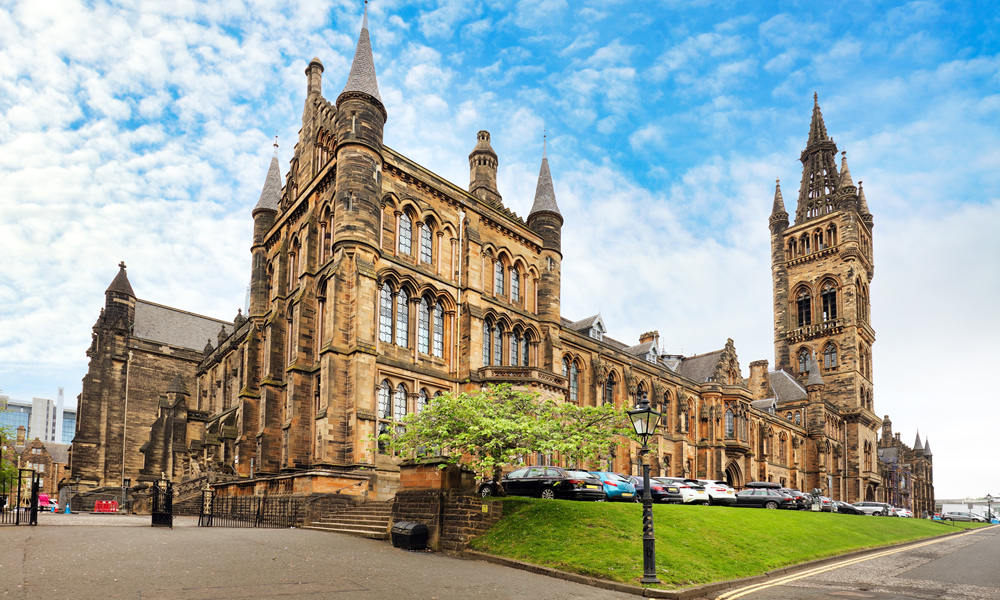
Passport Perks for Cypriot Students
Cypriot students who are also holders of a British passport, through a parent or place of birth, are still eligible to apply to the Student Loan Company (SLC) and will be paying home fees. Apart from that, UK passport holders are also not required to apply for a visa.
Kythreotis further noted that many individuals hold British passports through ancestry or birthplace without realising they qualify for home fees and visa-free access. He emphasised that a clearer understanding of nationality rules could significantly impact students’ access to UK funding and admissions. “You’d be amazed how many people have British passports but are not British”, he told P.
On the other hand, children of British passport holders that don’t have a passport themselves, are still eligible for home fees but will be required to apply for a visa, however the process gets “a little more difficult” and guidance is required to fill in the proper paperwork and get the most benefits possible.
In most cases, according to the academic advisor, most students will choose to continue their studies in Cyprus unless they are accepted in one of the high-ranking universities. On the contrary, postgraduate courses have risen in popularity, given that they are only one-year-long and the total cost is less.
As far as scholarships are concerned, Kythreotis explained how some universities, like Portsmouth University, Coventry and Sunderland, among others, offer EU-specific scholarships, that bring the tuition fees to the home fees rate. Many other universities offer merit scholarships, of between £1000 - £6000 a year and in a few instances 50% of the tuition fees. However, the amount is inadequate to cover annual fees that reach £30,000 (approximately €35,200). Furthermore, merit scholarships are given according to academic performance, with high competition making it harder to secure them, and therefore are not sufficient to make up for the student loss.
One thing is for sure, European students are no longer preferring the UK for studying at university, since Brexit, with the echoes reaching Cypriots as well. Although universities are still able to attract international students, mostly from Asia, the reduced numbers are affecting smaller cities, whose local economy was heavily dependent on students.
Still, there are options for those Cypriots that still want to go to the UK for studying, continuing a tradition that spans over 80 years.