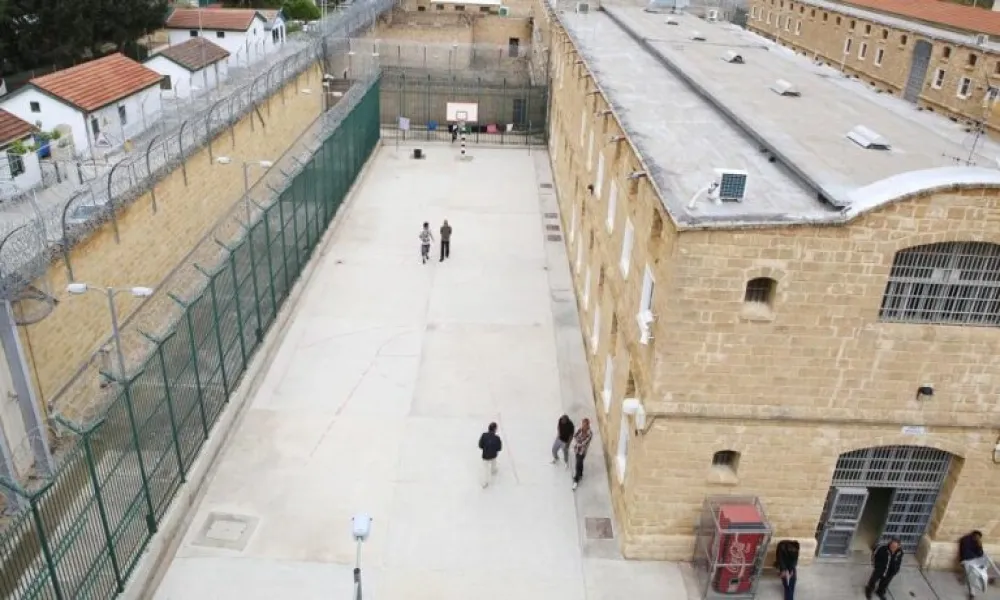
Criminal acts continue to be planned and executed under instruction from inmates inside the Central Prisons. For various reasons, the prison system has once again become the focus of attention and, regrettably as usual, not for any admirable achievement. First came the admission by the Assistant Attorney General that he had received threats against himself and his family, reportedly from a particular high risk inmate. Then came the testimony of a female prisoner who described what she claimed had been taking place inside the institution.
One must ask what has been happening inside the Central Prisons in recent years. No one has managed to impose order. Direct links with organised crime appear to have been established. Criminal acts are planned from inside cells and much more besides. The operation of the Central Prisons is governed by laws and regulations, yet the corrective role of the institution has long been lost.
Despite issues of overcrowding, ageing facilities and corruption, the prison has an important role to fulfil. The state must act without delay. Not with piecemeal measures but with immediate and thorough reforms, whatever the cost.
Those familiar with the situation estimate that around half of criminal activity is planned, organised and executed under instruction from convicted inmates in the Central Prisons. This raises the obvious question. If they were at liberty, what more might happen. Where are the controls. Where is the restriction on illegal contact with the outside world.
Much has happened in the prison over the past years, yet the real issue is what has not been done to contain a situation that appears increasingly out of control. This is why the position of director of the Central Prisons is seen as an exceedingly difficult one. Over the past eleven years, four people have served in the post. Anna Aristotelous, Ioannis Kapnoulas, Haris Philippides and Konstantinos Konstantinides, the last three as acting directors. There have been occasional steps in the right direction, yet events make clear that they are far from sufficient.
A pattern of incidents
Below is a chronological outline of significant incidents in the Central Prisons. These cases show that fundamental change is needed at all levels if the institution is ever to turn the page.
Nov 2013 – Jan 2014
A young Romanian inmate was raped inside the prison. The Larnaca and Famagusta Permanent Assize Court imposed concurrent prison terms of twelve years on two men and ten years on another two for forced intercourse, sexual exploitation, drugging with intent to commit forced intercourse and causing bodily harm. The court described the case as belonging at the peak of sexual depravity, noting the revulsion and disgust any person would feel for what the four men did to the defenceless victim.
27 October 2022
Turkish Cypriot inmate Tansu Cindian died after being brutally beaten inside the prison. Three warders received custodial sentences and the perpetrator was given life imprisonment. The Nicosia Assize Court highlighted serious shortcomings and lapses within the prison and a culture of lax oversight and inadequate protection of inmates.
26 September 2024
Lifer Doros Theofanous, known as The Hairdresser, escaped while on home leave at his residence in Cholettria, Paphos. His escort of four warders and three MMAD officers were caught off guard and he fled. He was arrested days later. The incident exposed serious weaknesses in leave procedures and prisoner transport. The President dismissed the Chief and Deputy Chief of Police and replaced the acting prison director.
January 2025
High risk inmate Deyan Loy, serving time for the 2016 Ayia Napa quadruple murder, recorded and gave an interview to an English language online outlet from inside his cell with ease. Filmed on his mobile phone and recorded in segments, the interview showed he could speak freely without staff noticing. The full video was posted online, disgracing both the prison system and the Republic.
April 2025
On 10 April, during a search warrant at a chief warder’s home for an unrelated case, thousands of documents were found, including confidential and classified files from the prison administration. These included architectural and spatial plans of the Nicosia Central Prisons, inmate files, disciplinary investigation documents, internal correspondence, reports, memos and lists relating to operational matters. Police documents and correspondence between the Prison Department and other state authorities were also found. Eight people, including former director Anna Aristotelous and former deputy director Athena Dimitriou, are expected to stand trial.
July 2025
During an investigation of a serious case, police discovered that a convicted inmate had been running his business operations from inside his cell via mobile phone. His partner received the proceeds and another individual handled collections. The case is now before the Nicosia Assize Court, with defendants including the 48 year old inmate, his 37 year old partner, her parents and brother, a 40 year old man from Famagusta district and a 26 year old warder.
Mobile phones and drugs remain persistent problems inside the Central Prisons. Despite efforts to stop the use of mobile phones, anyone willing to pay the price could obtain one. Hopes now rest on a new mobile phone disabling system which has begun pilot operation. Drugs remain a major scourge, with inmates continually finding new ways to bring in illegal substances. Drones have even been used to deliver drugs into the prison grounds.