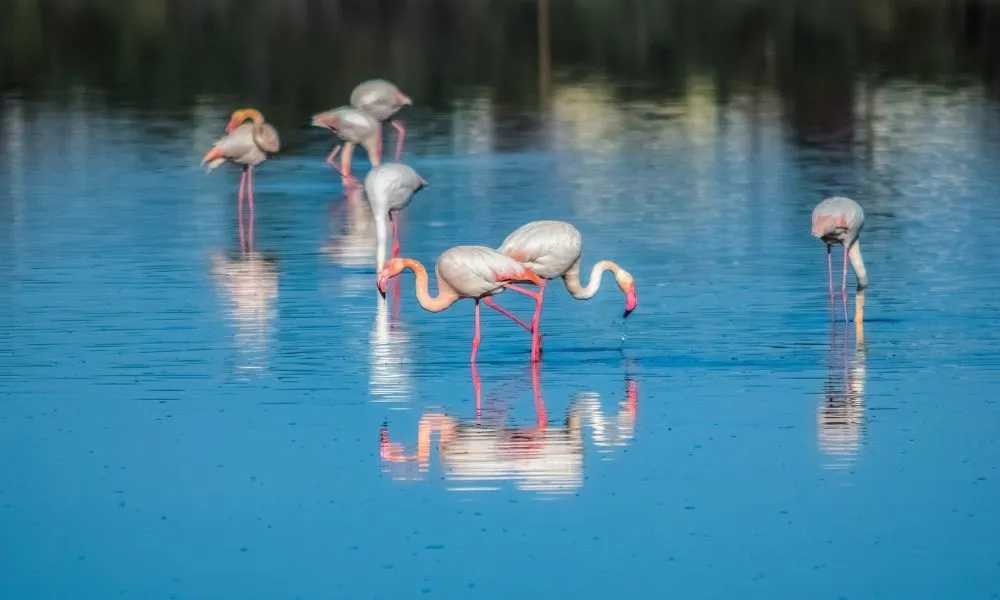
Cyprus’ wetlands, famous for hosting thousands of flamingos each winter, are showing signs of distress. New data from long-term monitoring efforts reveal a sharp drop in the number of birds arriving to overwinter—an alarming signal for one of the most charismatic species of the Eastern Mediterranean.
One of the region’s largest wintering populations
Every winter, between 5,000 and 10,000 greater flamingos (Phoenicopterus roseus) settle across five key wetlands in Cyprus. The largest gatherings occur at the Larnaka and Akrotiri Salt Lakes, making the island home to more than 1% of the Eastern Mediterranean population.
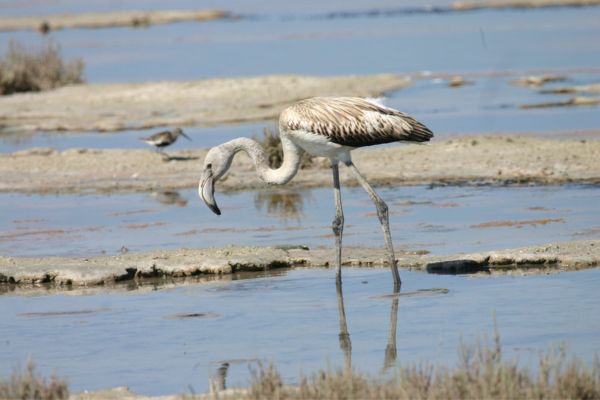
For over twenty years, monthly waterbird counts by the Game and Fauna Service and BirdLife Cyprus have tracked these populations with scientific precision. Their findings now outline a clear downward trend.
A decline of 14–31%
Since 2013, flamingos wintering in Cyprus have declined by 14–31%, according to data presented at the 4th International Flamingo Symposium held in Italy (10–15 November 2025). Scientists warn that the drop is not an isolated fluctuation but a consistent, long-term pattern.

What is driving the decline?
Researchers point to several pressures affecting Cyprus’ wetlands and their ability to sustain flamingo populations:
- Frequent droughts, reducing the availability of suitable wetland habitat
- Inflows of poor-quality water, diminishing food sources
- Development pressures around key natural sites
- Incompatible activities near wetlands, disturbing feeding and resting birds
Together, these threats undermine the delicate balance required for flamingos to thrive.
The role of the LIFE-funded Pandoteira Project
A decade-long conservation initiative, Pandoteira, co-funded by the EU’s LIFE Programme, is now working to fill critical knowledge gaps. The project investigates species-specific needs—feeding, nesting, and resting requirements—while quantifying the threats each species faces.

Flamingos are among the focal species of the project. By understanding their ecological needs in detail, conservationists can design targeted, site-specific actions within Natura 2000 Special Protection Areas.
A path toward recovery
Strengthening the scientific foundation behind conservation decisions will allow better management of Cyprus’ wetlands and a more resilient future for the species that depend on them. Achieving these goals is essential not only for flamingos but for the health of the Natura 2000 network itself.
Cyprus’ famous pink visitors are sending a message—and the island’s response in the coming years will determine whether these wetlands continue to glow with their presence.