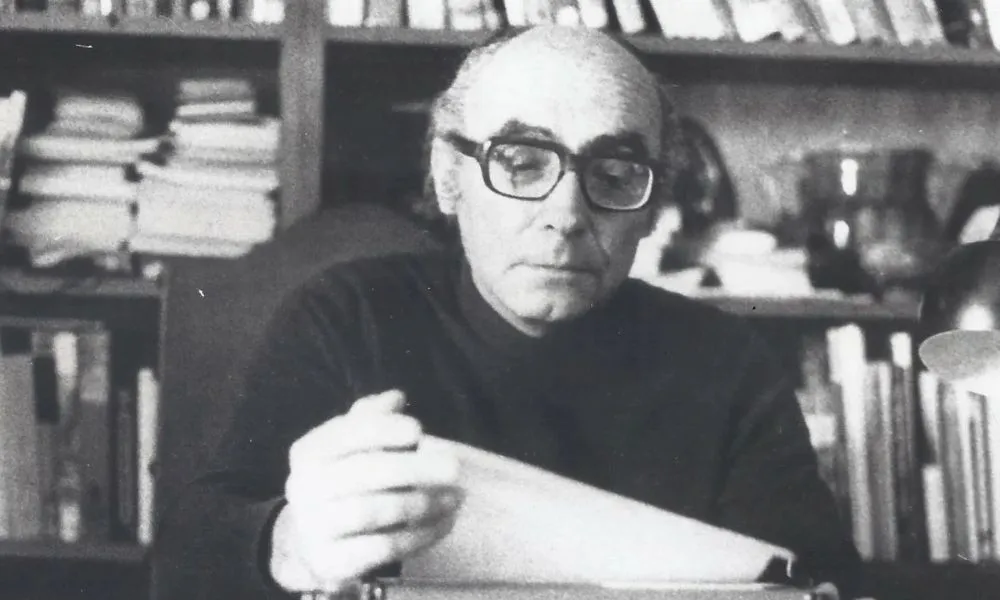
In 1961, the then district director and later director-general of the Ministry of Agriculture, Rogiros Michaelides, summoned a Plant Protection Service officer, Dinos Papayiannou - widely regarded as the father of modern Cypriot beekeeping - and tasked him with reviving the sector.
Bee populations on the island had collapsed. The problem had been identified as early as 1905 by the British colonial administration and peaked in 1946, when the number of beehives in Cyprus fell to just 23,170, according to Forestry Department statistics, compared with around 500,000 recorded in 1896.
From clay to wood
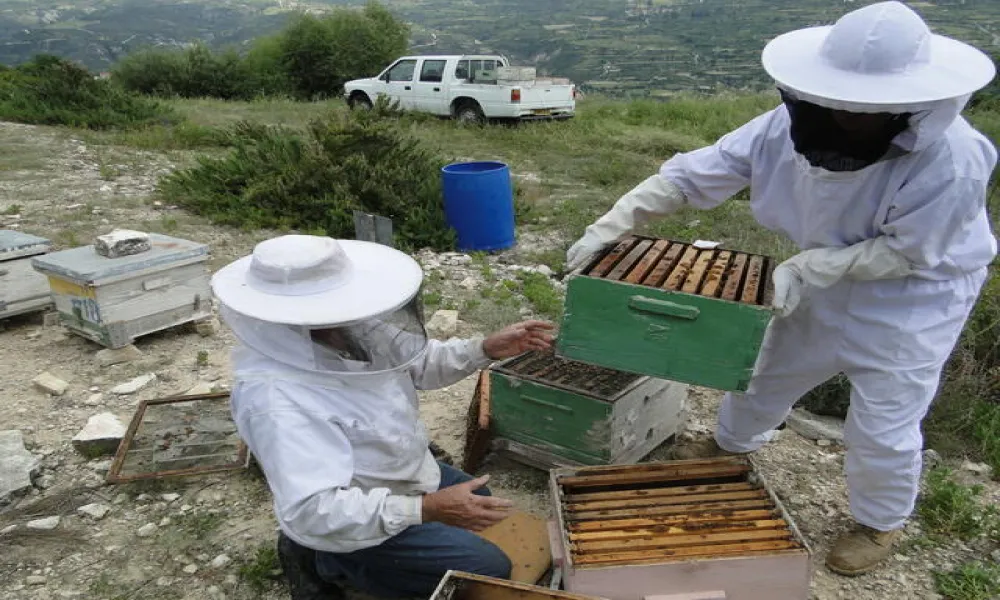
The decline continued until Independence. Following training abroad, Papayiannou brought new expertise to Cyprus. Together with his team, he systematically trained beekeepers and replaced the traditional clay hive (the jiverti) with the modern movable wooden hive invented in 1851 by American pastor Lorenzo Langstroth. For nearly two decades, Papayiannou travelled across the island, delivering lessons in towns and villages - in schools, monasteries and even at the Central Prisons.
State inertia
In contrast to the strong state involvement of past decades, today - at a time when the sector faces new challenges - such initiatives are notably absent. A key issue concerns ethical beekeeping and the risk of the Cypriot honeybee subspecies, Apis mellifera cypria, being driven to extinction.
The paradox is that while the bicommunal Technical Committee on the Environment has opened discussions on joint measures to protect the Cypriot bee, there is inertia on the part of the Department of Agriculture in areas controlled by the Republic of Cyprus.
Land request pending
The matter is of particular concern to the Cyprus Beekeepers’ Association. Last June, it formally requested the allocation of a plot of land in Athalassa - an area ideal due to its rich flora - for the establishment of a Beekeeping Centre. To date, no response has been received.
According to the Association’s plans, the centre would host an accredited apiary for the systematic production of Cypriot-breed queen bees and their distribution to local beekeepers.
Imported breeds
As reported in previous investigations, the Cypriot honeybee - naturally irritable and defensive due to its long struggle against its predator, the oriental hornet (Vespa orientalis) - is under increasing pressure, not only from drought but also from the importation of foreign bee breeds.
Many beekeepers believe imported genetic material offers easier management. In reality, Cyprus failed, following EU accession, to protect its native bee, unlike countries such as Slovenia, which safeguards Apis mellifera carnica through restrictions on imports.
Today, large numbers of beekeepers import foreign queen bees. Scientists warn that this leads to hybrids with negative traits and a loss of productivity after the first generation. At the same time, the indigenous subspecies is being gradually replaced, threatening extinction and a consequent loss of biodiversity.
Queen-rearing centre
Speaking to Politis, Association secretary Polydoros Kosta said the proposed site would allow for an accredited apiary preserving the Cypriot bee to the greatest possible extent. The centre’s queen breeder would selectively produce improved Cypriot queens, less aggressive towards beekeepers, more defensive against natural enemies and less prone to swarming.
These queens could then be supplied to Cypriot beekeepers at lower prices than imported varieties such as Buckfast bees, a man-made breed developed by Brother Adam at Buckfast Abbey in the UK - as well as Italian, Turkish and Greek strains.
Education and research
The centre would also be open to the public for awareness-raising and provide training for beekeepers. At the same time, unused EU funds earmarked for beekeeping research could be utilised, including for the protection and preservation of the Cypriot bee.
Mr Kosta stressed that the plans also include academic backing through collaboration with a university. At present, academic support for beekeeping in Cyprus is virtually non-existent. Unlike other countries, no Cypriot university has a beekeeping chair to guide and advise the sector — leaving beekeepers navigating uncharted waters and contributing to the ongoing undervaluation of the Cypriot honeybee.
This article was originally published on the Greek-language Politis website.