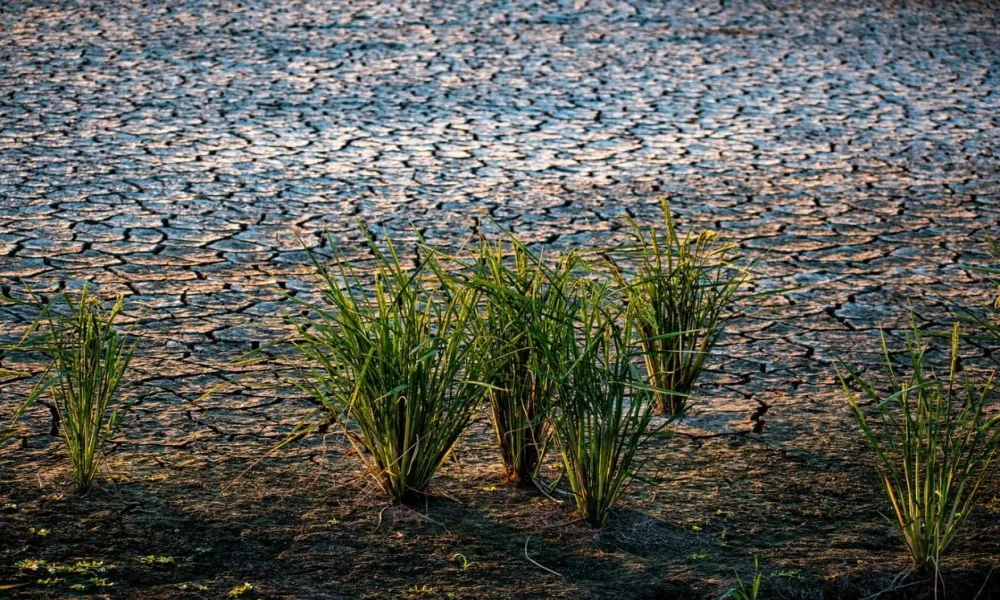

The world is entering an “era of global water bankruptcy”, scientists associated with the United Nations have warned, as mounting pressures on water resources push many regions beyond the point of recovery.
Against a backdrop of chronic groundwater depletion, over-allocation of water resources, land and soil degradation, deforestation, pollution and accelerating global warming, a new UN report declared that the planet has entered a phase in which traditional concepts such as “water stress” or “water crisis” no longer adequately describe reality. Instead, it describes a post-crisis condition marked by irreversible losses of natural water capital and an inability to return to historical baselines.
The report, titled Global Water Bankruptcy: Living Beyond Our Hydrological Means in a Post-Crisis World, calls on political leaders worldwide to facilitate what it describes as an “honest, science-based adaptation to a new reality”.
Beyond water stress and water crisis
According to the report, many regions are now living beyond their hydrological means, with water systems that have already “collapsed” in functional terms. It argues that the language of temporary shortage obscures the severity of the problem and delays necessary policy responses.
“This report exposes an uncomfortable truth: many regions are living beyond their hydrological means, and many critical water systems have already gone bankrupt,” said the report’s lead author, Kaveh Madani, Director of the Institute for Water, Environment and Health at the United Nations University (UNU-INWEH).
Madani stressed that the situation should be treated as a warning that fundamental policy reassessment is unavoidable. He noted that governments often continue to frame water scarcity as a temporary problem, rather than confronting it honestly and acknowledging systemic failure.
“Governments treat water scarcity as something temporary and avoid being honest about the problem,” he said, arguing that states should “declare bankruptcy today, instead of postponing that decision”.
“Let us adopt this framework. Let us understand it. Let us recognise this harsh reality today, before causing further irreversible damage,” he added.
A point of no return
The findings were echoed by civil society organisations working on global water access. Tim Wainwright, Chief Executive of WaterAid, said the report lays bare the scale of the challenge.
“This report captures a hard truth: the global water crisis has passed the point of no return,” he said.
The authors warn that without immediate, structural changes in how water is governed, allocated and valued, societies risk locking themselves into permanent water insecurity, with severe consequences for food systems, public health, economic stability and geopolitical relations.