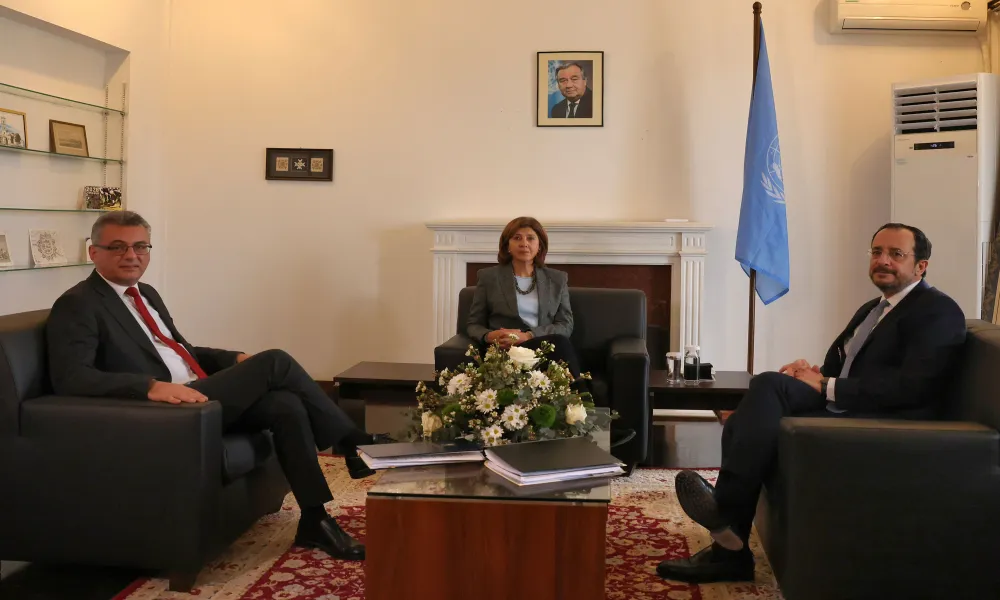
When the leadership of the Turkish Cypriot community passed to Tufan Erhürman last October, a sense of cautious optimism emerged. There was at least some hope that, together with his Greek Cypriot counterpart Nicos Christodoulides, the two leaders might more easily find common ground and usher in a new phase in efforts to break the long-standing deadlock in the Cyprus problem.
That hope was fuelled partly by Erhürman’s markedly different positions from those of his predecessor, his long-standing and clear support for the reunification of Cyprus, and partly by President Christodoulides’ repeated assurances that he was fully ready to resume negotiations but had found no response from the intransigent Ersin Tatar. Together, these factors opened a narrow window of expectation.
No one, of course, expected miracles or rapid breakthroughs. Reservations existed about both leaders, albeit for different reasons.
What was anticipated, however, was that as two relatively young leaders - both shaped by the difficult post-war period - they would differ from their predecessors, who were often burdened by the legacies of earlier eras and driven largely by a misguided concern for their political legacy. At the very least, it was hoped they would attempt to engage in sincere dialogue, with goodwill and genuine intent, aimed ultimately at the key objective at this stage: the resumption of negotiations.
Unfortunately, the initial signs have been deeply disappointing and discouraging. Despite three meetings to date, the two leaders have failed to make even the smallest step forward. On the contrary, each new meeting appears to mark a step backwards. Both have engaged in impression management, wasted time on inconsequential procedural issues, reopened matters that had already been agreed and resolved, and have been unable to agree on even a single confidence-building measure. Most tellingly, they have begun to cast doubt on convergences which both had repeatedly stated they accepted and regarded as acquis.
In practice, Christodoulides and Erhürman are proving to be well below the expectations raised by their simultaneous leadership of the two communities. Like their predecessors, they appear hesitant and unwilling to disturb the stagnant waters of the Cyprus problem.
Under these circumstances, it is evident that this effort, too, is being drained of substance and momentum, with responsibility lying with both leaders - not solely with Erhürman, as some on the Greek Cypriot side have already begun to suggest.
The United Nations, despite the diplomatic tact that the Secretary-General’s Personal Envoy continues - with visible difficulty - to deploy, is clearly disappointed. María Ángela Holguín’s statement that she currently sees no prospect for convening the agreed new 5+1 conference effectively signals the beginning of the end of both the current effort and Secretary-General António Guterres’ ambition to leave a meaningful legacy on the Cyprus problem before stepping down at the end of the year.