
Voices
By Pavlos K. Pavlou, journalist *
Honouring the memory of the third President of the Republic of Cyprus, George Vassiliou, I set out some information about his life, activity and contribution, aspects that are not widely known to the general public. I had the pleasure of knowing him and collaborating with him in various ways, and of observing at first hand some of the distinctive characteristics of his personality.
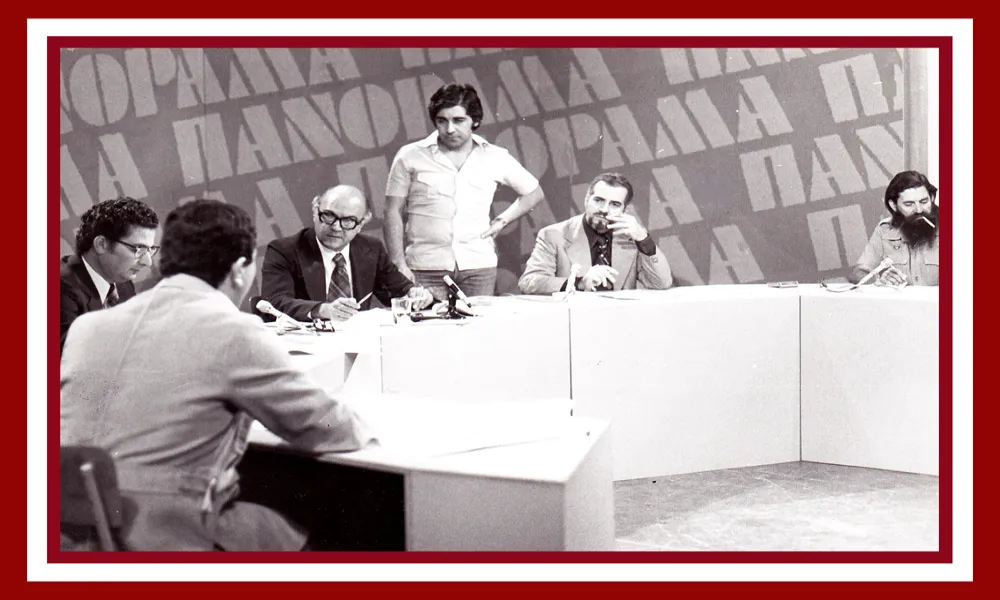
Collaboration on “Panorama”
George Vassiliou was one of my main collaborators on the weekly CyBC television programme Panorama, of which I was the producer. This meant that I was responsible for setting the agenda, selecting contributors and overseeing the direction. The team included distinguished journalists and academic analysts, among them Christakis Katsambas, Alex Efthivoulou, Andreas Hadjipapas, Iakovos Tenedios, Dimitris Andreou, Michalis Attalides, Andreas Achillides, Angelos Gavriel, Themis Themistocleous and Yiannis Kareklas.
With solid academic training in Economics and a broad range of knowledge, George Vassiliou was our regular contributor for analysing economic developments and prospects in Cyprus and internationally, always in a simple and accessible manner.
Communication skills and public presence
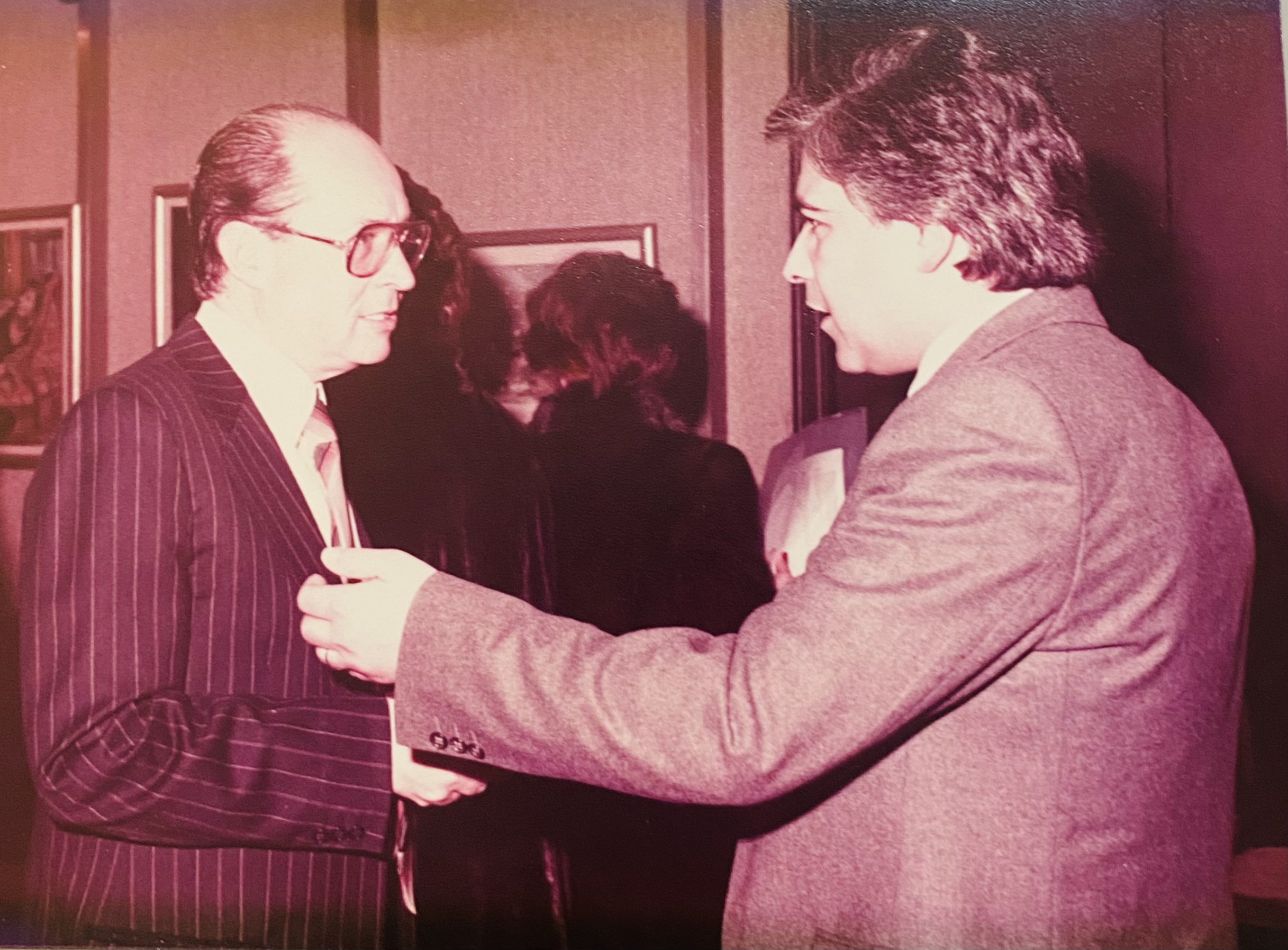
He had a natural gift for speech and was highly communicative, a quality that played a decisive role in his election to the presidency of the Republic of Cyprus. In his interpersonal relations he was exceptionally simple and approachable, a trait he maintained even while holding the highest office. As a presidential candidate he became known for his warm, firm handshake with everyone, especially ordinary people.
George Vassiliou was, moreover, an outstanding expert in communication and is regarded as the father of market research in Cyprus through KEMA, where many later well known researchers and pollsters were trained.
Family and youth
George Vassiliou should be regarded as a phenomenon in the political life of Cyprus. He came from a family with a strong political and activist background. His father was the ophthalmologist Vassos Vassiliou and his mother was the dentist Fofo, daughter of the renowned painter and iconographer Othon Yiavopoulos, originally from Vytina in the Peloponnese. His sister was the distinguished actress and director Monica Vassiliou.
His parents had joined the ranks of EAM and later the Democratic Army during the Greek Civil War. Along with their children and thousands of others, they became political refugees in countries of the former Eastern Bloc. With studies in economics and marketing, a cosmopolitan outlook and fluency in several languages, George Vassiliou distinguished himself primarily as an economist and businessman rather than as a career politician.
A remark by Christakis Katsambas
It is worth recounting a light hearted moment from the programme Panorama. During a break, Katsambas, Alex and I were discussing aloud how to approach a serious issue related to the Cyprus problem, when Vassiliou joined the conversation and said, “Shall I give you my opinion as well?” Katsambas, a man with a keen sense of humour, replied, “No, my dear George, you stick to economics. You do not understand politics.”
In the end, he understood politics very well indeed, as he is recognised as an effective and successful president and statesman.
On the road to the Presidency
From as early as late 1986, George Vassiliou detected a growing fatigue among the Cypriot electorate and a desire for change. Public opinion surveys played a key role in this assessment, a tool unfamiliar to many at the time but very familiar to him.
Unlike the traditional politicians of the 1950 generation and the Makarios era, Vassiliou appeared as a renewing force with a different style and political behaviour. This followed a period of political crisis marked by clashes between President Spyros Kyprianou, AKEL and the Democratic Rally. At the same time, the Cyprus problem had reached a prolonged stalemate, with responsibility for the deadlock attributed by many, both in Cyprus and abroad, not only to Turkey and Denktash but also to the Greek Cypriot side.
Shortly before the 1988 elections, RIK remained closed for an extended period due to a labour dispute. A delegation of officials from the two RIK trade unions, EVRIK and SYTYRIK, of which I was Secretary General of EVRIK, met George Vassiliou at KEMA. I vividly recall his absolute certainty of victory when he told us, “You are not speaking to a candidate, but to the next President of the Republic.” This confidence clearly stemmed from the opinion polls he was conducting.
In the 1993 election, however, against Glafcos Clerides, the same excessive confidence proved detrimental, highlighting one of his weaknesses. Many attribute his unexpected defeat to tactical errors and elements of arrogance, despite the fact that he had exceeded 44 per cent in the first round.
His election and a new climate
When he was elected President in February 1988, I accompanied him with an RIK crew on his travels to Athens, London, Geneva, New York, Kuala Lumpur for the Commonwealth Heads of Government Meeting, Singapore and Australia. I observed how quickly he adapted to the demands of high office.
He believed that Cyprus should not be single issue focused, meaning not referring only to the Cyprus problem. For this reason, he always went well prepared to meetings and would usually begin by addressing the problems faced by the country he was visiting. A tireless worker, he never allowed time to be wasted and frequently asked embassies and aides to add more meetings, even at inconvenient hours.
Contribution to media
Many have already spoken about the overall assessment of his contribution as former President. Personally, and with full knowledge of the facts, I wish to highlight his major contribution to communication, the media and free access to information. Even his political opponents acknowledge that the Vassiliou presidency brought significant positive changes to political culture and behaviour in Cyprus.
For the first time, boards of semi state organisations included individuals from across the political and ideological spectrum. At RIK, the presentation of government activity changed, and news bulletins gradually moved away from a leader centred approach towards a more people centred one. On his instruction, we no longer rushed repeatedly to the airport to cover arrivals and departures without real news value, nor did we begin every bulletin with the standard phrase “The President of the Republic…”.
During the second half of his presidency, private radio and television began operating, transforming the media landscape entirely.
Lasting impact on public life
With board members at RIK drawn from diverse political backgrounds, the Third Programme was established in a short period, staffed by many collaborators and operating without the suffocating managerial control of earlier years. Later, the second television channel also began broadcasting.
The same spirit of change was felt throughout the civil service and public life more broadly. George Vassiliou instilled the mindset of a technocrat who demands swift decisions and tangible results within a less bureaucratic state system. He achieved a great deal. He did not achieve everything he intended or hoped for. My sense is that he chose a more consensual approach in his first term, reserving the necessary confrontation with entrenched interests for a second five year term, which never came.
We bid farewell to George Vassiliou with appreciation, respect and gratitude for all that he managed to achieve and contribute to Cyprus.
* Pavlos K. Pavlou, journalist, (pcpavlou@gmail.com)