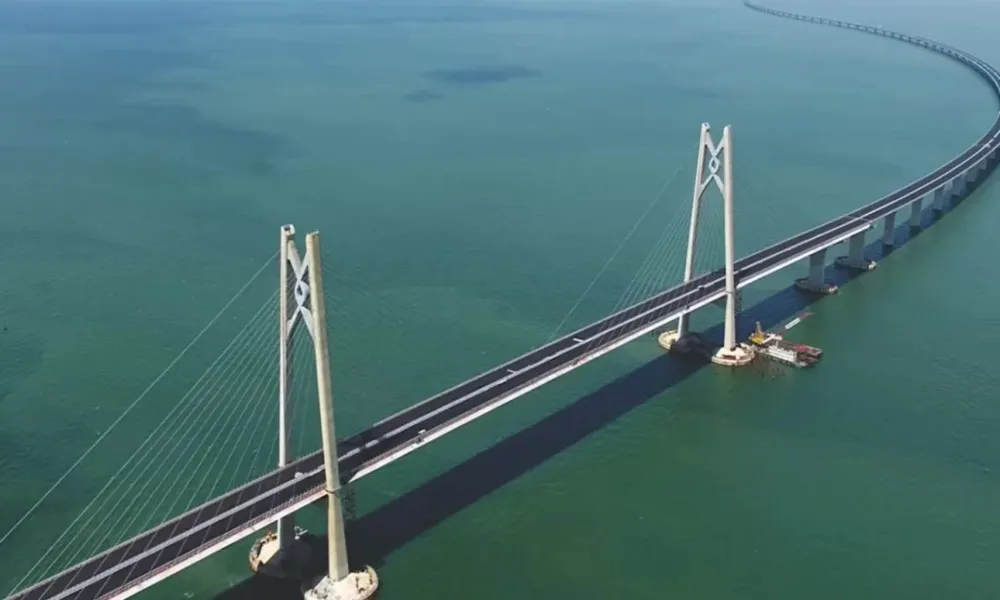
The Hong Kong–Zhuhai–Macau Bridge is the longest sea crossing in the world, stretching 55 kilometres and taking around 40 minutes to drive.
The landmark project links Hong Kong, Zhuhai and Macau, cutting across the Pearl River Delta in southern China. Construction took nine years, with total costs estimated at around £15 billion.
The bridge has significantly reduced travel times between the three cities, replacing a one-hour ferry journey with a much faster road connection. It has also strengthened links across a region considered a key economic hub for China.
Construction challenges
The project combines long bridge sections, artificial islands and an underwater tunnel system. It includes three major navigation bridges designed to allow large vessels to pass through one of the country’s busiest shipping areas.
According to the Mirror, engineers faced demanding conditions during construction, including typhoons and heavy maritime traffic. The structure was also designed with features aimed at reducing environmental impact and protecting wildlife such as the Chinese white dolphin.
Today, the bridge forms a central part of the region’s transport network, symbolising China’s drive to deliver large-scale infrastructure projects that rapidly connect major urban centres.
Source: iefimerida.gr