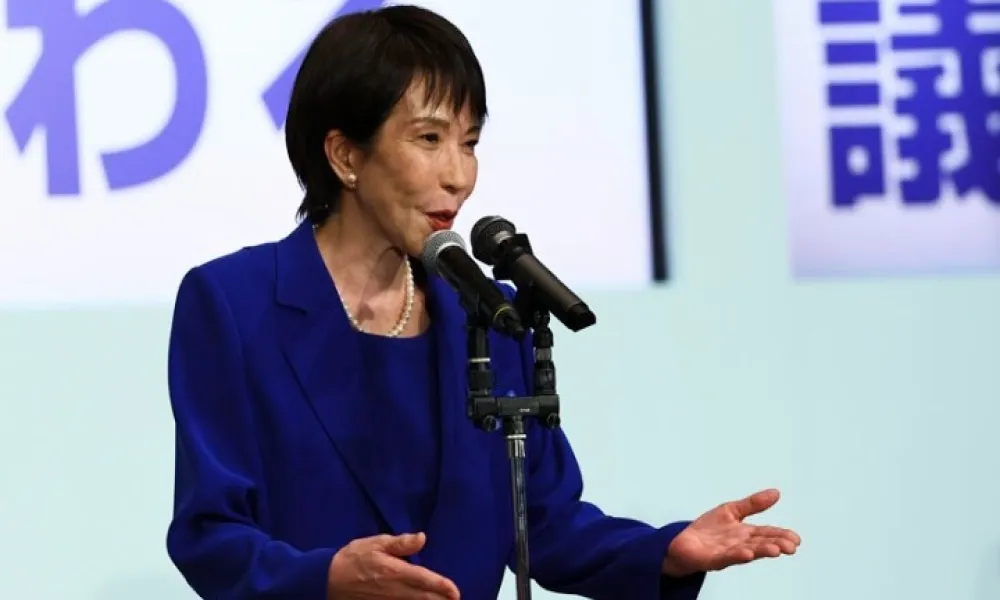
Japan’s governing coalition has significantly expanded its parliamentary strength following Sunday’s national vote. The result is widely viewed as an early public endorsement of Prime Minister Sanae Takaichi’s leadership.
The outcome gives the government strong legislative leverage at a time of economic pressure, geopolitical tensions and scrutiny over public finances.
Election outcome and parliamentary balance
Japan’s conservative ruling coalition strengthened its hold on power after a decisive electoral victory.
The Liberal Democratic Party (LDP), led by Prime Minister Sanae Takaichi, secured 316 seats by early Monday. This comfortably exceeded the 261 seats required for an outright majority in the 465-member House of Representatives and marked the party’s strongest result since its founding in 1955.
Together with its coalition partner, the Japan Innovation Party, which won 36 seats, the government now holds a two-thirds supermajority. This enables it to pass legislation even if the upper chamber, which it does not control, rejects proposed measures.
At party headquarters, Takaichi was seen placing red ribbons next to the names of winning candidates on a results board, as party officials applauded.
Political mandate and leadership position
The 64-year-old Prime Minister called early elections shortly after becoming Japan’s first female prime minister last autumn.
She had pledged to resign if her coalition failed to secure a simple majority. The vote took place in severe winter conditions, with heavy snowfall affecting several regions.
Economic policy commitments and fiscal concerns
Takaichi campaigned on a ¥21 trillion economic stimulus package, approximately €113 billion, aimed at addressing the cost of living crisis.
She later pledged a two-year suspension of the 8% consumption tax on food. The measure is expected to reduce state revenues by approximately ¥5 trillion annually.
Financial markets have reacted cautiously to the spending plans. Japan’s public debt exceeds twice its GDP, the highest ratio among advanced economies, and currency volatility has been reported.
Speaking as exit polls showed a strong lead, Takaichi, who has expressed admiration for former United Kingdom Prime Minister Margaret Thatcher, said:
“We have consistently emphasised the importance of responsible and active fiscal policy. We will prioritise fiscal sustainability. We will ensure necessary investment. The public and private sectors must invest. We will build a strong and resilient economy.”
Foreign policy positioning and China tensions
Following an intensive diplomatic schedule, including meetings with Donald Trump and Xi Jinping late last year, tensions with Beijing increased in November.
Takaichi stated that Japan could become militarily involved if China attempted to invade Taiwan.
China subsequently advised tourists not to visit Japan and discouraged students from studying there, citing safety concerns. Cultural exchanges were disrupted and long-standing panda diplomacy initiatives were halted.
While her refusal to withdraw the remarks reportedly angered Beijing, the stance appears to have resonated with segments of the electorate.
Donald Trump congratulated Takaichi on social media, wishing her success in advancing what he described as a conservative agenda and “peace through strength”.
Seiji Inada, Chief Executive of consultancy FGS Global, stated that the election result gives Takaichi greater room to implement core pledges, including consumption tax reductions. He noted markets could react in the coming days and the yen could face renewed pressure.
Voter turnout and electoral conditions
Severe snowstorms in parts of Japan made access to polling stations difficult. These were the first winter elections held in 35 years.
Estimated turnout reached 55.6%, according to public broadcaster NHK, compared with 53.8% in the 2024 lower house elections. More than 27 million voters cast ballots early.
Party dynamics and opposition landscape
Takaichi’s personal popularity, particularly among younger voters, has significantly improved the LDP’s electoral prospects since she won the party leadership contest in October, succeeding Shigeru Ishiba.
Under Ishiba, the LDP and its then coalition partner Komeito lost majorities in both parliamentary chambers amid public anger over a slush fund scandal and rising food and essential goods prices.
The LDP again benefited from a fragmented opposition. The main opposition Central Reform Alliance, formed only weeks earlier through the merger of two existing parties, is projected to secure roughly half of its combined pre-election total of 167 seats, raising questions about its future trajectory.