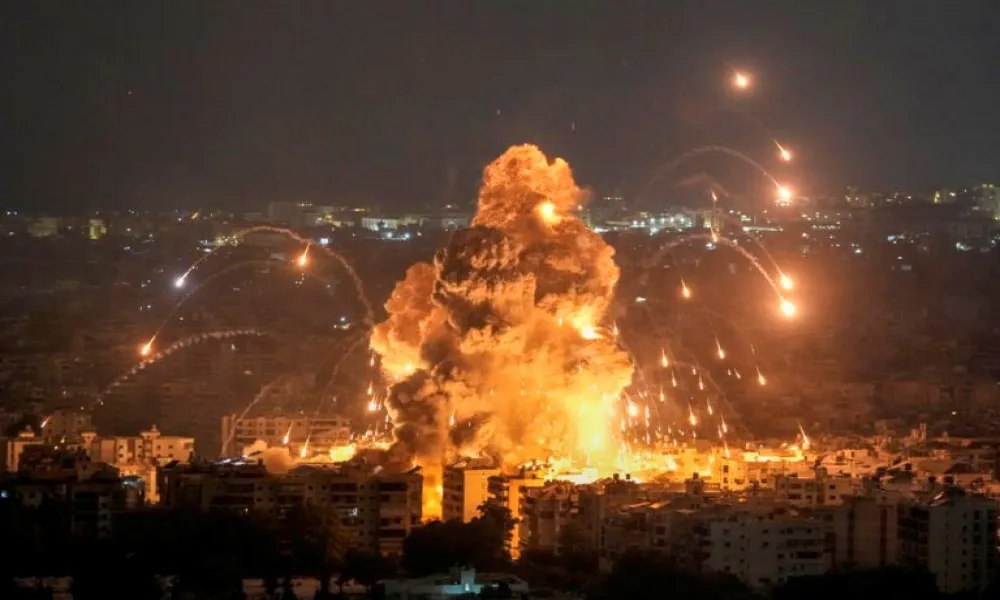

Air defence systems were activated across several Gulf countries early Friday, as missile and drone attacks intensified across the region.
The United Arab Emirates and Kuwait reported that their air defences responded to incoming missile threats, while Saudi Arabia announced it had intercepted at least seven drones.
In Bahrain, the Interior Ministry said debris from what it described as an “Iranian attack” caused a fire at a warehouse. Sirens were activated, but the blaze was brought under control and no casualties were reported.
Continued strikes on energy infrastructure
Iran continued its attacks on energy infrastructure in the Gulf on Thursday, with drones hitting a refinery in Saudi Arabia and additional strikes reported in Kuwait.
The developments follow a major strike earlier this week that caused significant damage to the world’s largest liquefied natural gas facility in Qatar, in retaliation for Israeli strikes on Iran’s South Pars gas field.
Israel launches new strikes on Tehran
The Israeli military confirmed it had launched a new wave of airstrikes targeting infrastructure in the Iranian capital, Tehran.
In a statement, Israeli forces said they were striking “infrastructure of the Iranian regime” as part of ongoing operations.
Explosions heard over Jerusalem
Explosions were reported in the skies over Jerusalem overnight, following new missile barrages launched from Iran and the activation of air raid sirens across the city.
The Israeli military said three separate waves of missiles were fired in recent hours, including one shortly before midnight and another in the early morning.
Emergency services reported no casualties, although police confirmed damage at several locations.
Israeli media said debris fell in the city of Haifa and at an educational institution in a nearby suburb, again without reports of injuries.
Escalation shows no sign of slowing
The latest exchanges came hours after Israeli Prime Minister Benjamin Netanyahu stated that Iran was being “decimated” and no longer had the capacity to produce ballistic missiles.
However, the continued launches and retaliatory strikes suggest a conflict that is intensifying across multiple fronts, with growing implications for regional stability and global energy security.
Source: AMNA / AFP