
On its 52nd anniversary, the Greek-backed coup against Makarios stands as a pivotal moment in the history of Cyprus and the Eastern Mediterranean.
Fifty-two years ago today, Cyprus experienced one of the darkest moments in its modern history. On 15 July 1974, a coup d’état orchestrated by the military junta ruling Greece and executed by elements of the Cyprus National Guard overthrew the democratically elected President of the Republic, Archbishop Makarios III. Five days later, on July 20, Turkey launched a military invasion of the island, setting in motion events that would leave Cyprus divided to this day.
The coup was the culmination of years of growing tension between Makarios and the Athens regime. Following the establishment of the Greek military dictatorship in 1967, relations between Cyprus and the junta steadily deteriorated. Makarios increasingly pursued an independent foreign policy, maintaining Cyprus’ role in the Non-Aligned Movement and resisting pressure from Athens to subordinate Cypriot policy to what the junta called the “national centre.”
At the same time, the military regime sought to undermine Makarios by exploiting internal divisions within Cyprus. The emergence of EOKA B, founded by General George Grivas in 1971, deepened political polarization. Although the organization publicly promoted the goal of union (Enosis) of Cyprus with Greece, it also engaged in an armed campaign against the Makarios government, contributing to a climate of instability and violence.
Greek interference
Following Grivas’ death in January 1974, EOKA B began to weaken. Makarios responded by intensifying efforts to dismantle the organization and challenge the role of Greek officers serving in the Cyprus National Guard. In a famous letter sent to Greek President General Phaedon Gizikis on 2 July 1974, Makarios directly accused the Athens junta of interfering in Cyprus’ internal affairs and demanded the withdrawal of Greek officers from the National Guard.
The junta’s answer came less than two weeks later.
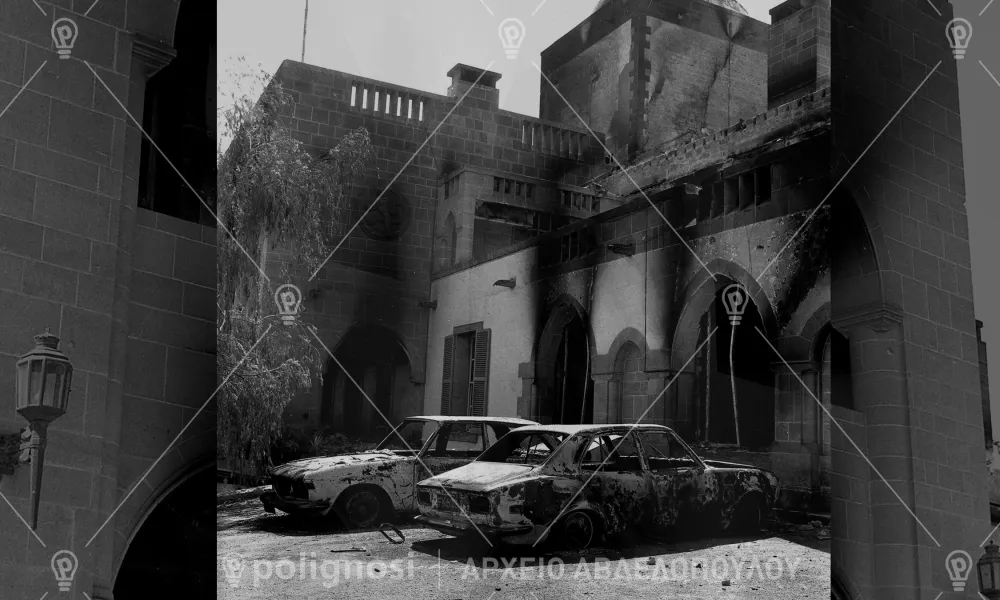
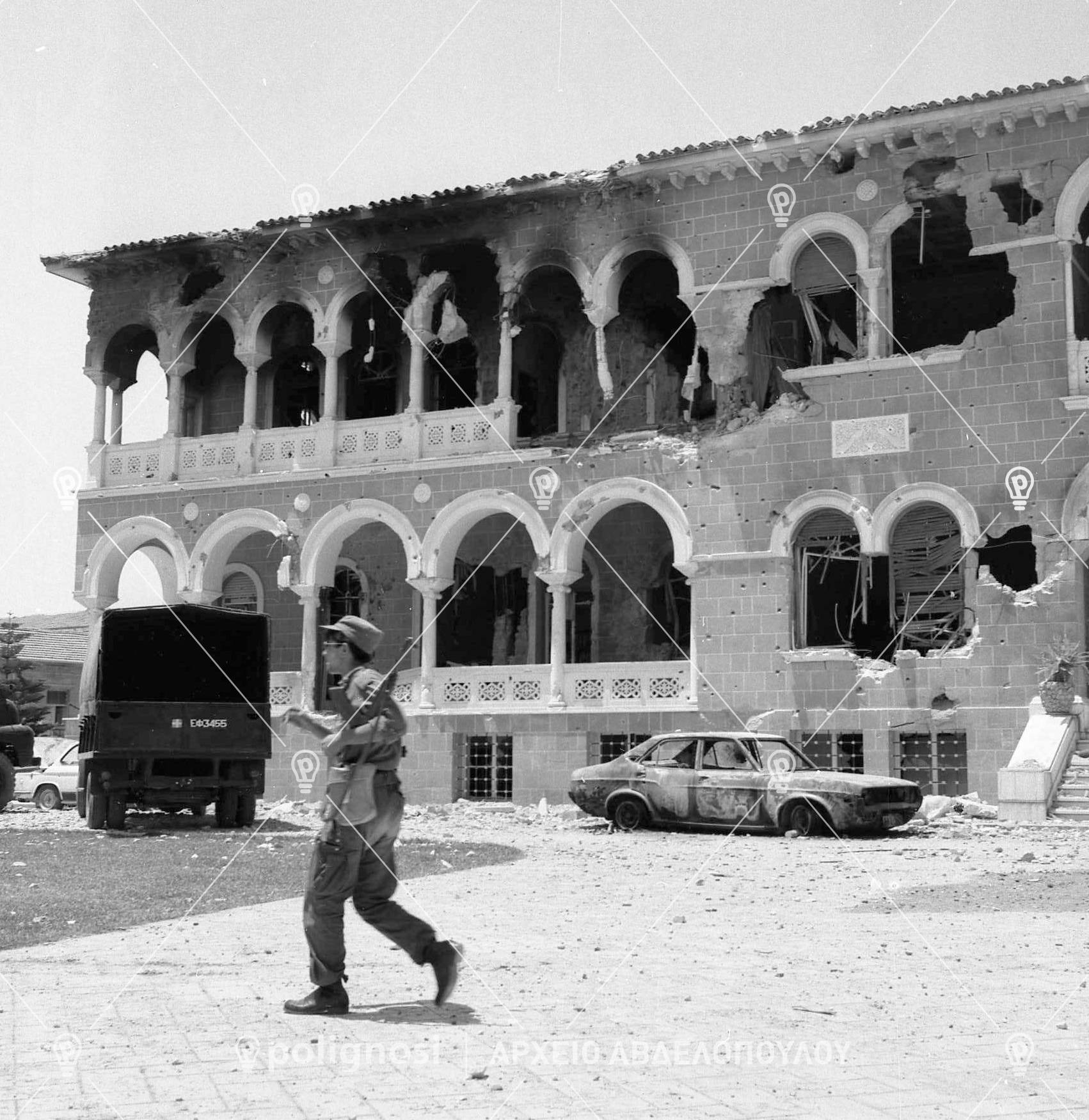
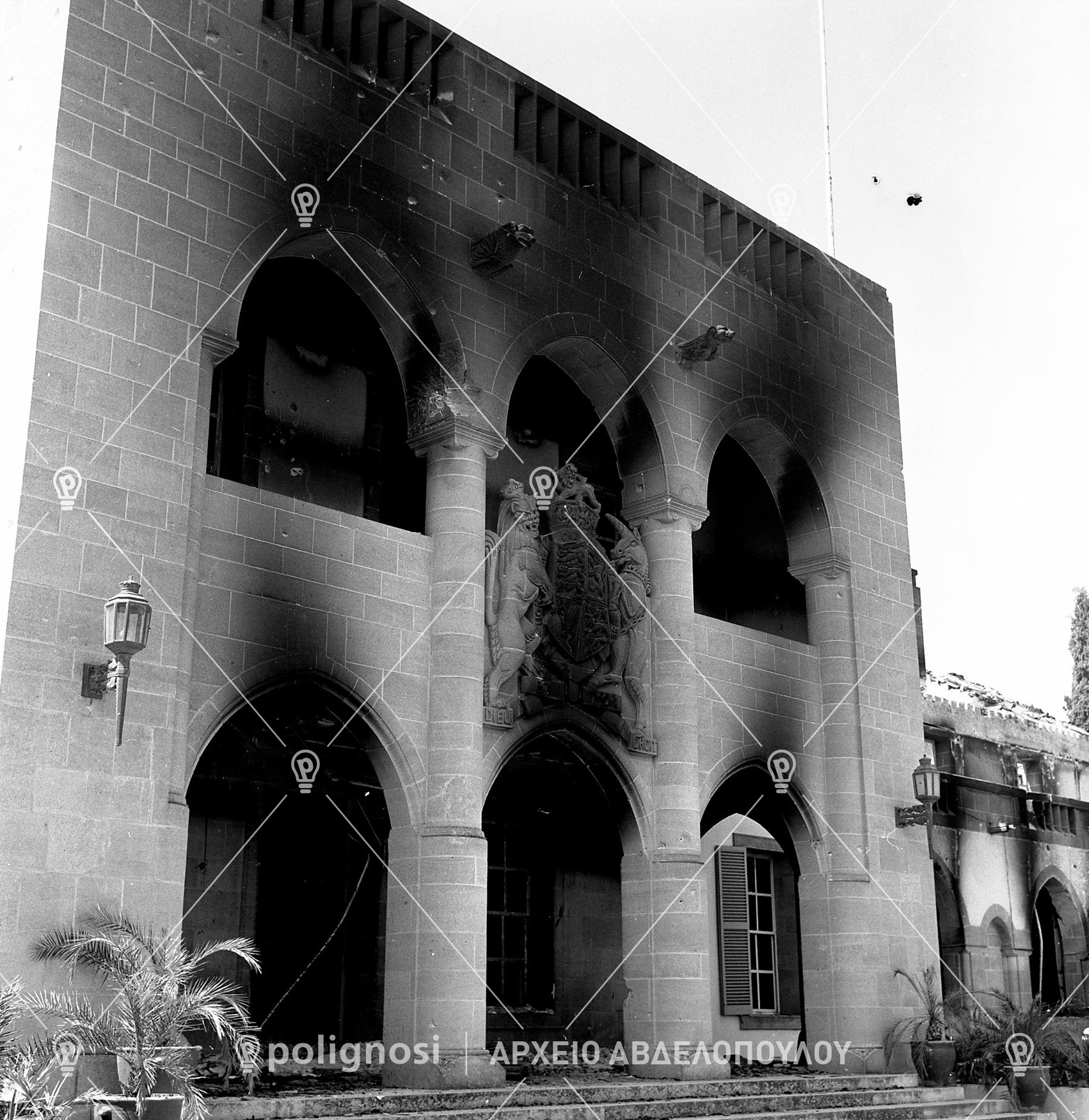
At approximately 8:20am on Monday, 15 July, units of the National Guard, commanded by officers loyal to the regime of Brigadier Dimitrios Ioannides in Athens, moved against key targets in Nicosia. Tanks and armoured vehicles attacked the Presidential Palace, the Archbishopric, the Reserve Force headquarters, the Cyprus Broadcasting Corporation and other strategic installations.
The great escape
Makarios was inside the Presidential Palace at the time, meeting children from the Cypriot diaspora in Egypt. As shells and gunfire struck the compound, the palace caught fire. Defying the expectations of the coup leaders, Makarios escaped through a rear exit and made his way to the Troodos Mountains before reaching Paphos.
Throughout the day, the coup authorities broadcast repeated reports claiming that Makarios had been killed. Those reports were dramatically disproved when the president addressed the nation through a radio station operating in Paphos.
“I am not dead,” Makarios declared. “I am alive and I call upon the people to resist.”
Fighting erupted across the island between forces supporting the coup and those remaining loyal to the constitutional government. By July 16, however, the coup leaders had gained control of most of Cyprus. Makarios was evacuated by a United Nations helicopter to the British base at Akrotiri and subsequently flown to London via Malta, beginning an exile that would last until December 1974.
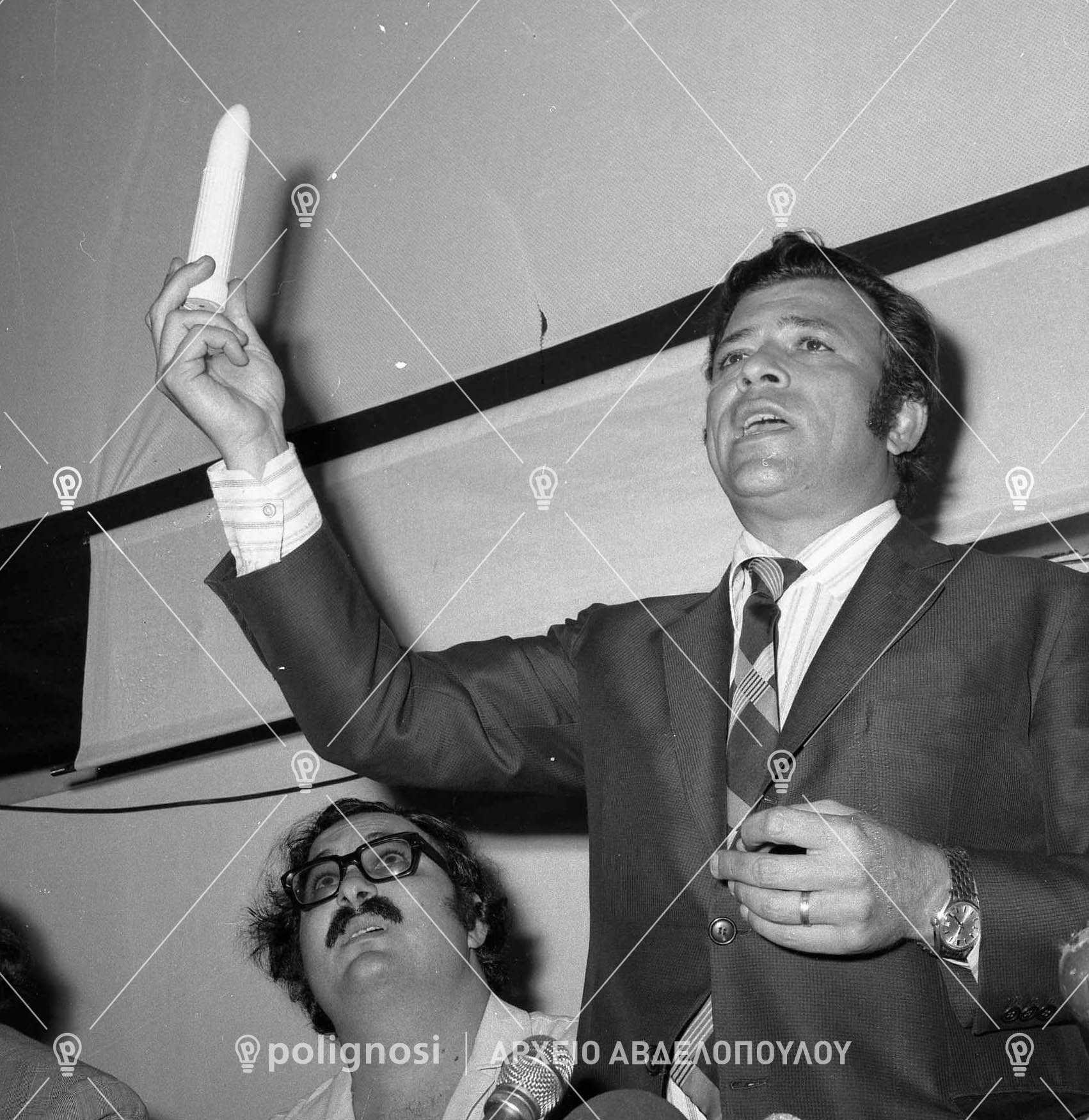
The junta-installed administration selected journalist and politician Nikos Sampson as ‘president’. His administration would survive for only eight days.
The coup immediately triggered international alarm. Turkey denounced the overthrow of Makarios as a Greek intervention in Cyprus and cited its rights under the 1960 Treaty of Guarantee. Diplomatic efforts intensified among London, Washington, Athens and Ankara, but they failed to prevent the crisis from escalating.
Invasion follows
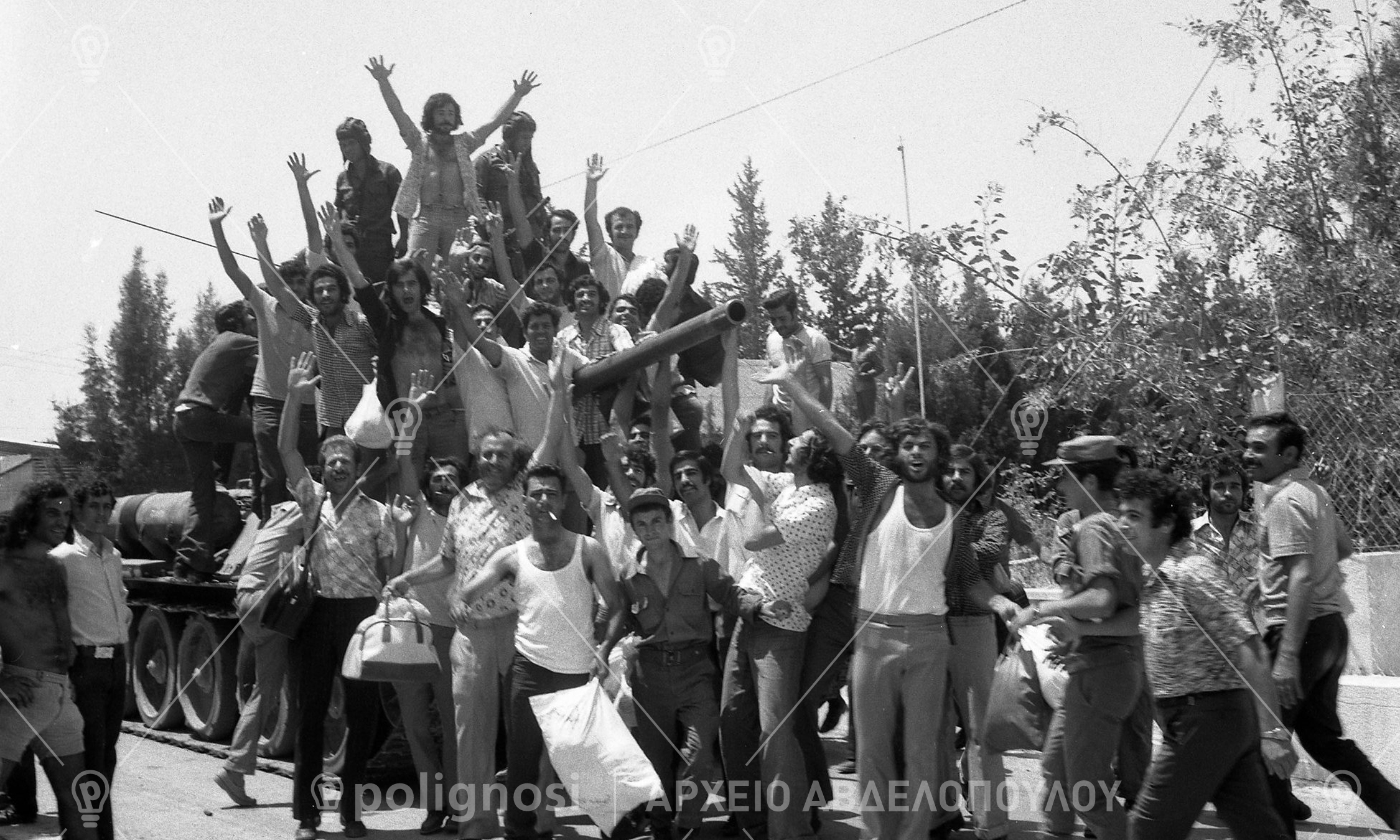
At dawn on 20 July, Turkish forces landed on the northern coast of Cyprus, launching what Turkey described as a military intervention and what Greek Cypriots regard as an invasion. The operation ultimately resulted in the occupation of approximately 37 percent of the island, the displacement of around 170,000 Greek Cypriots, thousands of deaths and disappearances, and the island’s continuing division.
Greek dictatorship falls
The consequences were far-reaching. The Cyprus coup and the subsequent Turkish invasion led to the collapse of the seven-year military dictatorship in Greece on 23 July 1974, and the restoration of democracy under Constantine Karamanlis.
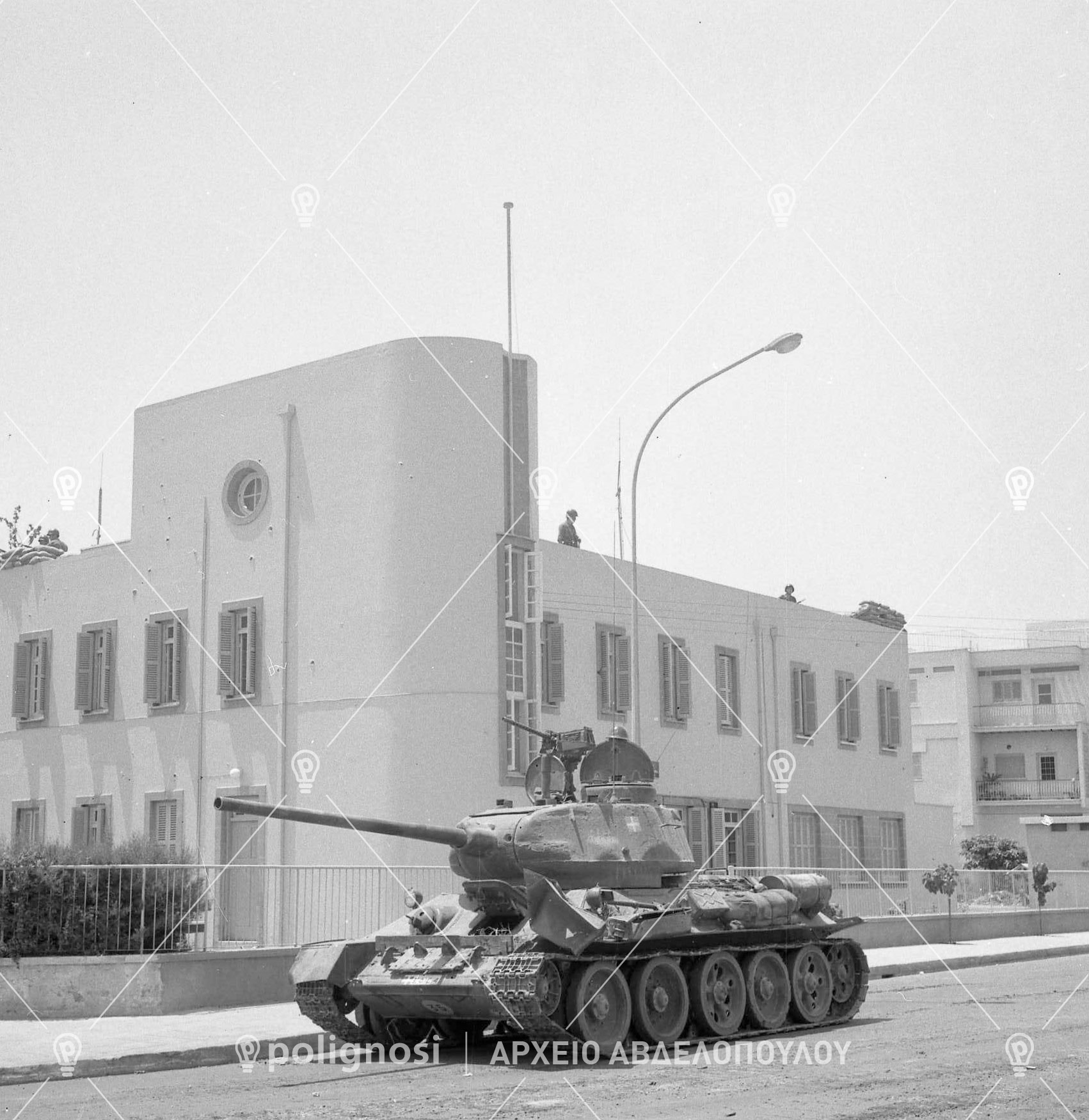
More than five decades later, 15 July remains a day of remembrance in Cyprus. It is commemorated not only as the anniversary of a violent assault on constitutional order, but also as the event that paved the way for the greatest national tragedy in the island’s modern history. For many Cypriots, the coup and the invasion are inseparable chapters of the same catastrophe – a reminder of how internal division and external intervention combined to alter the course of Cyprus forever.
Source: Polygnosi