
There is something almost artistically Cypriot about preparing for negotiations by trying to prevent people from hearing what the other side has to say. For an island that has spent more than half a century perfecting the vocabulary of dialogue while avoiding many of its practical inconveniences, this may even qualify as institutional continuity.
According to the Cyprus Mail, the Republic of Cyprus foreign ministry has been telephoning diplomatic missions in Nicosia and urging them not to attend a briefing that Mehmet Dana, undersecretary to Turkish Cypriot leader Tufan Erhürman, is due to give at the Home for Cooperation in the buffer zone. Dana intended to brief diplomats on the Turkish Cypriot assessment of the Cyprus process following UN Secretary-General António Guterres’ visit. The especially charming detail is that Greek Cypriot negotiator Menelaos Menelaou had already briefed diplomats on his own side’s assessment.
So, apparently, diplomats may be briefed on the Cyprus problem, provided they are briefed correctly.
One might call this the latest confidence-building measure: build confidence by ensuring that ambassadors hear only one version of events.
Dialogue, with attendance restrictions
There is, naturally, a respectable diplomatic explanation available. The internationally recognised Republic of Cyprus is extraordinarily sensitive to anything that might appear to elevate Turkish Cypriot institutions to equal diplomatic status. Greek Cypriot governments have guarded that distinction for decades, and recognition questions are neither imaginary nor unimportant.
But listening is not recognition. Attending a briefing by Mehmet Dana at the Home for Cooperation does not establish diplomatic relations with the Turkish Cypriot administration, alter UN Security Council resolutions or create a second internationally recognised Cypriot state. It means that diplomats charged with understanding one of the world’s longest-running conflicts would hear what one of its two communities thinks.
Indeed, if one genuinely believes the Turkish Cypriot position is wrong, unrealistic or contradictory, allowing diplomats to hear it should hardly be frightening. They are professional diplomats, not children who might accidentally become separatists after a PowerPoint presentation.
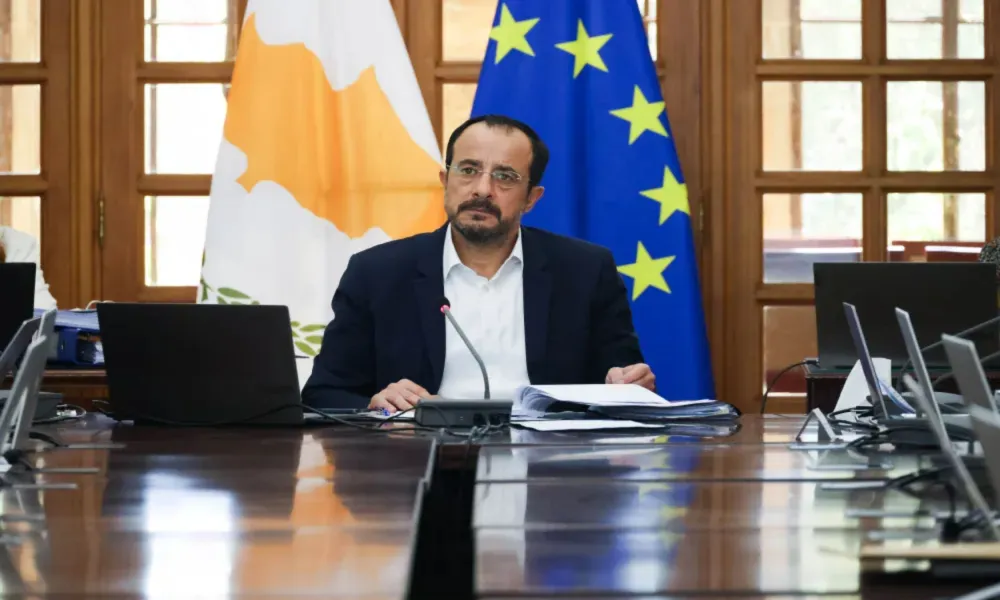
The symbolism becomes particularly awkward because Dana’s briefing is taking place precisely while the two sides are supposedly preparing for renewed dialogue. Menelaou and Dana are scheduled to meet on Thursday, Aug. 20, at 11 a.m., ahead of the Aug. 26 meeting between Christodoulides and Erhürman. The Greek Cypriot government says Christodoulides will approach that encounter with a “constructive attitude.”
One can only hope the constructive attitude is permitted to attend.
Peace negotiations as performance art
This episode reinforces a suspicion I have increasingly found difficult to dismiss. Christodoulides may well be interested in maintaining a Cyprus peace process. I am far less convinced that he is interested in the compromises without which there can be no Cyprus settlement.
Those are very different objectives.
Keeping a process alive is relatively inexpensive politically. One meets the UN secretary-general, welcomes his personal envoy, speaks earnestly about reunification, praises the agreed basis, calls for negotiations to resume and poses beside the Turkish Cypriot leader. Internationally, the photographs say moderation. Domestically, almost nothing need change.
A settlement is more troublesome.
A settlement requires accepting that the other community is not merely an interlocutor to be managed but a political partner whose consent matters. It means confronting effective participation, power sharing, rotating executive arrangements, property compromises, territory, security, guarantees and the accumulated fears of both peoples. Every one of those subjects produces political casualties.
That is where the difference between supporting negotiations and supporting a negotiated compromise becomes painfully important.
Christodoulides repeatedly says he wants negotiations resumed from where they stopped in 2017 and within the UN framework of a bizonal, bicommunal federation. That is his publicly stated position, and it should be acknowledged fairly. Yet declarations of commitment have never been Cyprus’ scarce commodity. The island could probably export them.
The test is what happens when the abstract word “solution” acquires a price tag.
Then along came Erhürman
President Tufan Erhürman’s election created precisely the problem that Greek Cypriot rejectionists should have preferred not to have.
His predecessor offered them an extraordinarily convenient opponent. Ersin Tatar demanded two states and sovereign equality as a precondition. Greek Cypriot leaders could therefore defend the internationally supported federal framework while safely explaining that meaningful negotiations were impossible because the Turkish Cypriot leader had abandoned it.
Then Erhürman won the Turkish Cypriot election with 62.8 percent of the vote after campaigning on returning to negotiations and exploring a federal settlement.
Suddenly, blaming Turkish Cypriot rejectionism became more complicated.
Erhürman did not arrive offering surrender. He insists upon political equality, effective participation, protection of previous convergences, a time-bound process and safeguards against another negotiation ending with the Turkish Cypriots returning to precisely the same international isolation from which they began. Those conditions may be uncomfortable for Greek Cypriots, and some can legitimately be negotiated. But they belong to the realm of bargaining, not fantasy.
That is why this phase matters.
The UN is no longer merely asking the leaders whether they love peace. Everyone in Cyprus loves peace in television interviews. Guterres has said an enlarged meeting should follow adequate progress on three tracks: confidence-building measures, methodology and substance. His envoy María Ángela Holguín has gone further, describing progress on confidence-building measures as indispensable before another enlarged gathering.
In other words, the UN wants evidence. Evidence is inconvenient because it cannot be produced entirely by press release.
Welcome to the 2028 campaign
There is another calendar operating alongside the UN calendar, and it may ultimately prove more important. It ends not with a 5+1 meeting but with the presidential election of 2028.
Christodoulides has not formally launched a reelection campaign, but one of his senior aides said in May that it “makes sense” for him to seek another term. More significantly, Cyprus’ May 2026 parliamentary election transformed his political arithmetic. The centrist parties that supported him suffered badly, while ELAM rose to about 11 percent and became the third-largest force in parliament. Reuters reported analysts saying that if Christodoulides cannot obtain DISY’s support for reelection, he could need formal or informal backing from ELAM, which campaigned from a markedly harder position on the Cyprus problem, including support for closing crossing points.
That does not prove that Christodoulides’ Cyprus policy is dictated by electoral calculations. It does, however, establish the political incentive structure within which his decisions must now be understood.
And that structure is not especially friendly to compromise.
Imagine the campaign advertisement after Christodoulides accepts a rotating presidency. Imagine explaining an affirmative Turkish Cypriot vote to an electorate being courted simultaneously by ELAM. Imagine selling territorial adjustment, compromises on governance or a security formula containing concessions to Turkish Cypriot concerns.
Much easier to defend the federation in principle while discovering procedural reasons why its difficult components cannot quite be agreed today.
Thus emerges the ideal 2028 strategy: be sufficiently pro-solution to reassure Brussels, Washington and the UN, sufficiently uncompromising to reassure nationalist voters, and sufficiently busy with meetings to ensure nobody notices that the distance between the two communities has not materially narrowed.
It is diplomacy as an imitation of diplomacy.
The theatre of constructive attitudes
The Dana affair looks small beside questions of territory, property or security. Politically, however, small episodes can be revealing because governments often reveal their instincts most clearly when they do not believe they are making historic decisions.
If the report is accurate, what instinct does telephoning embassies to discourage attendance at a Turkish Cypriot briefing reveal?
Not confidence. Not curiosity. Certainly not the willingness to normalise political interaction between two communities that would somehow have to share a federal state the morning after an agreement.
The Home for Cooperation exists precisely because Cyprus desperately needs spaces in which people can meet across the divide. It would therefore be difficult to invent better satire than a foreign ministry reportedly trying to keep diplomats away from a political briefing there.
Perhaps the building should temporarily be renamed the Home for Cooperation, Subject to Approval.
Meanwhile, Thursday’s negotiators’ meeting will prepare the leaders’ meeting, which will prepare the enlarged meeting, which will prepare the negotiations, which will prepare the comprehensive settlement. Cyprus diplomacy has always possessed a magnificent capacity to prepare for preparing.
The UN’s emerging methodology is designed precisely to interrupt that cycle. It asks whether the leaders can agree on practical confidence-building measures, methodology and substantive parameters before convening another grand diplomatic gathering.
That is why Aug. 26 matters, even if nobody should expect a breakthrough that afternoon. It will begin to show whether Christodoulides sees the current opening as something to use or something to survive.
The safest Cyprus solution is tomorrow’s
There is a comfortable political formula available to every leader who does not actually want to say “no.”
Yes to a solution, but not this concession. Yes to political equality, but not that mechanism. Yes to confidence-building measures, but they must not delay negotiations. Yes to negotiations, but the other side must first demonstrate its sincerity. Yes to hearing Turkish Cypriots, presumably, but perhaps diplomats should skip their briefing.
The beauty of this formula is that every individual proposition can be defended. Collectively, they ensure that tomorrow remains the safest possible date for solving Cyprus.
My concern is that this is increasingly Christodoulides’ political comfort zone. I do not see sufficient evidence that he is preparing his community for the painful compromises that any federal settlement would require. I see much stronger evidence that he understands the international necessity of appearing committed to a settlement while carefully avoiding political exposure at home.
And now 2028 hangs over every calculation.
After the parliamentary elections weakened his traditional support base and strengthened ELAM, the electoral logic points away from risk-taking on Cyprus. A transformative agreement would require Christodoulides to spend political capital. An inconclusive peace process allows him to accumulate it.
That is precisely why the coming months should be judged not by the frequency of meetings or the optimism of government spokesmen, but by measurable political choices.
Can crossing points actually be opened? Can previous convergences be accepted as the starting floor rather than renegotiated endlessly? Can effective Turkish Cypriot participation be discussed without immediately activating the nationalist alarm system? Can diplomats be allowed to listen to Mehmet Dana without the Republic collapsing before lunchtime?
Most importantly, can Nikos Christodoulides accept a compromise that may cost him votes?
That is the question behind all the diplomatic choreography.
Because if the answer is no, Cyprus does not have a peace process. It has a reelection campaign with UN catering.