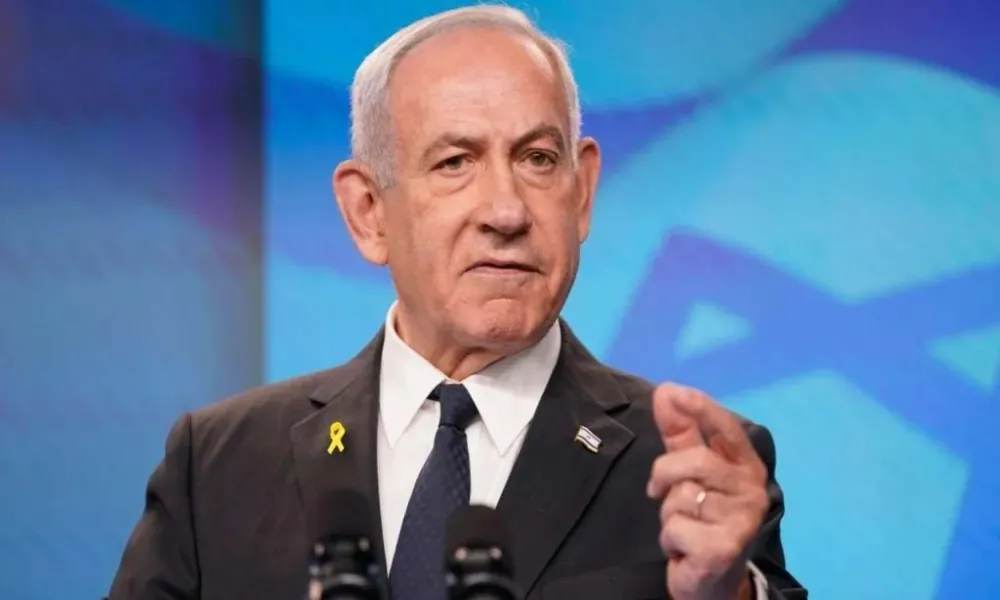

Israeli Prime Minister Benjamin Netanyahu made clear, according to an Israeli official, that the Israeli military will not withdraw from the demarcation line established under the October ceasefire, presenting a different picture from that offered by a Board of Peace official regarding his lengthy meeting with Jared Kushner.
While the Board of Peace official described the meeting as "long, in-depth and highly productive", claiming that agreement had been reached on the path forward in Gaza, the Israeli side, through another official, maintained that no progress was achieved during the talks.
According to the same source, Netanyahu made it clear that Israeli forces will continue operating in the Gaza Strip whenever they deem it necessary, including targeting individuals who took part in the 7 October 2023 attack that triggered the war.
This position contrasts with the disarmament timetable put forward by Kushner, who warned that if Hamas does not disarm within 60 to 90 days, Israel would be able to "move forward and finish the job".
The divergence between the accounts of the two officials highlights the limits within which the Netanyahu government is willing to operate, continuing to place security ahead of any withdrawal from territories currently controlled by the Israeli military.
Israeli President Isaac Herzog sought to strike a more conciliatory tone, expressing satisfaction with the efforts of the American delegation and stressing that Israel's security interests are a "significant and central element" of the proposal.
"I was impressed that Israel's security interests are a significant and central element of their plan," Herzog said.
Timetable and restructuring
Kushner, who concluded his two-day visit to Egypt and Israel yesterday, said the first steps towards demilitarisation could be taken within 30 days, including the surrender of part of Hamas' weapons stockpile and the sealing of tunnels within 60 to 90 days.
He also clarified that the reconstruction of Gaza will not begin before the territory's complete demilitarisation is achieved, arguing that no one wishes to invest in an area that could once again fall into the hands of armed groups.
Despite the optimistic rhetoric from the American side, Netanyahu's insistence on maintaining a military presence and operational freedom inside Gaza remains the main obstacle to implementation of the plan, making it uncertain whether Kushner's timetable can ultimately be achieved in practice.
The Israeli prime minister's remarks, as relayed by the official, reaffirm his government's longstanding position that any withdrawal or restriction of military operations will depend exclusively on the full and verifiable disarmament of Hamas, rather than on a predetermined timetable set by the United States.
The stance reflects Netanyahu's continued distrust of any agreement that does not, in his view, guarantee the complete elimination of the Palestinian organisation's military ability to threaten Israel again.
The Israeli government also regards bringing those responsible for the October 2023 attack to justice as a non-negotiable priority.
Analysts believe this insistence could become a source of friction with mediators seeking a broader and more durable solution to end the conflict.