
UN Personal Envoy María Ángela Holguín arrives this evening to Cyprus for probably her last visit, hoping the two leaders will show the political will and cooperation needed to get peace talks started after more than nine years without.
The former Colombian foreign minister will meet President Nikos Christodoulides tomorrow and Turkish Cypriot leader Tufan Erhürman on Monday, following his trip to Ankara to attend the 13th Summit of the Organisation of Turkic States.
During the week, Holguín will meet with the two negotiators and various stakeholders while on Monday, 9 November, she will hold a trilateral meeting with the two leaders.
Speaking yesterday on the Cyprus issue, President Christodoulides said: “The coming days are important.”
Guterres’ final days
But what are the chances of progress as the countdown begins to UN Secretary-General António Guterres’ departure. Cyprus will struggle to find an SG as knowledgeable on both the division and the workings of the EU again.
His personal envoy arrives tonight and has made no secret of her view on what needs to be done to move things forward.
According to sources, Holguín will not renew her contract after her term ends, alongside that of Guterres, in December.
Progress up to the Cypriots
In a recent interview with Alithia, the personal envoy said: “Cypriots hold the future in their hands.”
She sent the message that the leaders know what’s needed to move things forward but appear to lack political will to face the difficult issues. A change will only come when both sides prioritise coexistence in a united Cyprus, noted the envoy. Holguín hoped this happened before regional or global developments added further pressure on states in the region.
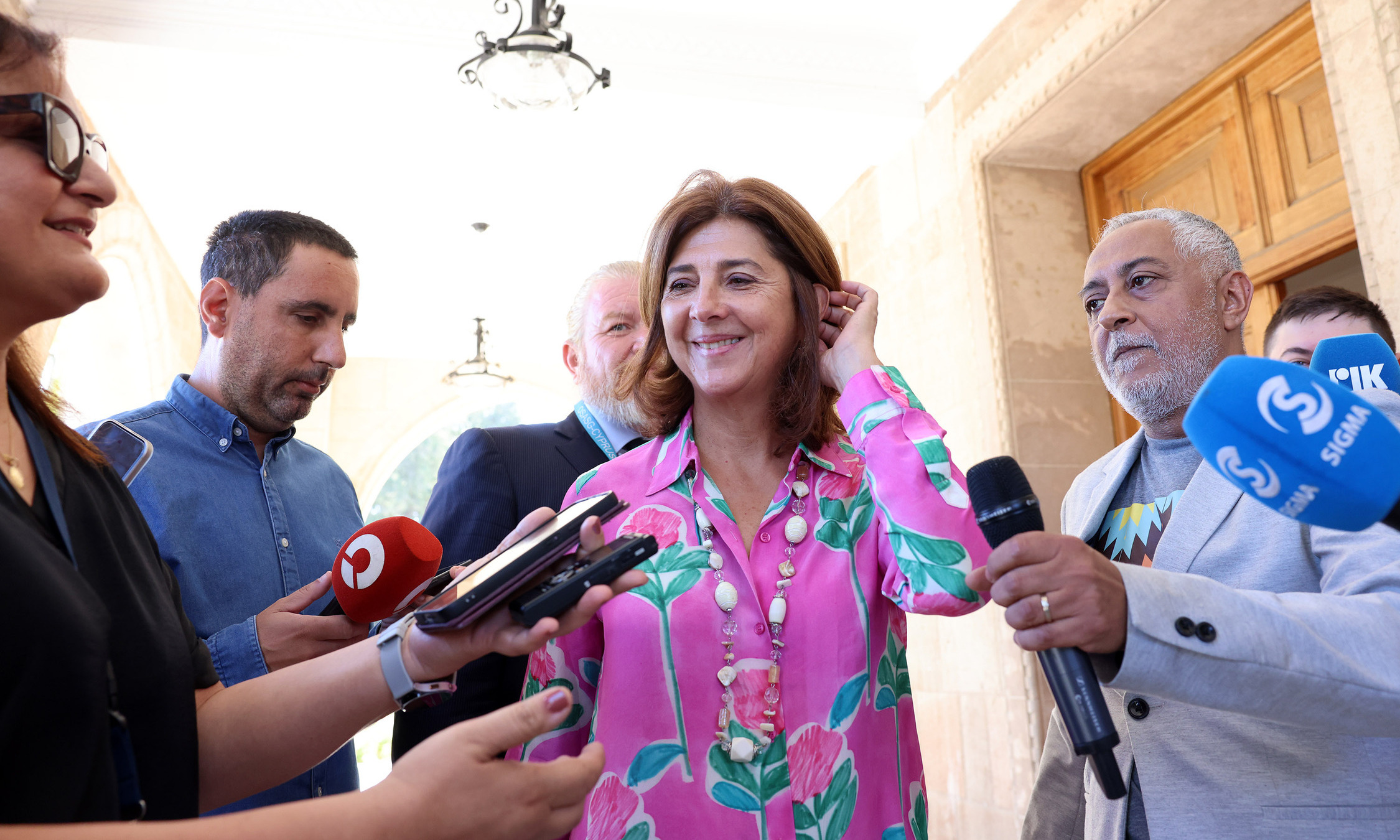
Regarding a resumption of talks, the leaders first need to show a willingness to cooperate and confront common challenges by agreeing and implementing confidence-building measures (CBMs), she said.
State of play
So where does the peace effort currently stand? It is common knowledge that Guterres seeks adequate preparation on CBMs, methodology and substance before convening an expanded meeting.
On CBMs, the sides have recently engaged in a familiar blame game. The Turkish Cypriot side is calling for a focus on the seven CBMs that Guterres reportedly listed during his visit to Cyprus last July. Erhürman says he’s ready to agree on six of the seven – the sticking point being the opening of new crossings. He also argues putting completely new CBMs on the table smacks of an effort to disorientate the process.
The Greek Cypriot side counters that Guterres did not list seven CBMs but did encourage the sides to focus on crossing points and demining.
Since the sides are not getting anywhere on the issues under discussion, Christodoulides argues new areas of potential cooperation should be explored, hence his oral presentation of 19 “new ideas” at the leaders’ meeting last month.
Crossing points
The “new ideas” include new crossing points, noted the president, who also pointed the finger at Erhürman for blocking agreement on a “reasonable compromise” floated by Guterres on crossing points on 28 July.
The Greek Cypriot side further argues that agreement could have been reached had the Turkish Cypriots not added Louroujina-Lymbia to the list of new crossing points. The Turkish Cypriots counter that the only new addition to the list came from the Greek Cypriot side for Kokkina.
The whole discussion over crossing points – covering their number, routes, and the principle of reciprocity – has certainly not helped create an environment conducive to the resumption of talks.
Varosha-Famagusta Port
The Greek Cypriot side has also proposed returning Varosha under UN administration, in exchange for putting Famagusta Port under European Commission supervision, in turn providing Turkish Cypriots with access to new markets. Interestingly, while this proposal has popped up several times in the past, the government is now not linking it to full implementation of the Ankara Protocol.
Erhürman rejected the proposal, saying it did not mean implementation of the EU’s direct trade regulation.
At an event organised by Anorthosis Famagusta on Tuesday evening, Christodoulides said Famagusta was “at the forefront of efforts to resolve the Cyprus problem."
He argued that returning the fenced-off area of Famagusta could be a first step and constitute the most important CBM.
AKEL questioned whether such an ambitious measure could contribute substantively to resuming talks or whether it would shift discussions away from that goal.
Analyst Fiona Mullen suggested on social media it was a tactical move to corner Erhürman. “Practically, everyone knows that a return of Varosha, which is de facto controlled by the Turkish military, won’t happen without a big carrot for Turkey (e.g. customs union upgrade) that isn’t there,” she said.
Substance and methodology
Then there are issues of substance and methodology which tend to overlap. Holguín has indicated that the issue of ‘substance’ has been addressed with the compilation of past convergences from 2015-2017. This UN document will not be shared with the sides until negotiations start, as the envoy does not wish it to become a new source of discord.
The Greek Cypriot side disagrees, arguing first, that the document should include all the negotiating acquis up to the final hour at Crans-Montana. Informed sources have told Politis that is currently not the case. Also, the Greek Cypriot side wants the document to be shared with the sides in advance of talks to ensure everyone is on the same page.
The Turkish Cypriot side, meanwhile, despite wanting agreement in principle on past convergences, objects to the UN convergences document being shared with the sides in advance, possibly to avoid being bound by certain provisions. At the same time, Erhürman seeks assurances that a rotating presidency is agreed in principle before negotiations can start. This is not a question of substance, but methodology, he argues, while ruling out any prior discussion of security and guarantees.
Greek Cypriot negotiator Menelaos Menelaou said in a recent interview with Kathimerini that a rotating presidency is included in past convergences, but only within the framework of their comprehensive reaffirmation across all chapters.
Meanwhile, in her meeting with the leaders, the UN envoy will expect to be briefed on any progress on CBMs and on the “rules of the game” for a future peace process.
Good vibes and friendly ties
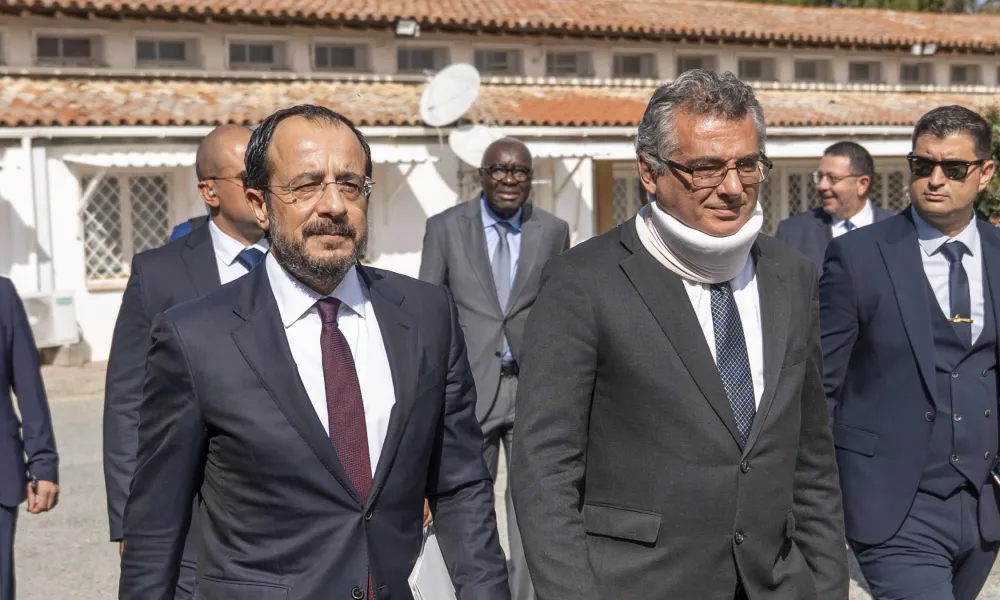
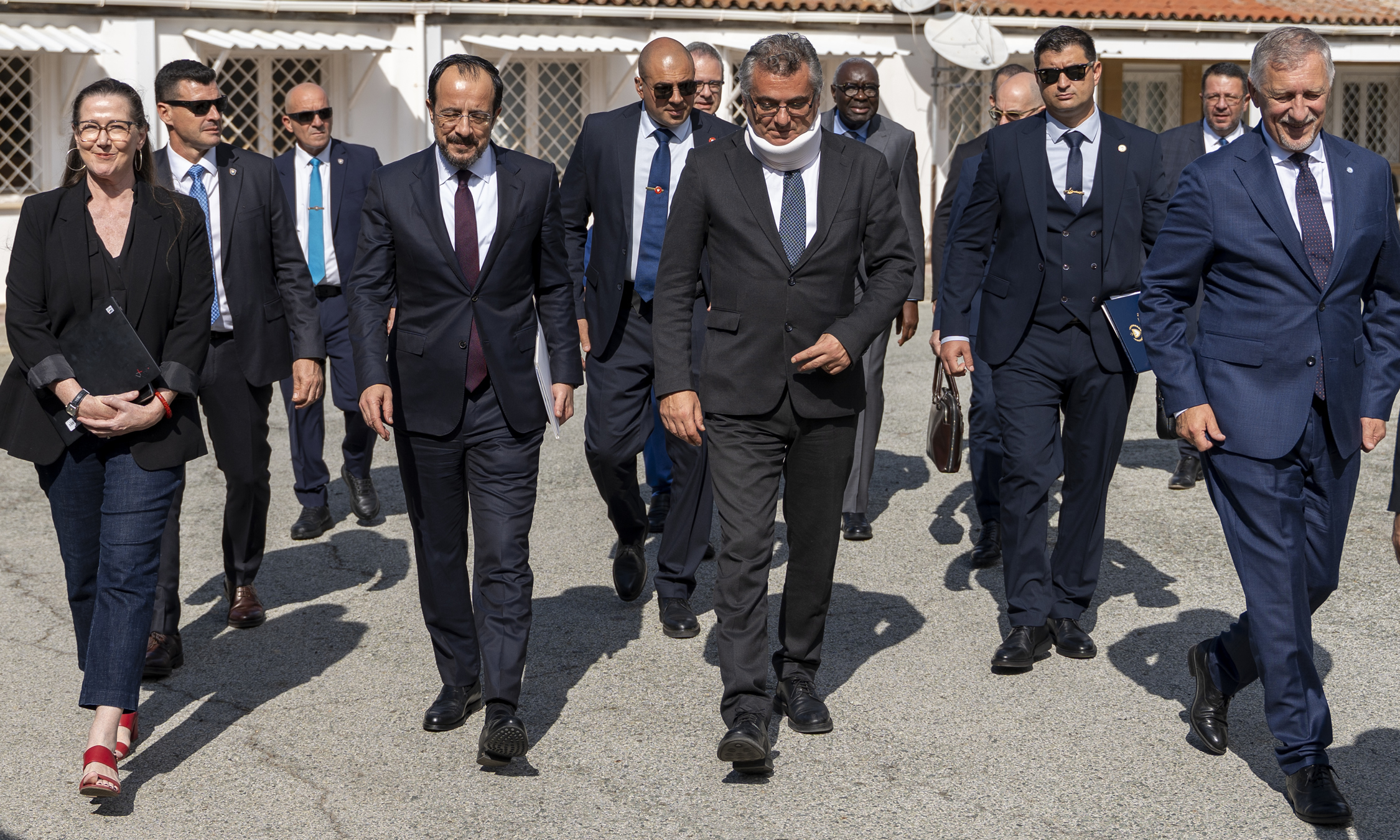
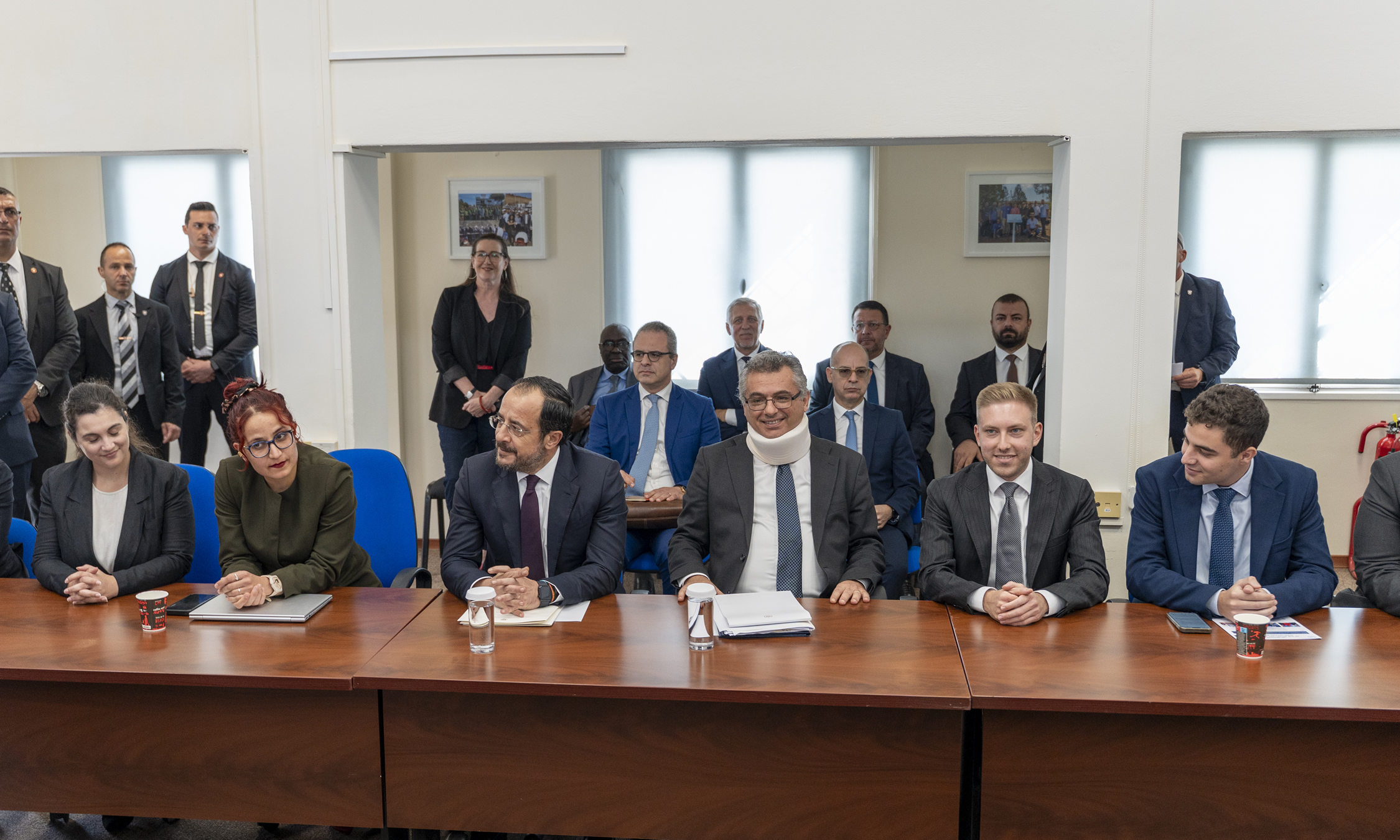
Despite the above, when the leaders jointly met with the three bicommunal committees on Thursday, several individuals present told Politis that the climate was very positive.
With Christodoulides sporting a mauve tie, and Erhürman blue, the two leaders showed enthusiasm and interest in the work of the committees, expressing full support for their efforts.
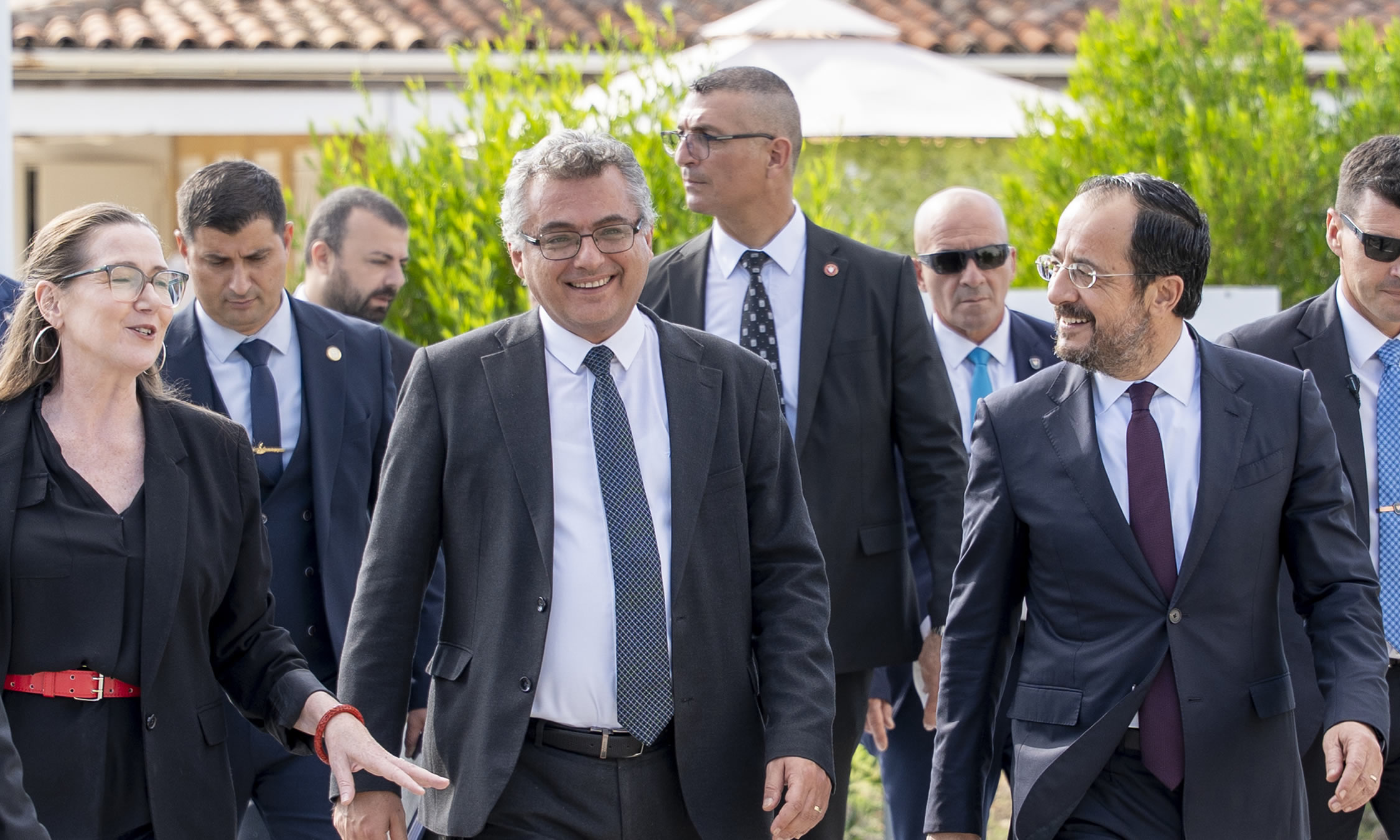
One attendee said they were positively surprised by the strong interest shown. Despite their different personalities and styles, they seemed to work well together and even completed each other's suggestions, said the source.
It remains to be seen whether the leaders will build on these rare positive vibes during Holguín’s visit and counter the envoy’s conclusion that political will appears to be lacking in Cyprus.