The Cyprus issue remains a top priority for the UN Secretary-General, with the international community seeking to make use of the window of opportunity before the current mandates of Antonio Guterres and his envoy Maria Angela Holguín expire, said bicommunal youth committee co-chair Amalia Avraam.
Speaking to Politis following the committee’s visit to Brussels on 10-11 June, Avraam provided insight into the prevailing mood within European and international circles on Cyprus.
‘Recognition of our work’
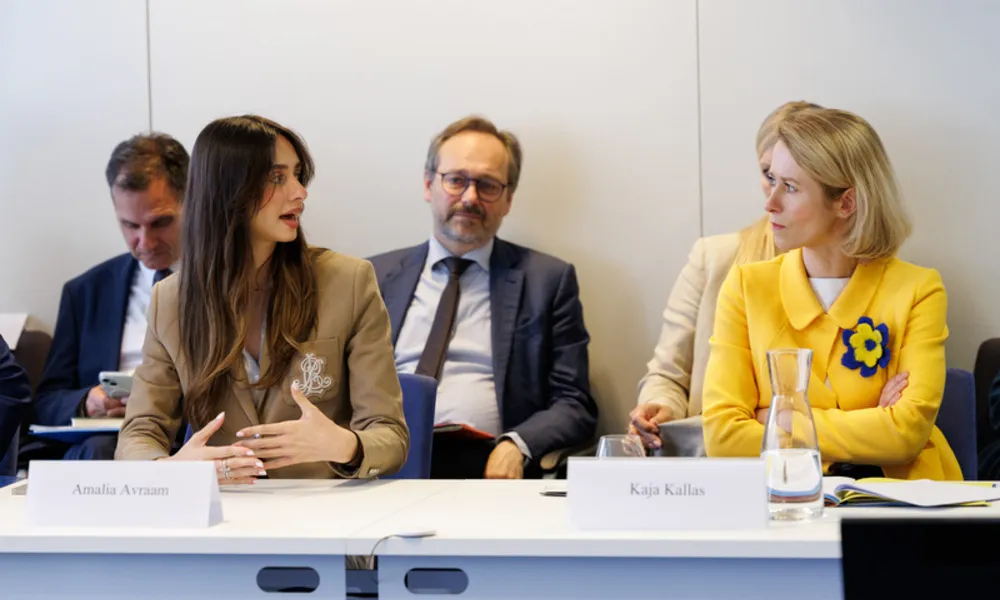
“The visit to Brussels took place following a personal invitation from the EU High Representative for Foreign Affairs and Security Policy, Kaja Kallas,” she said.
“This invitation reflects recognition that the Youth Technical Committee is carrying out important work.”
During the visit, committee members held meetings with EU officials and experts, and attended briefings on other international conflicts, examining both similarities and differences with the Cyprus case.
Two-hour meeting with Kallas
Avraam highlighted the significance of the committee’s meeting with Kallas, which lasted about two hours.
“It was a very important moment, as it was the first time such high-level meetings took place with the participation of Greek Cypriot and Turkish Cypriot youth on issues concerning young people,” she said.
Members shared personal experiences and perspectives reflecting life in both communities, while also stressing the importance of EU involvement in efforts to resolve the Cyprus issue.
‘There is a climate of trust’
On the committee’s internal dynamics, Avraam described a particularly positive environment.
“The committee has been operating for more than a year and a climate of trust has been established,” she said.
“Everyone can express their views freely without offending others. There is respect, understanding and a willingness for constructive cooperation, without other agendas.”
Priority for the UN
Avraam made clear that the committee does not have inside information on the next steps in the peace process.
However, discussions in Brussels underscored the importance of the current timing.
“What was stressed is that the term of the UN Secretary-General Antonio Guterres ends this year, along with that of his personal envoy Maria Angela Holguín,” she said.
“There is a sense that the UN wants to contribute to positive developments before this transition.”
She added: “At the moment, the Cyprus issue is very high on the Secretary-General’s agenda, but we do not know whether this will remain the case under the next Secretary-General.”
New initiatives
Avraam also revealed that a new initiative focusing on health issues is expected in the coming period.
At the same time, she expressed hope that by the end of the month the committee’s new website, developed with UN support, will be launched.
“Through the website we will present all our activities, and young people as well as any citizen will be able to send us views, proposals and ideas,” she said.
The goal remains the active participation of youth and civil society in building trust and bringing the two communities closer.
Hope – and effort
In conclusion, Avraam stressed that the younger generation is not relying on hope alone.
“There is not only hope. There is also effort,” she said.
“We are determined to contribute as much as we can from our side.”
She added that a solution to the Cyprus problem will not come from a single political decision, but from a gradual process of building trust within society.
“The Cyprus issue will be resolved through small but steady steps. It will be resolved through a bottom-up process, not the other way around,” she said.
“Society is what will ultimately make the difference when it understands that the solution concerns our shared future.”