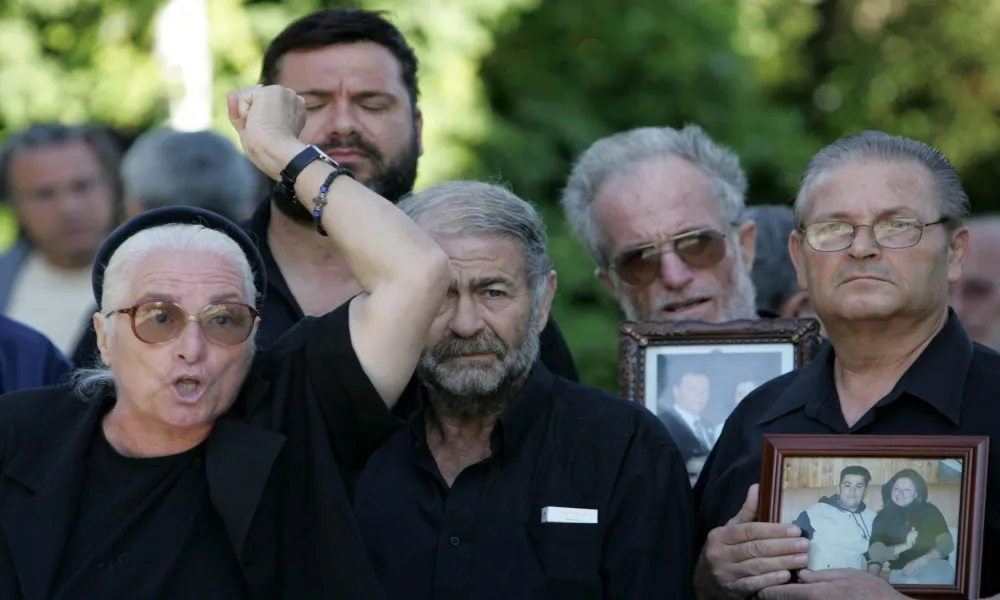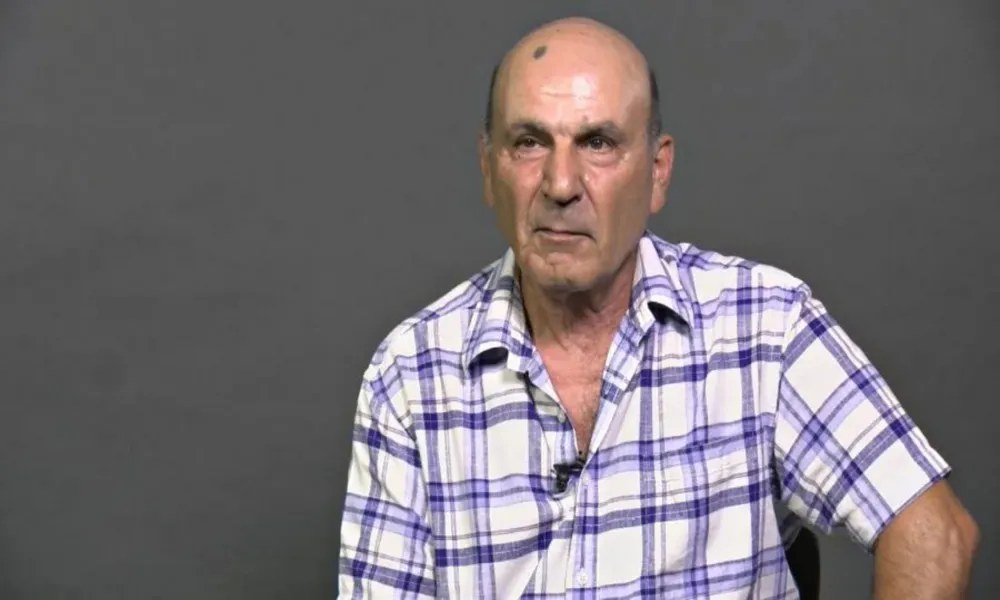
Thirty years have passed since the killing of Tassos Isaac during the mass motorcyclists' march at the Dherynia crossing point in August 1996. George Hadjicostas is the man who conceived the march. He was the leader of that major demonstration, which ended in tragedy with the killings of Tassos Isaac and Solomos Solomou by Turks.
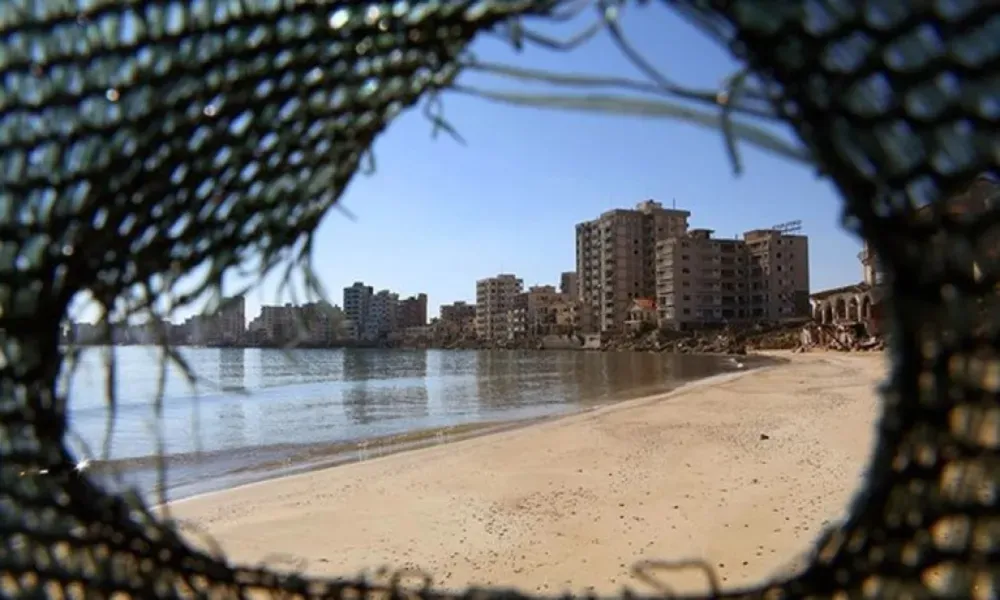
The idea for the march emerged in 1995 during a similar motorcyclists' event heading towards Zodia, with occupied Famagusta as its destination. A year later, the large march was organised, bringing the island very close to a renewed escalation of tensions along the ceasefire line.
How did the idea for the march emerge?
The idea came to me when we organised the march to Zodia in 1995, with occupied Famagusta as the destination. As I was leaving, the idea was born to organise a ride from Berlin to Kyrenia. The reason I chose Berlin was simply because it too had been a divided city that eventually managed to reunite.
At the time, motorcyclists were considered the "hooligans" whom nobody took seriously. Society looked down on us and, generally, our image was not the best. It was during that event in Zodia, a year before the large march, that I realised, as president of the Cyprus Motorcyclists Federation, that we had to do something more dynamic, that we had the power to internationalise the Cyprus problem.
It was a period when Cypriot politicians complained that the government was not spending enough money to promote international awareness of the Cyprus issue.
It should be noted that preparations took a full year. I met the president of the German Motorcyclists Federation and, when I told him of our intention to organise a major ride from Berlin, he immediately agreed to help. Along with Germany, 17 other countries agreed to support our effort.
Funding from the Archbishop
Who financed the event?
It is true that we were concerned about how and where we would find the money because, as you understand, such an undertaking involving foreign as well as Cypriot motorcyclists required considerable resources.
For that reason, we approached the European Motorcyclists Federation during a previously scheduled meeting. In the end, we received both moral and financial support from them and from foreign motorcyclists.
What was the role of the Church at the time?
Supportive.
In what way?
Financially. We launched a fundraising campaign and asked people to contribute whatever they could. We approached organisations, companies and others. We also contacted the Archbishopric.
The then Archbishop Chrysostomos I personally invited me to his office to express the Church's support and solidarity. Initially he gave us £10,000. Later he provided another £5,000. He also advised us where to seek additional funding.
Many believed the event was being orchestrated by him, but that was not the case. The Archbishop simply helped us secure financial resources.
Clerides' intervention
What exactly happened and why was the march cancelled?
The march was cancelled only minutes before it was due to begin.
That morning there were continuous meetings. The plan was for motorcyclists from Limassol and Paphos to travel to Nicosia, while motorcyclists from Larnaca would join those from Famagusta district.
I woke up that morning to attend the event at Makario Stadium, where we were all due to gather. Before leaving, I received a phone call from then Police Chief Mr Hadjiloizou, who urgently asked me to come to his office.
When I protested and asked why, since we had been in constant contact, he told me President Clerides wanted to see me.
Specifically, he said: "The President will be here and you need to come."
I went to police headquarters and from there they placed me in a vehicle and took me to the Presidential Palace.
On the way, the Police Chief made clear that the President was expecting us, although he himself did not know why.
Upon arriving at the Presidential Palace, we entered a large room where, apart from President Clerides, almost the entire Cabinet and the Attorney-General were waiting.
I should note that I attended together with the president of the Greek Motorcyclists Federation.
As soon as we sat down, discussion began about Turkish threats, which had become particularly intense that day. We had ignored them.
I then said to the President:
"Mr Clerides, if you didn't want this march to take place, why are you telling us now and not days earlier, so that we could have ended it in Greece, which was the final stop before Cyprus?"
Incidentally, during the meeting I overheard him answering telephone calls and realised they were from the UN Secretary-General, the US Secretary of State and other important figures.
The threats were coming from Turkey and Rauf Denktaş. We were ignoring them and insisting that, whatever happened, we would go to Kyrenia.
In any case, I said that I did not know what to tell the thousands of motorcyclists.
"If you want the march cancelled, Mr President, come with us and tell them yourself and explain the risks."
That is what I said in front of everybody.
He then replied:
"Do you know how many dangers there are? We will drag Greece into a war, and Greece is not ready."
Afterwards, we went alone to his office, where the President revealed certain state secrets to me.
The state secrets
What were those state secrets?
I believe I can mention them now.
One of them was that some Russian tanks had already arrived and that another 80 or so would follow. There were also Greek tanks and the S-300 missile system.
At the time nobody knew about these things.
Referring to them, President Clerides told me:
"When these arrive, I will tell you to organise a march. But today you must cancel it."
Meanwhile, when I announced that the march would not take place, motorcyclists had already gathered independently in Dherynia.
On the way there, we learned that there was already a dead man.
How would you have entered the occupied areas?
We had found a way.
There were several places where we could have entered. We were 13,000 people, including 170 foreign participants. We even had the flags of every country supporting the march ready.
Denktaş was threatening to open fire.
I personally believe that if we had crossed, he would not have dared. We had 170 foreign motorcyclists with us, from Greece all the way to the United States.
I should mention that I alone knew the route of the march, how and where we would enter.
As I said, the only thing participants knew was that the destination was Kyrenia.
Do you feel guilt? Have you regretted anything?
Do you feel guilt about what happened? Have you regretted anything, perhaps the way events were handled?
No.
I believe that I did what I had to do under the circumstances and based on the available information.
I could not have done anything else.
The responsibility lay with the government.
As I mentioned earlier, motorcyclists were viewed as society's troublemakers.
The government had not taken us seriously.
Personally, six months before the march, I sent a letter to President Clerides explaining in detail exactly what we planned to do.
I personally delivered it to the Presidential Palace and left it at the gate.
When I discussed this with the President on the day of the march, he told me he had never received it.
What is your relationship with the Isaac and Solomou families?
Very good.
And I mean that.
We met and they never said anything negative.
They regard their children as heroes.
Whenever we met, they were always courteous towards me.
The Archbishop disagreed
How did Archbishop Chrysostomos I react when he learned that the march had been cancelled?
After the cancellation and everything that followed, we met with His Beatitude.
He told me that I should not have cancelled the march.
He believed we should not have yielded to Turkish threats.
He had his own interpretation of events.
Specifically, he told me that I should not have listened to the President.
In fact, he used the following phrase:
"If blood is not shed, Cyprus will not be liberated."
President Clerides, on the other hand, treated me as though I were his son.
What remained from the whole story?
First of all, the Cyprus problem received enormous international publicity.
The government tried to capitalise on the event and, afterwards, whenever gatherings were organised, relatives of the victims were invited for publicity purposes.
Essentially, everyone tried to exploit the story for their own benefit.
The international arrest warrants and Turkey's conviction by the ECHR
A few months after the killing of Tassos Isaac, the Cypriot authorities sought to internationalise the search for suspects.
On 22 November 1996, Cyprus Police issued international arrest warrants for five individuals identified as having been involved in the deadly events in Dherynia.
Their names were later included in material examined by the European Court of Human Rights (ECHR).
The warrants concerned Hasim Yilmaz, Neyfel Mustafa Ergun, Polat Fikret Koreli, Mehmet Mustafa Arslan and Erhan Arikli.
Yilmaz was described as a settler and former member of Turkey's MIT intelligence service, while Ergun was described as a settler from Turkey and a "police officer" of the breakaway regime.
Koreli was a Turkish Cypriot from Famagusta. Arslan was a Turkish settler presented as the leader of the Grey Wolves in the occupied areas, while Arikli was identified as a Turkish settler originating from the former Soviet Union.
The case of Erhan Arikli attracted renewed attention years later when he was arrested in Kyrgyzstan in 2012.
Despite the outstanding international warrant against him, he was ultimately released and was not extradited to the Republic of Cyprus.
The most significant international judicial development came on 24 June 2008.
In its judgment in Isaac v. Turkey, the European Court of Human Rights held Turkey responsible for violating Article 2 of the European Convention on Human Rights, which protects the right to life.
The court's ruling was not limited to the circumstances of Tassos Isaac's death.
The ECHR also held Turkey responsible for failing to carry out an effective investigation after the killing, noting that the relevant authorities had not taken the necessary steps to fully investigate the case and bring those responsible to justice.
Twelve years after the events in Dherynia, the Strasbourg judgment effectively amounted to an international judicial confirmation of Turkey's responsibility in the case.
The court also awarded compensation to the family of Tassos Isaac.
(Interview originally published on 15 August 2018 and republished in 2026).