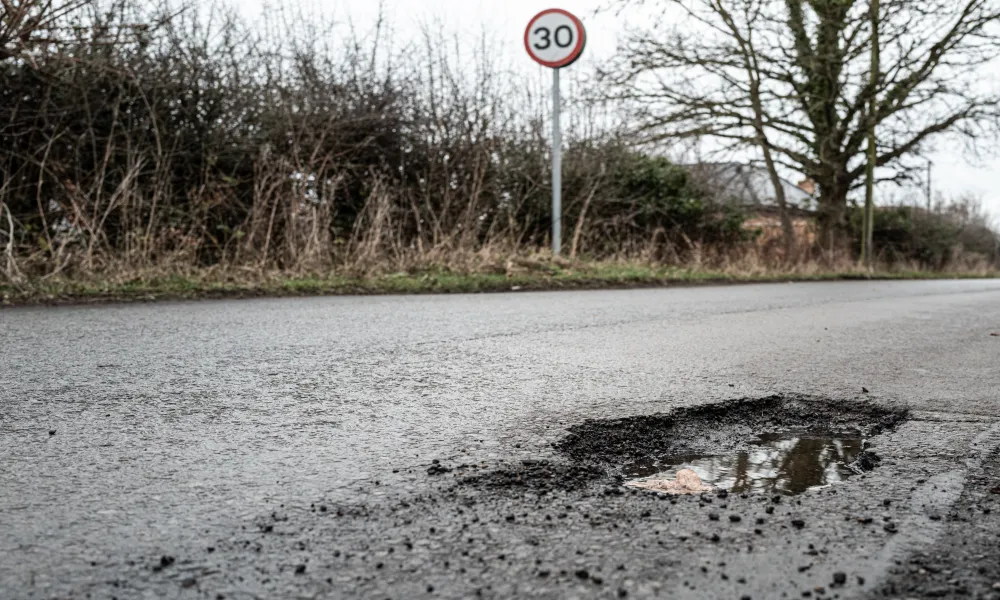

Potholes are among the most common road hazards facing drivers, particularly during winter, when rainwater and ice can worsen small cracks in the road surface. A single hard impact can damage several parts of a vehicle, with repair costs depending on the depth of the pothole, the speed of the car and the size of its wheels.
Tyres are often the first casualty
A deep pothole can cut a tyre, cause a sudden puncture or lead to a gradual loss of pressure. Low-profile tyres are particularly vulnerable because their smaller sidewalls offer less cushioning between the road and the wheel.
A bulge on the sidewall is a warning that the tyre’s internal reinforcing structure has been damaged. The tyre should then be replaced immediately, as its strength has been compromised. In more severe cases, part of the tread may begin separating from the tyre body.
Wheels can bend or crack
A strong impact can bend, crack or even break a wheel, particularly on cars fitted with rims larger than 17 inches.
Small cracks may not be immediately visible. Drivers may only notice a problem several hours later, or the following day, when the tyre begins losing air. In such cases, the wheel should be inspected by a specialist.
Run-flat tyres can place additional strain on the wheel because their stiffer sidewalls absorb less of the impact than conventional tyres.
Suspension and alignment can be affected
Suspension systems are designed to absorb irregularities in the road, but a deep pothole can place them under extreme pressure. The impact may damage shock absorbers, steering components or tie rods, while also knocking the wheels out of alignment.
Possible warning signs include:
- The steering wheel sitting off-centre
- The car pulling consistently to one side
- Reduced stability when cornering
- Uneven tyre wear
These symptoms should be checked promptly, as poor alignment can affect both handling and tyre life.
Exhaust damage is also possible
Deep potholes can dent or puncture exhaust pipes and damage the catalytic converter. These components are mounted beneath the vehicle and are often exposed, particularly on cars with low ground clearance.
Low bumpers are vulnerable
A deep pothole can also scrape, crack or break a low front bumper, especially on sports cars. Although such damage is usually cosmetic, repairs can still be expensive.
After a severe impact, drivers should check for tyre pressure loss, unusual vibrations, steering changes or new noises and arrange an inspection if anything feels different.
Source: AMNA