
Concerns are growing over Cyprus’ ability to secure an adequate electricity supply after 2029, as the Vasiliko liquefied natural gas terminal remains delayed and no clear alternative plan has been presented.
DISY and AKEL MPs offered different assessments of who bears responsibility for the stalled project, but both warned that time is running out to address the country’s energy needs.
Concerns over the absence of a clear plan
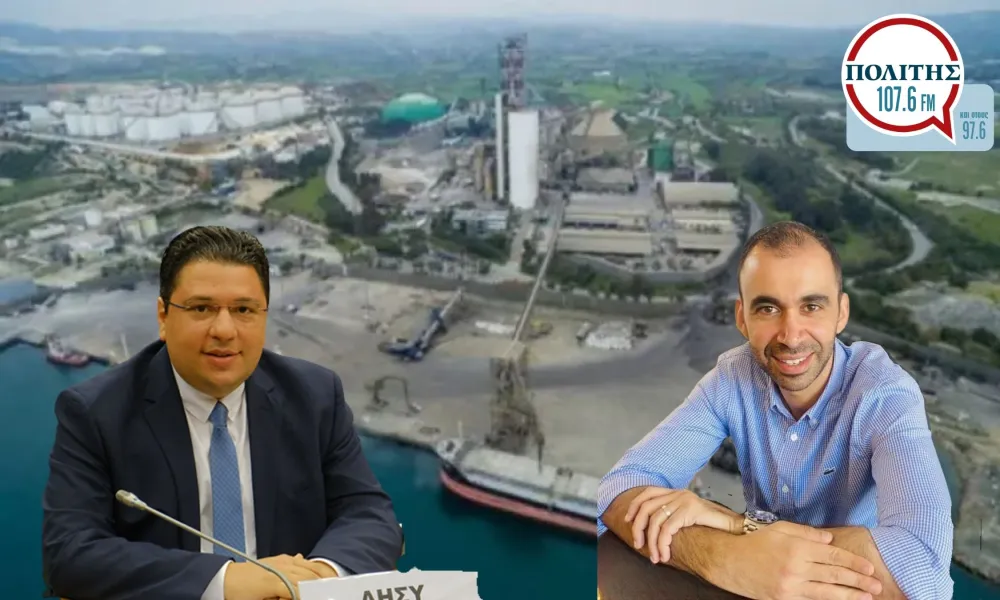
House Energy, Commerce and Industry Committee Chairman and DISY MP Nikos Georgiou described the information presented by the Energy Minister as particularly concerning.
Speaking to Politis radio 107.6 and 97.6, Georgiou said the government had not presented a clear strategy for completing the Vasiliko terminal or ensuring electricity adequacy after 2029.
He argued that the terminal had remained effectively stalled for two years and that the authorities were still preparing new tenders rather than completing construction.
New procurement procedures could lead to further delays, legal challenges and additional costs, he said.
“The targets set for 2030 to secure the country’s energy security and adequacy appear to be taking us into the unknown with hope as our only vessel,” Georgiou said.
He also questioned whether the latest timetables could realistically be met.
Previous government assurances questioned
Responding to claims that the difficulties originated under the previous administration, Georgiou noted that the current government continued to provide assurances in 2024 that the project was progressing normally and would be completed on schedule.
“Either some people did not know what was actually happening, or some people left the President of the Republic and the government exposed,” he said.
Georgiou focused particularly on the Energy Minister’s acknowledgement that Cyprus could face electricity adequacy problems by 2029 or 2030 if natural gas has not been introduced.
No detailed alternative plan has yet been presented, he said.
He also referred to conflicting government positions on the proposed electricity interconnector. While the government is awaiting a new viability study, the Finance Minister has already expressed serious reservations about the project’s potential cost to public finances.
Georgiou argued that energy security should not be assessed solely through financial criteria, as it is also a matter of national strategy.
No firm timetable for Vasiliko
AKEL MP and committee member Andreas Pasiourtides agreed that Cyprus lacked a comprehensive energy plan.
He said the ministerial briefing had not produced a firm roadmap for completing the Vasiliko terminal or guarantees that the revised deadlines would be met.
“We heard a series of conditions, not certainties,” he said.
According to Pasiourtides, each stage of the project remains dependent on new tenders, possible appeals and lengthy procedures that could result in further postponements.
“It has become like Santa Claus. We wait for it every December,” he said, referring to the repeated changes to the completion date.
He warned that the delays were continuing to burden households and businesses because Cyprus remained dependent on expensive conventional fuels for electricity generation.
Responsibility attributed to both administrations
Pasiourtides said the previous government bore responsibility for the initial handling of the project, but argued that the current administration must now also answer for its management of a terminal that remains uncertain.
It is still unclear, he said, whether the existing infrastructure at Vasiliko can be used or whether the project will effectively need to restart.
“Until recently, we were discussing when electricity prices would fall. Today, we are discussing whether we will even have sufficient electricity after 2029,” he said.
He described Vasiliko as the country’s most important energy project, arguing that it could not be abandoned in favour of other options.
Renewable energy constrained by the grid
Pasiourtides also criticised the planning behind the expansion of renewable energy.
Thousands of photovoltaic systems were installed without the necessary upgrades to the transmission network or the development of sufficient energy-storage capacity, he said.
As a result, significant quantities of renewable electricity are being rejected because the grid cannot absorb them.
He argued that a meaningful reduction in electricity costs would only become possible once comprehensive energy-storage systems were operating.
Fuel prices could rise by 15%
Pasiourtides also raised concerns over legislation aimed at reducing greenhouse gas emissions from transport fuels.
He said experts had estimated that the proposed measures could increase fuel prices by as much as 15%.
AKEL is proposing the abolition of what it describes as double taxation on fuel, the suspension of green taxes and stronger incentives for electric vehicles to limit the financial impact on consumers.
Both MPs warned that the period available before 2029 was rapidly narrowing and that completing the Vasiliko terminal had become critical to the country’s future electricity supply.