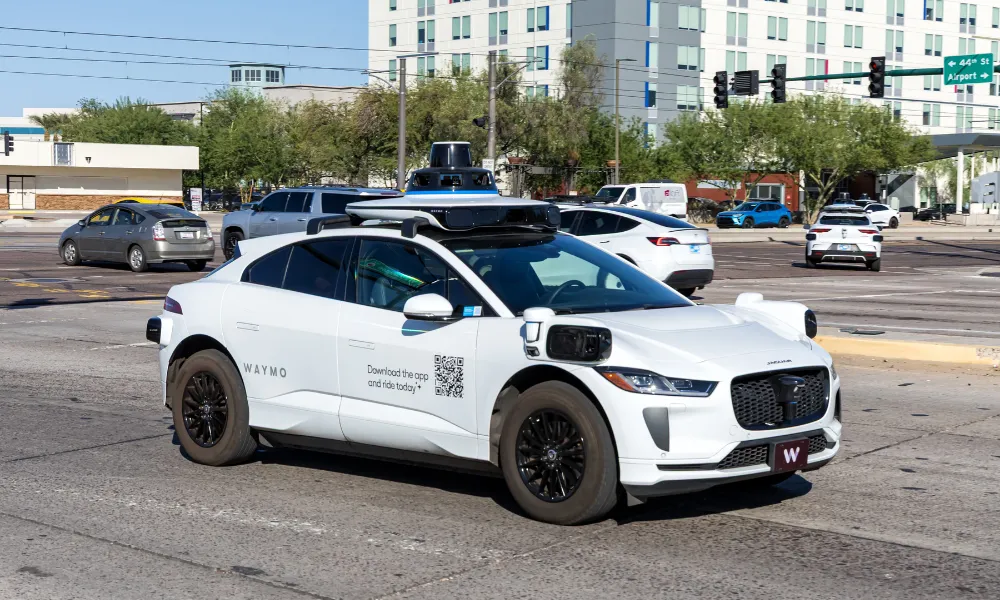
Portugal is preparing to let autonomous vehicles onto public roads for controlled testing, after adopting new rules that define how the trials must be carried out and who can conduct them.
The decree-law, approved by the Council of Ministers in late April and published this week in the country’s Official Gazette, will take effect in July. It gives Portugal a formal framework for testing highly automated and fully automated vehicles outside closed circuits, provided operators meet a series of licensing, safety and monitoring requirements.
The measure is aimed at supporting research and innovation in autonomous mobility, while ensuring that public-road trials take place under tighter conditions than ordinary driving.
According to the Portuguese government, self-driving technology could eventually expand transport options for people who cannot drive because of physical or other limitations. Authorities also see potential in new mobility services that could make better use of vehicle fleets and reduce the inefficiencies of a transport model still heavily dependent on privately owned cars.
A controlled testing regime
The new framework will allow trials by research laboratories, universities and companies active in the automotive, infrastructure and transport sectors.
Before any vehicle is tested on public roads, organisations will need authorisation and must comply with technical and operational rules. They will also have to submit a plan explaining how risks will be reduced during the trial.
Cybersecurity is treated as a core requirement. Operators must show that measures are in place to protect vehicle systems from unauthorised access, a key issue for cars that rely on software, sensors, connectivity and remote commands.
Insurance cover will also be significantly higher than usual. The decree sets the minimum compulsory insurance at four times the normal level, covering injuries or damage caused to third parties during autonomous vehicle testing.
Human oversight remains central
Although the trials involve automated systems, the legislation places clear responsibility on the people supervising them.
Both the driver and the operator in charge of highly automated or fully automated functions must have held a driving licence for at least six years. They must also have a clean recent record, with no road traffic crimes or offences in the previous five years.
The rules also limit how long they can remain on duty. Drivers and operators will not be allowed to work for more than three consecutive hours and must take breaks of at least one hour.
Alcohol limits will be stricter than for ordinary motorists, matching those applied to professional drivers.
Lower speeds and detailed records
Autonomous vehicle trials will have to be carried out at reduced speeds. During testing, the normal speed limits under Portugal’s Highway Code will be lowered by 20 kilometres per hour.
Vehicles used in the trials must also be fitted with systems that record detailed information about how the automated technology is performing. This includes data on speed, steering, braking, who is in dynamic control of the vehicle, and any intervention by the driver or operator.
The systems must also keep records of remote commands and communications with other vehicles, infrastructure and digital connection points.
At the end of each trial, operators will be required to submit a report to the authorities. This must include information on the testing activity and any accident, serious incident or other incident that occurred.
Licences granted abroad may also be recognised in Portugal, but only after an application is submitted to the president of the board of the Institute for Mobility and Transport.
With information from Euronews