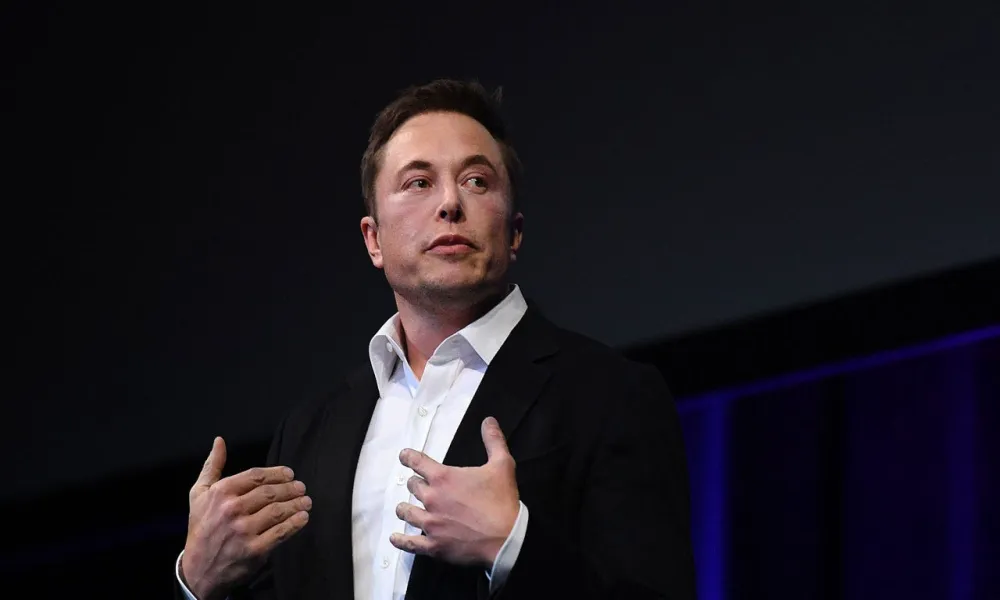



Elon Musk became the world's first trillionaire on Friday after SpaceX raised a record $75 billion in its initial public offering, pushing his total net worth above $1.1 trillion when the stock began trading, according to Reuters calculations based on company filings.
Prior to the share sale, Forbes estimated Musk's net worth at roughly $780 billion, already far ahead of the second wealthiest person in the world. The gap between Musk and those below him is staggering by any measure. "The second richest person has been hovering around $300 billion, so about less than one-third of what Musk can potentially be worth," said Matt Durot, deputy editor at Forbes Wealth, noting that only Oracle founder Larry Ellison had ever previously crossed the $400 billion threshold.
The bulk of Musk's fortune now rests with SpaceX, where his stake is valued at roughly $866 billion. The company, which spans rockets, satellites and artificial intelligence, sits at the centre of what market observers have taken to calling the "Muskonomy" - the sprawling network of businesses built around a single entrepreneur whose valuation is driven as much by faith in his vision as by conventional financial metrics. "Much like Tesla, SpaceX is a bet on Elon Musk," said Matt Kennedy, senior strategist at Renaissance Capital. "A market cap of $1.5 to $2 trillion would certainly throw all traditional valuation methodologies out the window, and is instead best characterised as the Elon Musk premium."
Musk, 54, was born in Pretoria, South Africa, and graduated from the University of Pennsylvania in 1997. He took over as Tesla's chief executive in 2008 with the conviction that electric vehicles could combine high performance with software-driven features, a bet that helped reshape the global automotive industry and pushed legacy carmakers to accelerate their own shift to electric. "He renewed the world's respect for American ingenuity in automotive engineering," said Bob Lutz, a former General Motors vice chairman. Beyond Tesla and SpaceX, Musk has co-founded five other companies, including tunnelling startup The Boring Company and brain implant maker Neuralink, as well as acquiring the social media platform Twitter in 2022 for $44 billion, giving him a direct channel to hundreds of millions of users.
The concentration of so much influence around a single individual has drawn sustained criticism. Governance concerns, conflicts of interest and the risks of tying company fortunes to one person have been recurring themes among regulators and shareholders. Tesla has faced legal challenges and investor unease connected to its chief executive, particularly around his 2018 pay package, once valued at $56 billion. Musk's entry into politics, most notably his role in Donald Trump's Department of Government Efficiency, proved among his most divisive moves, coinciding with weakening Tesla sales and consumer boycotts in several international markets through 2025. His subsequent public falling-out with Trump, though the two have since struck a more conciliatory tone, illustrated the increasingly blurred boundary between his business empire and political ambitions.
Yet for many investors, those concerns are secondary to his track record. JPMorgan Chase chief executive Jamie Dimon, once a legal adversary of Musk, has become one of his more prominent admirers. Having told CNBC last year that the two had "hugged it out," Dimon described Musk this week as "our Einstein."
SpaceX remains cash-hungry, and analysts note that much of its valuation rests on technologies that could take years or decades to reach commercial viability. Whether the IPO marks the peak of the Musk premium or simply its latest plateau is a question markets will be answering for some time.
Source: Reuters