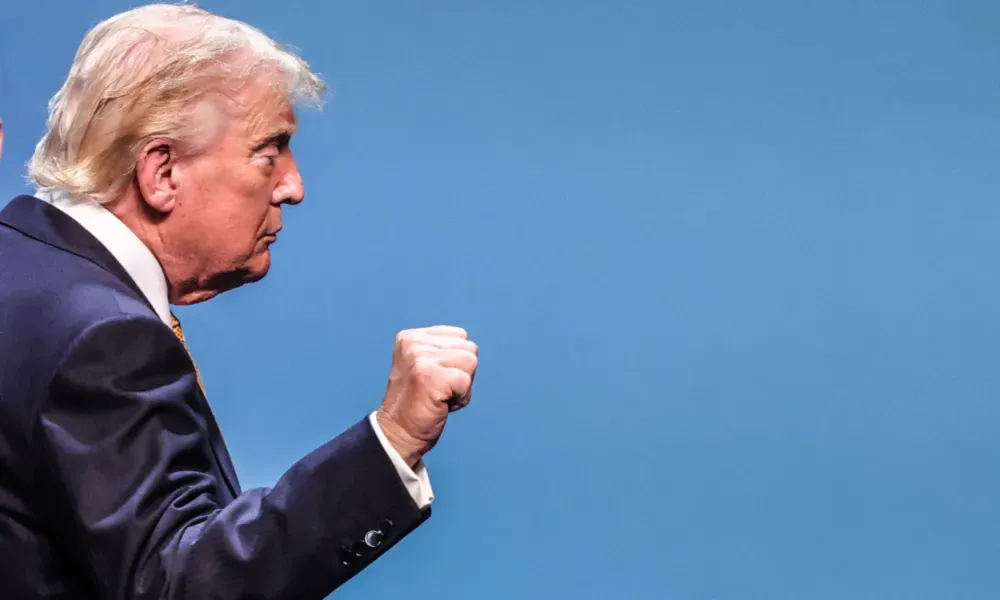

US President Donald Trump has pledged a $5,000 payment to every adult American if the Republican Party retains control of both chambers of Congress in November's midterm elections.
Speaking at the party's first-ever midterm convention in Dallas, Texas, Trump offered no details on funding or implementation, saying only that recipients would be required to spend the money domestically. The pledge, which he called a "Trump Dividend," would cost an estimated $1.3 trillion given the roughly 270 million adult Americans who would qualify.
The scale of the cost
With nearly 270 million adult Americans eligible, a $5,000 payment to each would total approximately $1.3 trillion. Trump gave no indication of how the payments would be administered or how spending would be monitored to ensure the money remained in the United States, as he requested. He specifically told supporters not to spend the money in Canada, China or Germany.
How it could be funded
Vice-President JD Vance linked the proposed payments to revenue generated by Trump's tariff programme, describing the plan to Fox News as "fundamentally a dividend for American workers." Vance argued that tariff revenue collected from foreign companies and countries justified the payout, adding that he did not consider the idea controversial. Trump has previously floated a similar, smaller proposal of $2,000 cheques funded through tariffs, though neither plan has been formally costed or submitted to Congress, which holds authority over federal spending.
Legal questions raised
The proposal has prompted debate over whether it complies with federal law, which prohibits payments intended to influence voting. Legal experts are divided. New Mexico lawyer John Day told the Associated Press the plan would likely be lawful, since it constitutes a promise to all adult citizens rather than a payment to induce a specific vote. Separately, an election law expert cited by the New York Times said the pledge would likely be protected under the First Amendment's free-speech guarantees. No legal challenge has yet been filed.
Political and economic context
The pledge comes as the US faces rising prices, driven in part by the ongoing conflict involving the US, Israel and Iran, which has disrupted oil markets through Iran's partial blockade of the Strait of Hormuz. Trump has said the war will not end before the midterms and that oil prices are unlikely to fall until after the vote. Democrats have dismissed the $5,000 pledge as an "empty promise," while former Republican strategist Robert Moran described it as a "novel solution to an interesting problem" tied to the historical pattern of the president's party losing seats in midterm elections. The midterm elections will be held on 3 November.
Source: BBC