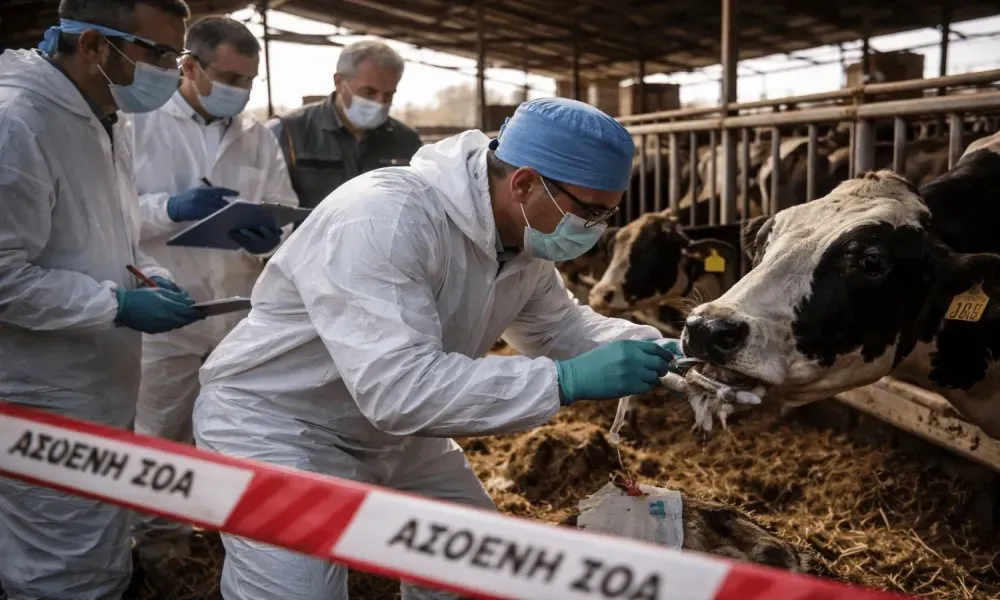
The spread of foot‑and‑mouth disease is continuing, with three new cases identified in small ruminant farms in the Nicosia district, bringing the total number of affected units nationwide to 120.
The latest cases involve farms in Paliometocho, Mammari and Kokkinotrimithia. All are located within the existing infected zone in western Nicosia, within the three‑kilometre radius, with reports indicating a limited number of animals affected.
Scale of the damage
The figures surrounding the livestock crisis, which began in February in the government‑controlled areas, underline the scale of the impact.
Of the 120 infected units across Cyprus, the majority, 103, involve sheep and goat farms. Of these, 73 are located in Larnaca, 29 in Nicosia and one in Limassol. The remaining cases involve 14 cattle units, nine in Larnaca and five in Nicosia, as well as three pig farms, all in western Nicosia.
So far, 71,000 animals have been culled, including 43,000 sheep and goats, 3,000 cattle and more than 24,000 pigs.
The affected animals represent around 11% of the country’s adult sheep and goat population, 3.5% of cattle and nearly 8% of pigs.
As previously reported, a second round of epidemiological investigation in Limassol, Paphos and Famagusta is expected to be completed by the end of the month, to determine whether the virus has spread beyond the known case in Pachna, Limassol, or into areas that are still considered unaffected.
Minister holds emergency meeting
Amid growing concern over the trajectory of the outbreak, the Minister of Agriculture is holding a critical meeting later today with the leadership of the Veterinary Services.
The meeting will focus on reviewing the course of the outbreak and assessing existing containment measures. It will also address obstacles faced by veterinary officials in their daily efforts to manage the crisis.
According to information, veterinary staff are expected to stress that they do not wish to be caught in ongoing disputes, but to focus fully on tackling the outbreak.
Protest planned
Meanwhile, a group of farmers is set to stage a protest outside the Presidential Palace on Friday, warning that the situation has reached a critical point.
Farmers say they have been pushed to the limits and are criticising the handling of the outbreak, demanding an immediate end to mass culling and greater reliability in laboratory testing.
Call for presidential intervention
Organised farming groups will not take part in the protest but have requested a meeting with President Nikos Christodoulides.
They are calling for immediate intervention to reassess mass culling practices through the European Union, establish an emergency financial support plan and prevent what they describe as the collapse of domestic production, including halloumi.